Taipei Travel Guide
Your journey to Taipei introduces you to a city where ancient traditions thrive among soaring skyscrapers, creating a dynamic destination in the heart of East Asia. This Taiwanese capital offers an unmatched blend of history, world-class cuisine, and lush natural escapes just a metro ride from the urban core. This travel guide provides essential logistics, cultural insights, and local secrets for navigating the city’s vibrant neighborhoods and planning your ideal itinerary.
Introducing Taiwan’s Capital City
Taipei serves as the political, economic, and cultural center of Taiwan, a democratic island nation with a complex history spanning indigenous cultures, Dutch and Spanish colonial periods, and Japanese rule. The city’s modern identity emerged in the latter half of the 20th century, transforming into a global technology hub while preserving its deep Chinese heritage. Today, Taipei’s cityscape tells this layered story through its architecture, museums, and daily life.
With a population exceeding 2.6 million in the city proper and nearly 7 million in the metropolitan area, Taipei is a dense, efficient metropolis. Mandarin Chinese is the official language, but Taiwanese Hokkien is widely spoken, and English signage is common in tourist areas and on the excellent public transit system. The local currency is the New Taiwan Dollar (NT$), and the city enjoys a subtropical climate with hot, humid summers and mild, relatively dry winters.
Visa and Entry Requirements
Most travelers need to check specific entry rules before booking flights to Taiwan. Passport holders from the United States, Canada, the United Kingdom, Australia, New Zealand, and most EU countries can enter visa-free for tourism for 90 days. You must have a passport valid for at least six months beyond your arrival date and proof of onward travel, such as a departing flight ticket.
- Always confirm current regulations with the Taipei Economic and Cultural Representative Office (TECRO) in your country, as policies can change.
- If you plan to stay longer than 90 days or for purposes like work or study, you must apply for the appropriate visa in advance through a Taiwan overseas mission.
- Upon arrival, you will receive an entry stamp; keep the disembarkation card portion safe, as you may need to present it when checking into some hotels.
- Budget travelers can manage on $40-60 USD per day by staying in hostel dorms, eating primarily at night markets and local noodle shops (meals for $3-6 USD), and using the MRT or YouBike for transport. Many temples and hikes are free, and museum entrance fees are generally under $10 USD.
- Mid-range travelers spending $100-180 USD daily can book comfortable boutique hotels or Airbnb apartments, enjoy sit-down restaurant meals, take occasional taxis, and join guided day trips to nearby areas like Jiufen or Beitou Hot Springs.
- A luxury daily budget of $250+ USD affords five-star hotels, degustation menus at top restaurants, private chauffeur services, and premium shopping experiences in the Xinyi District malls.
- Taiwan Tourism Bureau
- Taipei City Government Travel Information
- Taipei Metro Official Website
Understanding Taipei’s Layout
Taipei is administratively divided into twelve districts, each with its own character. For visitors, a handful of key districts form the core of the travel experience. Central Taipei contains the major commercial and historical hubs. The city is geographically nestled in the Taipei Basin, surrounded by mountains and hills, which provide stunning natural backdrops and accessible hiking trails.
Navigating between districts is straightforward thanks to the Taipei Metro, commonly called the MRT. This clean, efficient, and affordable subway system connects all major attractions, shopping areas, and night markets. Taxis are also plentiful and reasonably priced, while YouBike, the city’s public bike-sharing system, offers a fantastic way to explore at street level.
Climate and Weather Patterns
Taipei experiences a humid subtropical climate heavily influenced by monsoon patterns. Summers, from June to September, are hot and humid with frequent afternoon thunderstorms and the possibility of typhoons. Average highs hover around 92°F (33°C), with high humidity making it feel warmer. This is also the rainy season, so pack a compact umbrella.
Winter, from December to February, is relatively mild and dry. Temperatures typically range from 55°F to 68°F (13°C to 20°C), though cold fronts can occasionally bring cooler, damper weather. Spring (March-May) and autumn (October-November) are generally considered the most pleasant times to visit, with comfortable temperatures and less rainfall, making them ideal for extensive outdoor exploration.
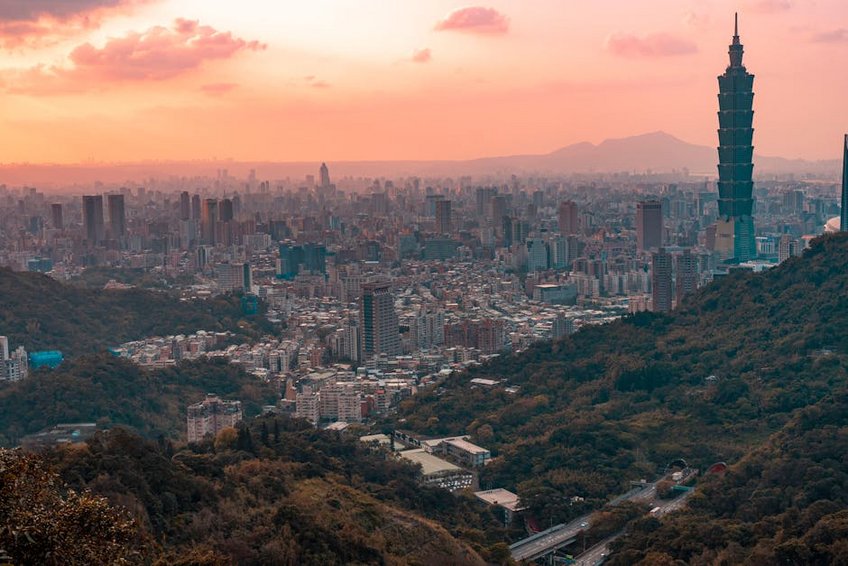
Alt: “taipei-cityscape-taipei-101-skyscraper-mountains-sunset”
Taipei Travel Guide – Planning Your Trip
Crafting a successful Taipei itinerary requires balancing iconic sights with local neighborhood exploration and culinary adventures. The city’s efficient MRT system makes it easy to cover significant ground each day. A well-planned visit accounts for opening days, as some museums close on Mondays, and optimal times to visit popular spots like the National Palace Museum or the Maokong Gondola to avoid the biggest crowds.
Budget planning is flexible; you can enjoy a lavish culinary tour or stick to affordable night market feasts and free attractions like temple visits and city park hikes. Accommodation ranges from high-end international hotels in the Xinyi District to charming, design-forward hostels in the Zhongshan or Da’an districts. Booking hotels at least two months in advance is wise for peak travel periods like Chinese New Year or summer holidays.
Best Time to Visit Taipei
The optimal months for visiting Taipei are October, November, March, and April. During these periods, you’ll encounter pleasant daytime temperatures between 70°F and 80°F (21°C and 27°C) with lower humidity and minimal rainfall. These conditions are perfect for hiking in Yangmingshan National Park, exploring historic streets, and enjoying outdoor night markets without the summer heat or winter chill.
If you visit during the hot, humid summer from June to August, plan indoor activities for the afternoon and carry water constantly. The Lantern Festival in February and Dragon Boat Festival in June offer incredible cultural experiences despite the potential for crowds and weather challenges. The winter months see fewer tourists and can be a good time for bargain hunters, though you should pack layers for the variable conditions.
Budget Planning and Costs
Daily costs vary significantly based on your travel style and accommodation choices.
Essential Preparation Checklist
Start by ensuring your passport is valid for more than six months and check if you need a visa. Purchase comprehensive travel insurance that covers medical emergencies and trip interruptions. Book your accommodations early, especially if traveling during a festival or holiday period. Download useful apps like Google Translate (for offline Chinese translation), the Taipei Metro map, and a reliable currency converter.
Pack for the season: light, breathable clothing and a rain jacket for summer; layers and a light coat for winter. Comfortable walking shoes are non-negotiable. Bring a universal power adapter (Taiwan uses Type A and B plugs, 110V voltage) and a portable power bank for your phone. Having some New Taiwan Dollars in cash upon arrival is helpful for taxis or small purchases before you find an ATM.
Top Attractions and Iconic Sights
Taipei’s landmarks range from architectural marvels to serene natural retreats. The city’s most famous symbol, Taipei 101, once held the title of world’s tallest building and still offers breathtaking city views from its observatory. At its base lies a luxury mall and food court. In contrast, the historical heart of the city beats in districts like Wanhua, home to the centuries-old Longshan Temple, a masterpiece of Taiwanese folk religion and architecture.
You cannot miss the National Palace Museum in the Shilin District, which houses one of the world’s finest collections of Chinese imperial artifacts spanning 8,000 years. Allow at least half a day for this immense museum. For a change of pace, take the Maokong Gondola from the Taipei Zoo MRT station up into the tea-growing hills for panoramic views and a traditional tea-tasting experience.
Must-See Cultural Highlights
Begin your cultural exploration at the Chiang Kai-shek Memorial Hall, a vast national monument and park commemorating the former president. The changing of the guard ceremony on the hour is a precise spectacle. Nearby, the National Theater and National Concert Hall showcase modern Taiwanese performing arts. For a more intimate historical experience, visit the Taipei Confucius Temple, a serene oasis of traditional architecture and gardens.
Dedicate a morning to exploring the Bao’an Temple in the Datong District, a UNESCO-awarded temple known for its elaborate stone and wood carvings that depict Taiwanese folklore. Afterwards, wander through the adjacent Taipei Story House to understand the city’s development during the Japanese colonial era. These sites are easily accessed via the MRT’s Zhongshan or Yuanshan stations.
Natural Escapes Within the City
Escape the urban bustle without leaving the city limits. Yangmingshan National Park, accessible by public bus, offers volcanic landscapes, hiking trails past fumaroles, and seasonal flower blooms. The park’s Qingtiangang Grassland provides open, rolling hills perfect for a picnic. For a more curated nature experience, the Taipei Botanical Garden near the National Museum of History features tranquil ponds and diverse plant collections.
Elephant Mountain (Xiangshan) is the city’s most popular hiking trail for a reason. The short but steep climb rewards you with the iconic postcard view of Taipei 101 against the city skyline, especially stunning at sunset. For a riverside escape, the extensive bike paths along the Tamsui and Keelung Rivers are perfect for a leisurely YouBike ride, offering glimpses of local life away from the main tourist circuits.
Historic Districts and Street Life
Dihua Street in the Datong District is Taipei’s oldest commercial street, lined with beautiful Baroque and Fujian-style shophouses selling traditional Chinese herbs, teas, and fabrics. Visit before the Lunar New Year to experience the famous Dihua Street New Year Market. The nearby Ximending district offers a completely different vibe, known as Taipei’s “Harajuku,” packed with trendy fashion shops, street performers, and theaters popular with the youth.
For a glimpse of Taipei’s creative energy, explore the Zhongshan and Da’an districts. These areas are filled with independent designer boutiques, artisanal coffee shops tucked into alleyways, and small galleries. The Songshan Cultural and Creative Park, a renovated tobacco factory, hosts design exhibitions, markets, and studios, representing the city’s shift toward a creative economy.
Practical Travel Information and Logistics
Taipei’s Taoyuan International Airport (TPE) is the main international gateway, located about 30 miles (50 km) west of the city center. The most convenient transfer is via the Airport MRT, which takes 35 minutes to Taipei Main Station for around 160 NT$ (approx. $5 USD). Taxis and ride-share services are available but cost significantly more, especially during peak traffic hours. Songshan Airport (TSA) handles domestic and some regional flights from within Taipei city.
Once in the city, the Taipei Metro (MRT) is your best friend. It’s clean, safe, punctual, and covers all major districts and attractions. Purchase an EasyCard at any MRT station; this rechargeable smart card offers small discounts on all MRT and bus rides and can also be used at convenience stores. Taxis are metered, reliable, and affordable for shorter distances or late-night travel when the MRT has closed.
| Accommodation Type | Best Neighborhoods & Features | Average Price Range (USD/Night) |
|---|---|---|
| Luxury Hotels | Xinyi District (near Taipei 101), rooftop bars, spa facilities, direct MRT access | $180 – $400+ |
| Boutique Hotels | Zhongshan & Da’an Districts, design-focused, quieter locations, local charm | $90 – $180 |
| Hostels & Guesthouses | Ximending & Main Station area, social atmosphere, budget-friendly, shared facilities | $20 – $50 |
| Serviced Apartments | Neighborhoods like Tianmu or Dazhi, kitchenettes, more space, longer stays | $80 – $150 |