Panoramic Train Routes in Switzerland: Your Guide to Alpine Rail Perfection
Switzerland’s panoramic train routes deliver a front-row seat to Europe’s most dramatic landscapes, from glacial valleys to storybook villages. These engineering marvels combine first-class comfort with unparalleled views, making scenic travel an effortless and immersive experience. This guide details the essential routes, planning strategies, and insider tips to craft your perfect Alpine rail journey.
Essential Information on Swiss Scenic Rail
Switzerland’s rail network is famously efficient, but its scenic routes are in a class of their own. These special trains feature oversized windows, often extending into the ceiling, designed solely for sightseeing. They traverse UNESCO World Heritage sites, high mountain passes, and remote regions inaccessible by car, operating year-round with seasonal highlights.
The system is integrated into the Swiss Travel System, allowing seamless connections with local transport. Passes like the Swiss Travel Pass offer flexibility, covering most panoramic routes with a reservation fee. Understanding this network is key to a smooth and scenic adventure across the Confederation.
Understanding the Swiss Travel System
Navigating the options ensures the best value for your scenic rail adventure.
- The Swiss Travel Pass offers unlimited travel on trains, buses, and boats across the country, plus museum entry; it covers most panoramic routes with a mandatory seat reservation fee ranging from $15-50.
- Point-to-point tickets provide flexibility for shorter itineraries, often booked via the SBB Mobile app, with prices fluctuating based on demand and how far in advance you book.
- Regional passes, like the Bernese Oberland Pass, focus on specific scenic areas and can offer superior value if your trip is concentrated in one region rather than spanning the entire country.
- Budget travelers should opt for a 2nd class Swiss Travel Pass (approx. $350 for 4 days), pack lunches, and focus on one major route like the Bernina Express, keeping daily costs around $110-150 per person.
- Mid-range journeys benefit from a 1st class 8-day pass (approx. $600), include a reserved dining car meal on a premier route, and stay in comfortable mid-tier hotels, averaging $250-350 per person daily.
- Luxury experiences involve private guided rail tours, exclusive panoramic carriages, stays at 5-star hotels like the Bellevue Palace, and gourmet dining throughout, easily exceeding $700+ per person per day.
- Switzerland Tourism – Scenic Trains
- The Man in Seat 61: Switzerland Scenic Trains
Key Features of Panoramic Trains
These trains differ significantly from standard commuter services. They prioritize the viewing experience above all else. Carriages are specifically designed with extra-large, curve-angled windows and often feature partial glass roofs.
Most include elegant dining cars serving regional cuisine or offer upgraded first-class sections with even more spacious seating. However, they are not high-speed trains. Their purpose is leisurely travel, with average speeds allowing you to fully absorb the passing vistas.
The History of Alpine Railway Engineering
Switzerland’s mountain railways are feats of 19th and 20th-century engineering. Building tracks across the Alps required conquering steep gradients and harsh climates. Pioneering projects used rack-and-pinion systems for ascents and spiraling tunnels to gain elevation.
Lines like the Bernina Pass route, completed in 1910, remain masterpieces. This legacy of innovation created the scenic network we enjoy today. It transformed remote Alpine communities and established Switzerland’s global reputation for precision travel.
Alt: “glacier-express-crossing-alps-swiss-railway-viaduct”
Panoramic Train Routes in Switzerland – Planning Your Trip
Crafting your Alpine rail itinerary requires balancing ambition with realistic travel time. The most celebrated journeys, like the Glacier Express, take a full day. You can connect multiple routes over a week using strategic overnight stops in charming towns along the way.
Your budget should account for rail passes, seat reservations, meals on board, and accommodations. While the travel itself is the highlight, allocating time to explore destinations en route enhances the experience. This planning ensures your scenic journey is both logistically sound and deeply rewarding.
Best Time to Visit for Scenic Rail Travel
Each season offers a distinct perspective on these panoramic train routes in Switzerland. Summer (June-August) provides lush green meadows, stable weather, and long days, with temperatures between 65-75°F (18-24°C). This is the peak season, so book reservations several months in advance.
Spring (April-May) and autumn (September-October) are splendid shoulder seasons. You’ll encounter fewer crowds and dramatic seasonal changes, with temperatures ranging from 50-65°F (10-18°C). Winter (December-March) transforms the landscape into a snow globe, but some high passes close; check specific route schedules for the white season.
Budget Planning and Costs
Costs vary based on pass type, class of service, and dining choices.
Essential Preparation Checklist
Pack layers, including a warm fleece and waterproof jacket, as mountain weather shifts rapidly. Essential gear includes sunglasses, a camera with a polarizing filter to reduce window glare, and a portable power bank for device charging. Comfortable shoes are a must for exploring stations during brief stops.
Secure your Swiss Travel Pass or point-to-point tickets online before arrival. Make mandatory seat reservations for panoramic trains immediately after, as they sell out. Purchase comprehensive travel insurance covering trip interruptions and consider a VPN for booking on Swiss railway websites from abroad.
Top Panoramic Routes and Journeys
Switzerland boasts several iconic scenic railways, each with a unique character and landscape. The Glacier Express is the most famous, connecting two mountain resorts across 291 bridges. The Bernina Express, a UNESCO site, climbs to 7,391 feet without a cogwheel.
The GoldenPass Line links Lake Geneva to the Bernese Oberland through three distinct stages with changing track gauges. Meanwhile, the Gotthard Panorama Express combines a historic boat cruise with a train ride through the new base tunnel. Choosing among them defines your Alpine experience.
Must-See Highlights: The Premier Routes
The Glacier Express (Zermatt to St. Moritz) is an 8-hour “slowest express train in the world.” Its highlights include the Oberalp Pass, the Rhine Gorge, and the Landwasser Viaduct. Book the “Excellence Class” for a premium five-course meal and exclusive seating.
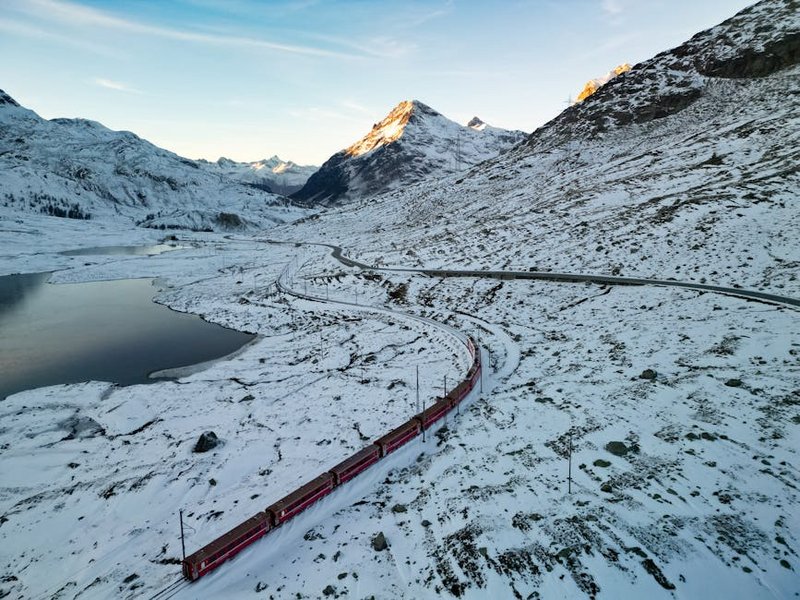
The Bernina Express (Chur to Tirano, Italy) is a 4-hour UNESCO masterpiece. It climbs to the Bernina Pass, circles the Morteratsch Glacier, and spirals down to palm trees in Italy. Reserve seats on the right side from Chur for the best glacier views. The dining car offers excellent Italian-Swiss fusion.
Hidden Gems and Local Favorites
For a less crowded alternative, the Centovalli Railway runs from Locarno to Domodossola. It winds through 100 valleys with cascading waterfalls and rustic stone villages. This route feels wonderfully undiscovered compared to the major lines and requires no special reservation.
The Montreux-Oberland Bernois (MOB) line is another local secret. It travels from Montreux to Gstaad through the gentle hills and dairy farms of the Vaudoise countryside. This journey offers a quieter, more pastoral side of Swiss rail travel, perfect for a half-day excursion.
Combining Routes for a Grand Tour
Ambitious travelers can link multiple panoramic train routes in a circular tour. A classic one-week itinerary starts in Zurich, takes the Gotthard Panorama Express to Lugano, the Bernina Express to Chur, and the Glacier Express to Zermatt, finishing with the Wilhelm Tell Express back to Lucerne.
This grand tour showcases Switzerland’s incredible diversity. It requires meticulous reservation planning but delivers an unforgettable cross-section of the country. Overnight stays in Lugano, St. Moritz, and Zermatt break up the travel beautifully.
Practical Travel Information
Switzerland’s efficiency extends to its travel logistics. Major international airports in Zurich (ZRH) and Geneva (GVA) offer direct train connections to city centers within 20 minutes. Basel (BSL) and Zurich are also primary rail hubs for starting your scenic journey.
Accommodation ranges from grand historic hotels adjacent to stations to cozy family-run guesthouses in Alpine villages. Booking lodging near train stations saves time with luggage. Most Swiss stations offer secure paid luggage lockers and forward services to your next hotel.
| Train Route | Key Highlights & Duration | Approx. Cost with Pass & Reservation |
|---|---|---|
| Glacier Express | Oberalp Pass, Rhine Gorge, Landwasser Viaduct (8 hours) | $140-250 (1st Class + Lunch) |
| Bernina Express | Bernina Pass, Morteratsch Glacier, Brusio Spiral (4 hours) | $50-90 (Reservation Only) |
| GoldenPass Line | Lake Geneva, Gruyères region, Gstaad (5.5 hours) | Included with Pass (Res: $15) |
| Gotthard Panorama Express | Lake Lucerne boat cruise, Gotthard Tunnel (5.5 hours total) | $45-75 (Boat+Train Reservation) |