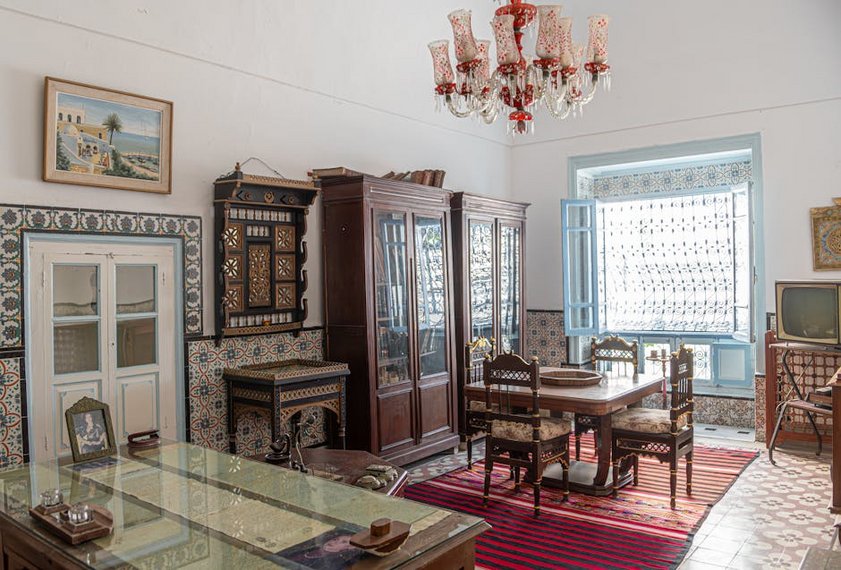
Tunisia Sidi Bou Said White Village – Mediterranean Charm and Culture
Sidi Bou Said stands as Tunisia’s iconic white and blue village perched on cliffs overlooking the Mediterranean Sea. This historic settlement features Andalusian architecture with whitewashed buildings, vibrant blue doors, and bougainvillea-covered streets creating unparalleled photographic opportunities. Our guide covers essential travel planning, cultural insights, and practical tips for experiencing this destination fully.
Essential Village Information
Sidi Bou Said originated in the 13th century as a religious retreat named after Sufi saint Abu Said ibn Khalef. The village gained international recognition in the early 20th century when Baron Rodolphe d’Erlanger championed its distinctive blue and white color scheme. Today it represents one of Tunisia’s most visited attractions while maintaining authentic residential character.
The village occupies a dramatic cliffside position 20 kilometers northeast of Tunis capital city. Elevations range from sea level to 120 meters (394 feet) above the Mediterranean coastline. Visitors enjoy panoramic views across the Gulf of Tunis toward Carthage archaeological sites and the distant mountains.
Historical Background and Significance
Understanding Sidi Bou Said’s evolution helps appreciate its current atmosphere.
- Andalusian refugees established the village’s core architectural style after the 15th century Spanish Reconquista
- French protectorate era (1881-1956) introduced European artistic influences and preservation efforts
- UNESCO added the village to its tentative World Heritage list in 2012 recognizing cultural importance
- Budget travelers spend $40-60 daily using public transportation, street food, and hostel accommodations with shared facilities
- Mid-range visitors allocate $80-120 per day for private hotel rooms, restaurant meals, and guided tours of key attractions
- Luxury experiences cost $150-250 daily featuring boutique hotels, fine dining, and private transportation with English-speaking drivers
- Tunisia National Tourism Office
- UNESCO World Heritage Centre
Geographical Context and Layout
The village spreads across multiple levels connected by steep cobblestone pathways and staircases. Northern sections feature residential areas where locals maintain traditional lifestyles away from tourist crowds. Southern zones concentrate commercial activity with cafes, art galleries, and souvenir shops catering to visitors.
Navigation requires comfortable walking shoes and patience with elevation changes. The main thoroughfare, Rue Habib Thameur, runs horizontally while smaller alleys descend toward the sea. Several viewpoints offer spectacular photo opportunities particularly at sunset.
Cultural Importance and Preservation
Local residents actively maintain architectural traditions through community agreements regulating building colors and styles. The distinctive blue color derives from traditional methods using crushed limestone mixed with natural pigments. This preservation creates visual harmony throughout the village’s narrow streets.
Cultural events include summer music festivals honoring the village’s association with musicians and artists. The Ennejma Ezzahra palace hosts classical concerts showcasing Tunisian and international performers. These activities blend tourism with authentic cultural expression.
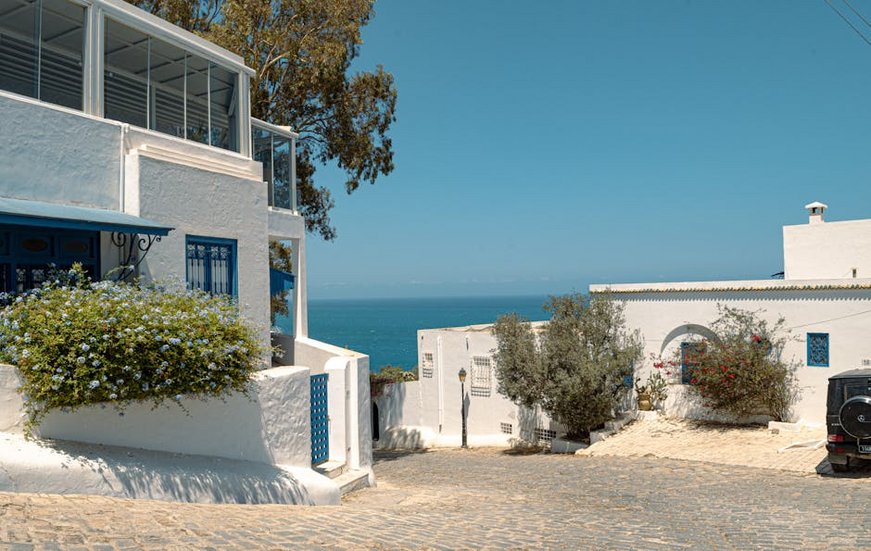
Alt: “sidi-bou-said-white-buildings-blue-doors-mediterranean-view”
Tunisia Sidi Bou Said White Village – Planning Your Trip
Successful visits to this picturesque destination require understanding seasonal patterns and logistical considerations. Spring and autumn provide optimal conditions with comfortable temperatures and manageable crowds. Winter offers quieter experiences though some facilities may reduce operating hours.
Budget planning should account for Tunisia’s dual currency system where euros often provide better value than dinars for tourists. Credit cards work reliably in established businesses while cash remains essential for smaller vendors. Accommodation prices vary significantly between standard hotels and traditional guesthouses.
Cultural preparation involves learning basic French or Arabic phrases since English proficiency remains limited outside tourist areas. Dress codes suggest modest attire respecting local customs particularly when visiting religious sites. These considerations ensure respectful and enjoyable interactions.
Best Time to Visit Sidi Bou Said
Peak season runs from March through May when temperatures range 18-25°C (64-77°F) with minimal rainfall. These months offer ideal conditions for photography and outdoor exploration. Hotel rates increase approximately 30% during this period requiring advance reservations.
Shoulder seasons in September-November provide similar climate benefits with fewer visitors and lower prices. Summer months June-August bring intense heat reaching 35°C (95°F) making daytime exploration challenging. Winter visits December-February require warm layers for temperatures dropping to 8°C (46°F).
Budget Planning and Costs
Travel expenses vary based on accommodation style and dining preferences.
Essential Preparation Checklist
Packing should include comfortable walking shoes, sun protection, and modest clothing covering shoulders and knees. Photography equipment benefits from polarizing filters to enhance blue tones and wide-angle lenses for narrow streets. These items improve comfort and capture quality.
Documentation requires valid passports with at least six months remaining validity for most Western nationalities. Tourist visas typically granted on arrival for 90-day stays though requirements vary by country. Travel insurance covering medical evacuation provides essential protection.
Top Attractions and Activities
Sidi Bou Said offers diverse experiences beyond its photogenic streets and architecture. The village serves as gateway to broader Tunisian cultural and historical sites. Visitors typically combine exploration here with nearby Carthage ruins and the Bardo Museum collections.
Artistic heritage appears in numerous galleries showcasing local painters and craftspeople. Traditional workshops demonstrate ceramic production using methods unchanged for generations. These cultural elements provide depth beyond superficial tourism.
Must-See Highlights
Café des Nattes represents the village’s most famous establishment with its traditional floor seating and mint tea service. The café dates to the 17th century and maintains authentic atmosphere despite tourist popularity. Visit during mid-morning hours to avoid peak crowds.
Ennejma Ezzahra palace showcases stunning Andalusian architecture and houses the Center for Arab and Mediterranean Music. Built between 1912-1922, the palace features intricate woodwork, tilework, and gardens overlooking the sea. Guided tours operate Tuesday through Sunday.
The village’s main viewpoint near the cemetery provides panoramic Mediterranean vistas particularly spectacular at sunset. This location offers unobstructed views across the bay toward Tunis and Carthage. Photography conditions optimize during golden hour.
Hidden Gems and Local Favorites
Dar Zarrouk restaurant serves authentic Tunisian cuisine in a family-run setting away from main tourist paths. Their couscous and seafood dishes utilize recipes passed through generations. Reservations recommended for dinner service.
Local artisan workshops in the village’s northern section welcome visitors observing traditional craft techniques. These include pottery making, textile weaving, and metalworking using methods preserved for centuries. Purchases directly support local families.
Photography Tips and Techniques
Early morning light provides soft illumination enhancing the white buildings and blue accents. Tripod use helps capture sharp images in narrow shaded alleys where light remains limited. These techniques produce professional-quality travel photography.
Composition should incorporate architectural details like ornate door knockers and wrought iron window grilles. Including local residents in scenes adds human interest and scale. Respectful photography involves seeking permission before capturing portraits.
Practical Travel Information
Transportation options include Tunis-Carthage International Airport located 15 kilometers away with regular flights from European hubs. Taxi services from the airport cost approximately $15-20 while shared louages (minibuses) offer budget alternatives at $3-5 per person.
Accommodation ranges from international chain hotels in nearby Tunis to traditional guesthouses within the village itself. Staying overnight provides unique opportunities to experience quieter mornings and evenings after day-trippers depart. These overnight stays enhance cultural immersion.
| Category | Options/Features | Price Range (USD) |
|---|---|---|
| Budget Accommodation | Hostels with shared facilities, basic guesthouses, limited amenities | $25-45 nightly |
| Mid-Range Hotels | Private rooms with en-suite bathrooms, breakfast included, central locations | $60-100 nightly |
| Luxury Properties | Boutique hotels with sea views, swimming pools, spa services, fine dining | $120-200 nightly |
| Transportation | Taxis, rental cars, louage shared minibuses, Tunis light rail system | $3-50 daily |