Nepal Everest Climbing Season Start and Summit Guide
The Nepal Everest climbing season start is a tightly defined window, historically opening in April and peaking in May. This timeframe is dictated by the Himalayan jet stream, which shifts northward, providing a precious period of relatively stable weather, warmer temperatures, and reduced hurricane-force winds on the upper mountain. Your summit bid hinges on aligning your entire expedition with this short seasonal opportunity, requiring permits, physical readiness, and logistics to converge perfectly for a successful ascent of the world’s highest peak.
Essential Everest Climbing Information
The climbing season on Everest is not a casual suggestion but a critical safety parameter. Mountaineering authorities and experienced Sherpa guides base all logistical planning on decades of meteorological data, which consistently points to a narrow spring window. The primary factor is the movement of the subtropical jet stream, whose winds can exceed 200 mph at the summit, making climbing impossible outside the calm period.
Access to the mountain is strictly controlled by the Government of Nepal’s Ministry of Tourism. All climbers must obtain a climbing permit issued in their name, a process handled by their chosen expedition operator. Independent climbing is not permitted, and all teams must operate through a licensed Nepali company, ensuring adherence to safety protocols, environmental regulations, and providing vital economic support to the local guiding community.
Understanding the Summit Window
This brief calm is what climbers refer to as the “summit window.”
- The summit window typically lasts 7-14 days in May, characterized by high pressure and winds below 30 mph, though conditions can change rapidly.
- Expedition leaders monitor multiple weather forecasting services to pinpoint the exact 2-3 day period for their team’s final push from Camp 4 to the summit.
- Missing this window due to illness, weather, or slow acclimatization often means the end of a climber’s summit attempt for that season, as waiting for the next possible window is usually not feasible.
- Budget Option ($40,000-$45,000): Typically includes a basic guided service, shared tents at high camps, and a higher client-to-guide ratio. This option often involves joining a larger team and may have fewer included luxuries at Base Camp.
- Standard Guided Service ($55,000-$70,000): The most common package for international climbers. This includes a 1:1 Sherpa guide, personal high-altitude climbing equipment rental, private tent at higher camps, ample oxygen bottles, and comfortable Base Camp facilities with catering.
- Full-Service Luxury Expedition ($85,000-$120,000+): Offers maximum support, including a larger personal Sherpa team, the most experienced Western guides, state-of-the-art equipment, premium food, extensive communication options, and enhanced safety resources like hyperbaric chambers.
- Nepal Tourism Board
- Alan Arnette – Everest Climbing Analyst
Historical Context and Climbing Protocol
Modern Everest climbing is built upon a legacy of exploration and tragedy. The first confirmed ascent by Sir Edmund Hillary and Tenzing Norgay in 1953 occurred in late May, setting the historical precedent for the spring season. Today, the route from the Nepal side follows the South Col route, established by that historic expedition and refined over decades.
Climbing protocol is rigorous, emphasizing a slow, staged acclimatization process. Teams spend weeks rotating between higher camps and returning to lower elevations, allowing their bodies to produce more red blood cells. This “climb high, sleep low” method is non-negotiable for preventing life-threatening altitude illnesses like HAPE or HACE, which remain leading causes of death on the mountain.
The Role of the Sherpa Community
The success and safety of any Everest expedition are intrinsically linked to the Sherpa people. These expert high-altitude climbers are responsible for the most dangerous work: fixing miles of ropes through the Khumbu Icefall, establishing camps, carrying heavy loads of oxygen and supplies, and guiding clients. Their unparalleled knowledge of the mountain’s moods and terrain is invaluable.
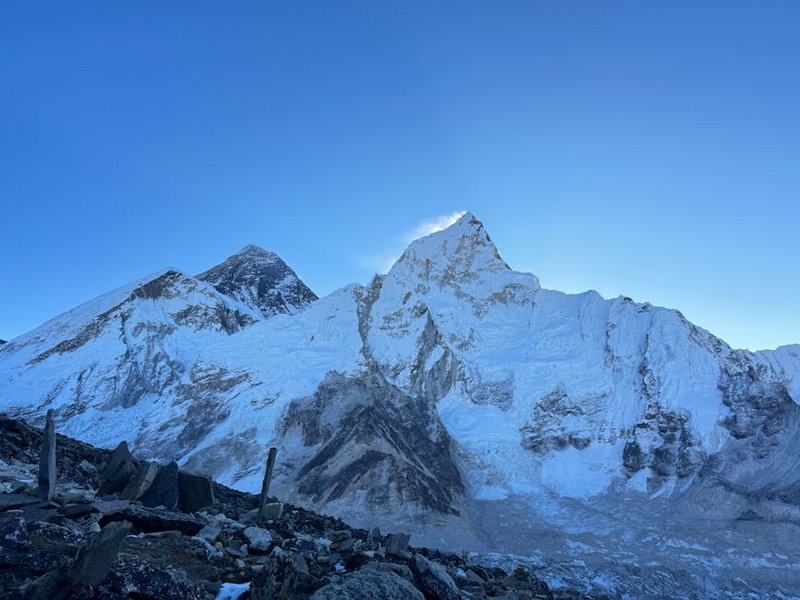
Alt: “everest-base-camp-khumbu-glacier-spring-expedition-tents”
Nepal Everest Climbing Season Start – Planning Your Expedition
Planning your Nepal Everest climbing season start requires booking your expedition 12-18 months in advance. Reputable operators fill their team rosters quickly, and the limited number of permits issued each spring creates high demand. Your preparation must be holistic, encompassing intense physical training, financial planning for a significant investment, and securing all necessary documentation, from a valid passport with six months’ validity to specific travel insurance covering high-altitude mountaineering.
The logistical chain is complex. Your operator will handle permit applications, liaison officer assignments, oxygen system procurement, and base camp infrastructure. As a climber, your focus must be on achieving peak cardiovascular endurance, leg strength, and mental resilience. Success is less about brute force and more about consistent pacing, efficient movement, and the mental fortitude to endure weeks of extreme discomfort and uncertainty.
Best Time to Climb Mount Everest
The primary spring season runs from mid-April to the end of May. Early April sees teams arriving at Base Camp (5,364m/17,598ft) to begin acclimatization. Summit pushes most commonly occur between May 10 and May 25. Temperatures during a summit bid can range from -25°C to -35°C (-13°F to -31°F) without wind chill, though it can feel significantly colder.
A secondary, smaller autumn season exists from late September to October. However, it is generally shorter, colder, and sees far fewer attempts due to increased snow accumulation and less predictable weather following the monsoon. Over 95% of all summit attempts occur in the spring, making it the definitive Nepal Everest climbing season start for most aspiring climbers.
Budget Planning and Costs
Climbing Everest is a major financial undertaking with costs covering permits, logistics, guides, and equipment.
Essential Preparation Checklist
Physical preparation should begin at least 12 months out. Your training must prioritize endurance through long-distance running or cycling (2+ hours), combined with heavy strength training for legs and core. Incorporating high-altitude simulation, either via hypoxia training masks or actual climbs on lower peaks, is highly beneficial for understanding how your body responds to low oxygen.
Documentation is critical. Secure a passport valid for six months beyond your return date. You must obtain a Nepali visa on arrival, but your expedition operator will handle the specific climbing permit. Purchase specialized travel insurance that explicitly covers mountaineering above 6,000 meters, emergency helicopter evacuation, and repatriation. Begin compiling your gear list early, as testing and breaking in boots and layers is essential.
Top Attractions and Climbing Route Details
While the summit is the ultimate goal, the journey through the Khumbu Valley is profoundly impactful. The trek to Base Camp itself passes through Sagarmatha National Park, a UNESCO World Heritage Site, and iconic villages like Namche Bazaar and Tengboche Monastery. These cultural touchpoints offer insight into the Buddhist traditions of the Sherpa people and provide vital acclimatization days before you even reach the ice.
The climbing route presents a series of iconic and formidable challenges. The Khumbu Icefall, a shifting maze of towering seracs and deep crevasses, is often considered the most dangerous section due to its inherent instability. Above it, the Western Cwm, Lhotse Face, and the Geneva Spur lead to the South Col, the launch point for summit bids. Each section demands specific techniques and extreme mental focus.
Must-See Highlights on the Ascent
The Khumbu Icefall, while hazardous, is a surreal landscape of blue ice sculptures. Climbers typically navigate it in the pre-dawn cold when the ice is most stable, using a network of pre-fixed ladders and ropes installed by the Icefall Doctors. The view from the top of the Icefall, looking into the expansive Western Cwm with the giant faces of Everest, Lhotse, and Nuptse surrounding you, is unforgettable.
Camp 2 (Advanced Base Camp) at 6,400m (21,000ft) offers a rare semi-permanent setup on the glacier. Higher up, the yellow band of sedimentary rock on the Lhotse Face and the stark, windswept desolation of the South Col at 7,950m (26,085ft) are defining landmarks. The final summit ridge features the famous Hillary Step, a near-vertical rock face, and leads to the small, sacred summit crown where the world falls away below you.
Cultural and Natural Landmarks
Do not rush the approach trek. Visiting the Tengboche Monastery to receive a blessing from a lama is a revered tradition for climbers seeking protection. The Sagarmatha National Park Visitor Center in Namche Bazaar provides excellent context on the region’s fragile ecosystem. Consider adding a few extra days after your expedition to visit quieter villages like Khumjung or Pangboche to experience Sherpa culture without the pre-climb pressure.
Acclimatization Rotations Strategy
The standard acclimatization schedule involves two or three “rotations” from Base Camp up to higher camps. A first rotation might go to Camp 1 (6,065m) and back. A second rotation typically goes to Camp 2 (6,400m) or Camp 3 (7,200m) before descending. These cycles are physically grueling but physiologically essential, forcing your body to adapt to the thinning air before the final summit push.
Practical Climbing Travel Information
All international climbers fly into Tribhuvan International Airport (KTM) in Kathmandu. You will spend several days here for official briefings, gear checks, and last-minute shopping before taking a short, scenic flight to Lukla Airport (LUA), renowned as one of the world’s most challenging airports. The trek from Lukla to Everest Base Camp takes approximately 8-10 days, allowing for proper altitude gain.
Accommodation before Base Camp consists of teahouses—basic lodges offering twin-share rooms and communal dining. At Base Camp, your expedition operator provides a personal tent, a communal dining/mess tent, and toilet facilities. Communication options have improved, with many teams offering paid Wi-Fi satellite systems, though bandwidth is limited and costly.
| Category | Options & Features | Price Range (USD) |
|---|---|---|
| International Flights | Major hubs: Doha, Dubai, Istanbul, Delhi. Often includes excess baggage fees for gear. | $1,500 – $3,000 |
| Kathmandu Hotels | Pre & post-expedition stays. Budget guesthouses to 5-star hotels like Yak & Yeti. | $30 – $300/night |
| Lukla Flight | Round-trip on Tara Air or Summit Air. Weight limits strictly enforced (10-15kg duffel + 5kg day pack). | $350 – $400 |
| Trekking Costs | Includes teahouse lodges, meals, park entry fees ($50), and TIMS card ($20) if not in package. | $40 – $60/day |