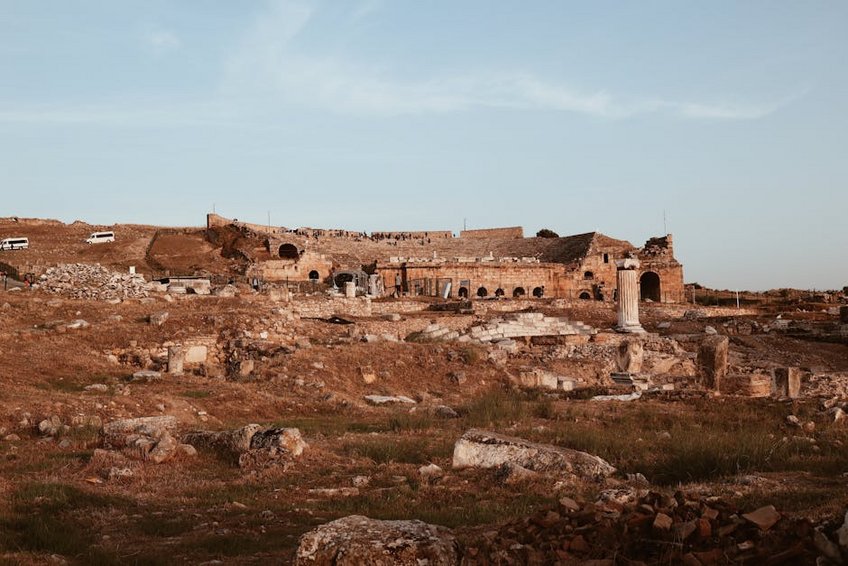
Ancient Theater Routes in Turkey: A Journey Through Time
Exploring the Ancient Theater Routes in Turkey transports you through millennia of Mediterranean history, where stone stages carved into hillsides once hosted Greek dramas and Roman spectacles. This network of remarkably preserved amphitheaters stretches from the Aegean coast to the rugged interior, offering a tangible connection to the artistic and political life of antiquity. This guide provides the essential details for navigating these archaeological wonders, from iconic Ephesus to the majestic Aspendos, ensuring you experience their acoustic marvels and historical significance.
Essential Historical Context
Turkey’s coastline and highlands are a palimpsest of ancient civilizations, each leaving their architectural mark. The Greeks established many coastal cities, constructing their theaters into natural hillsides to harness acoustics and provide seating for thousands. Following their conquest, the Romans expanded and renovated these structures, adding elaborate stage buildings, vaulted entrances, and marble embellishments for their own games and political assemblies.
The survival of these sites through earthquakes, conquests, and time is a testament to their robust engineering. Their locations along key trade and pilgrimage routes created a cultural circuit that thrived for centuries. Today, this circuit forms the backbone of a unique travel itinerary focused on performance art and empire.
Key Civilizations and Their Legacies
Understanding the layers of history enriches your visit. Three major cultures defined these structures.
- Hellenistic Greeks (4th-1st century BCE): Built the foundational semi-circular orchestra and cavea (seating). Theaters like those at Priene and Assos exemplify this era, designed primarily for spoken tragedies and comedies with clear sightlines to the sea or landscape.
- Romans (1st century BCE – 4th century CE): Transformed theaters into multi-use entertainment complexes. They added the towering *scaenae frons* (stage backdrop), underground tunnels for performers, and adapted structures for gladiatorial contests. The theaters in Hierapolis and Aspendos showcase peak Roman engineering.
- Byzantines and Seljuks (5th-15th century CE): Repurposed the sites as fortresses, marketplaces, or quarries. You can often see later walls built across the orchestra, adding another chapter to the site’s long story.
- Budget Traveler ($50-80/day): This covers hostels or guesthouses, local bus transport between cities, self-catering meals, and selective site entry. Prioritize 2-3 major theaters (Ephesus, Hierapolis) and use the museum pass for value. Travel by overnight bus to save on accommodation.
- Mid-Range Explorer ($100-180/day): Allows for comfortable boutique hotels, rental car for flexibility, meals at local restaurants, and guided tours at key sites. You can comfortably visit 5-7 theaters across two regions, such as the Aegean and Pamphylian coasts, with this budget.
- Premium Historical Journey ($250+/day): Enables stays in luxury hotels near archaeological parks, private guided tours with expert archaeologists, fine dining, and domestic flights to optimize time. This tier offers deep, unhurried exploration of both iconic and remote amphitheaters with expert context.
- Turkish Ministry of Culture and Tourism
- UNESCO World Heritage List – Turkey
Architectural Features to Recognize
Knowing what to look for turns ruins into a story. The cavea, or seating area, was divided into sections by horizontal walkways and vertical staircases. The wealthiest citizens sat in the front-row marble seats, often inscribed with their names.
The orchestra was the circular performance space at the base. In Greek theaters, it was used by the chorus, while Romans sometimes flooded it for mock naval battles. The stage building behind it originally housed scenery and provided an impressive architectural backdrop, fragments of which often remain.
The Acoustic Phenomenon
The legendary acoustics are not myth. The precise curvature of the seating and the stone materials create a natural sound amplification effect. A whisper or the dropping of a coin from the center of the orchestra can be heard clearly in the topmost rows.
This engineering marvel was achieved through mathematical precision, allowing performances to reach audiences of 10,000 or more without electronic aid. It’s a feature best tested during a quiet visit, away from large tour groups.
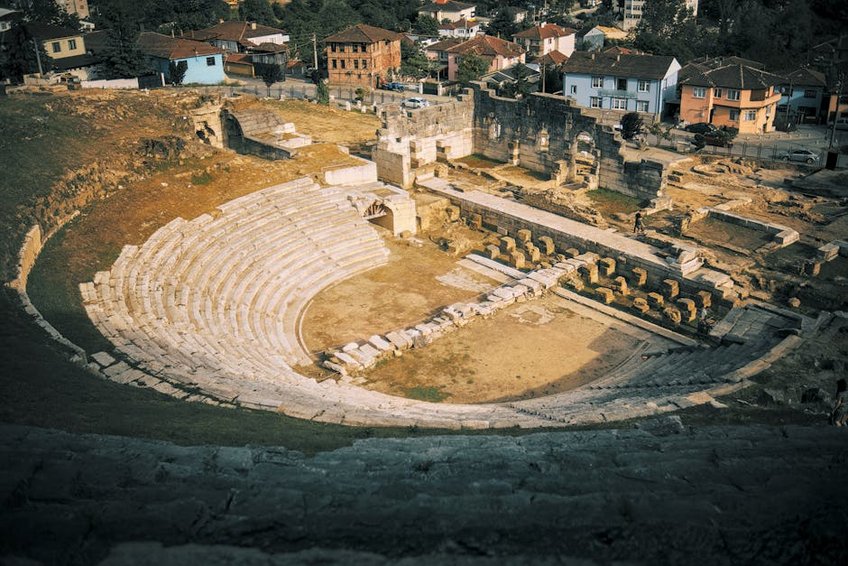
Alt: “ephesus-ancient-theater-turkey-marble-seats-acoustics”
Ancient Theater Routes in Turkey – Planning Your Trip
Successfully touring the Ancient Theater Routes in Turkey requires strategic routing and timing. The major sites are spread across western and southern Turkey, clustered in distinct regions like the Aegean, Mediterranean, and Central Anatolia. A focused regional approach often yields a richer experience than attempting to cover the entire country in one trip.
Your budget should account for archaeological site entry fees, intercity transport, and knowledgeable local guides at key locations. While major sites are well-signposted, the historical context provided by a guide brings the stones to life. Prioritize sites based on your interest in preservation level, scenic setting, or historical era.
Best Time to Visit the Ancient Theaters
The ideal months for this journey are April-May and September-October. During these shoulder seasons, daytime temperatures range from a comfortable 65-80°F (18-27°C), making extensive walking and climbing the steep cavea seats manageable. The summer sun from June to August can be intense, often exceeding 95°F (35°C), with minimal shade at the sites.
Winter visits from November to March offer stark beauty and few crowds, but be prepared for cooler weather of 40-55°F (4-13°C) and occasional rain. Some smaller, less-managed sites may have reduced access or muddy paths during this period. The outdoor concert season at venues like Aspendos runs from June to September.
Budget Planning and Costs
A trip focusing on these archaeological routes can be tailored to various budgets, with daily costs outlined below.
Essential Preparation Checklist
Packing correctly enhances comfort and safety. Sturdy, closed-toe walking shoes with good grip are non-negotiable for navigating uneven marble and stone steps. Bring sun protection: a wide-brimmed hat, high-SPF sunscreen, and sunglasses are essential, as shade is scarce. Carry a refillable water bottle; many sites have fountains at the entrance.
Ensure your passport has at least six months validity for the standard Turkish tourist e-Visa, which most Western nationals can obtain online before travel. Secure travel insurance that covers medical evacuation. Book accommodations in hubs like Selçuk (for Ephesus) or Antalya (for Aspendos) at least two months in advance for peak season visits.
Top Archaeological Sites and Theaters
The density of well-preserved theaters in Turkey is unparalleled. From the grand urban centers to secluded mountain settings, each venue tells a different story. The experience varies from walking in the footsteps of Apostles at Ephesus to attending a modern opera in the Roman arena at Aspendos, a continuity of purpose spanning 2,000 years.
Beyond the monumental structures, look for smaller details: Greek inscriptions on seat backs, Roman reliefs on the stage, and Byzantine crosses carved into columns. These layers reveal the site’s evolving use and offer a more personal connection to the countless individuals who have sat in these same seats.
Must-See Highlights
The Great Theatre of Ephesus is arguably the most iconic. This massive structure, capable of holding 25,000 spectators, overlooks the historic harbor street. It’s famously linked to biblical events and provides a profound sense of scale. Visit in the late afternoon for softer light and slightly fewer crowds.
The Theatre of Aspendos, near Antalya, is the best-preserved Roman theater in the world. Its nearly intact stage building and perfect acoustics are staggering. It remains a working venue; attending a performance here is a unforgettable highlight. The adjacent Roman aqueduct is also worth exploring.
The Theatre of Hierapolis, perched above the white travertine terraces of Pamukkale, offers a breathtaking fusion of natural and man-made wonder. The view from the top rows across the fertile Lycus Valley is spectacular, especially at sunrise.
Hidden Gems and Local Favorites
Venture off the main tourist trail to discover equally impressive but quieter sites. The Theater at Termessos sits at 1,000 meters (3,280 feet) altitude within a rugged national park. The hike to reach it is rewarding, and the setting among pine forests, with views to the sea, is uniquely dramatic.
The relatively small but exquisitely located Theater at Assos provides a more intimate experience. Hewn from the local andesite stone, it gazes directly over the Aegean Sea to the island of Lesbos. Its Hellenistic design offers a purer example of Greek theater architecture before Roman modifications.
Regional Theater Circuits
Grouping sites by region makes logistical sense. The Aegean Circuit includes Ephesus, Priene, Miletus, and Didyma. These can be toured from a base in Kusadasi or Selçuk over 3-4 days. The Pamphylian Circuit features Aspendos, Side, and Perge, easily accessible from Antalya.
The Central Anatolia or “Interior” Circuit includes the lesser-visited but impressive theaters at Aizanoi and Sagalassos. These require more travel time but offer a deep sense of discovery without the crowds, set amidst stunning mountainous landscapes.
Practical Travel and Logistics
Navigating between these ancient sites involves a mix of transport modes. While a rental car provides maximum flexibility for visiting remote locations, Turkey’s extensive and comfortable intercity bus network connects all major hubs efficiently. For longer distances, consider domestic flights between Izmir, Antalya, and Kayseri to save time.
Accommodation ranges from charming guesthouses in small towns adjacent to archaeological parks to full-service resorts in coastal cities. Staying within walking distance of a major site, like in Selçuk for Ephesus, allows for early morning or late evening visits when the sites are at their most magical and least crowded.
| Transportation Method | Best For | Approx. Daily Cost (USD) |
|---|---|---|
| Rental Car | Flexibility, remote sites like Termessos or Aizanoi | $40-70 (including fuel) |
| Intercity Bus | Budget travel between major hubs (Izmir-Antalya) | $15-30 per long journey |
| Private Driver/Guide | Premium comfort, expert commentary, door-to-door service | $200-350 |
| Local Dolmuş (Minibus) | Short hops from towns to nearby sites (e.g., Selçuk to Ephesus) | $1-3 per ride |