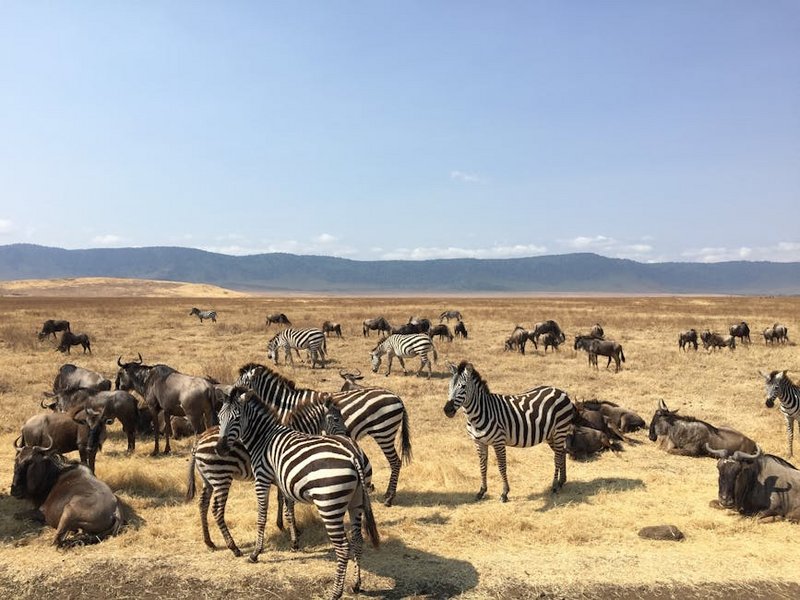
Tanzania Serengeti January Migration Season
Witnessing the Tanzania Serengeti January migration season offers a front-row seat to one of nature’s most dramatic events. The southern Serengeti plains transform into a vast, vibrant nursery as hundreds of thousands of wildebeest give birth. This guide provides essential details on tracking the herds, planning your safari logistics, and capturing this phenomenal wildlife spectacle.
Understanding the Great Migration in January
The annual Great Migration is a continuous, clockwise movement of over 1.5 million wildebeest and hundreds of thousands of zebra and gazelle. In January, the cycle reaches a critical and visually stunning phase known as the calving season. The herds concentrate on the nutrient-rich, short-grass plains of the Serengeti’s southern Ndutu region.
This concentration creates unparalleled game-viewing opportunities. Predators like lions, cheetahs, and hyenas are drawn to the area, capitalizing on vulnerable newborn calves. The spectacle is both brutal and beautiful, showcasing the raw circle of life on the African savanna.
The Calving Season Phenomenon
This period sees an explosive birth rate, with estimates of up to 8,000 wildebeest calves born daily. The synchronized birthing is a survival strategy, overwhelming predators with sheer numbers. You will see thousands of wobbly-legged calves taking their first steps within minutes.
Wildlife Dynamics and Predator Activity
Predator activity intensifies significantly during this period. Cheetahs are particularly visible on the open plains, using speed to target young animals. Lion prides often position themselves near the herds, waiting for strategic hunting opportunities.
Spotted hyenas work in clans to scout for birthing complications. This makes January one of the best times for observing predator-prey interactions. Your game drives will be filled with constant, dynamic action across the landscape.
Weather and Landscape Conditions
January falls within the short rainy season, known as the “Green Season.” Afternoon showers are common but brief, rejuvenating the plains and creating dramatic skies. Temperatures range from 60°F to 85°F (15°C to 29°C) during the day.
The landscape is lush, green, and dotted with wildflowers, providing stunning photographic backdrops. The rains keep dust levels low and refresh watering holes. This results in exceptionally clear air and vibrant colors for photography.
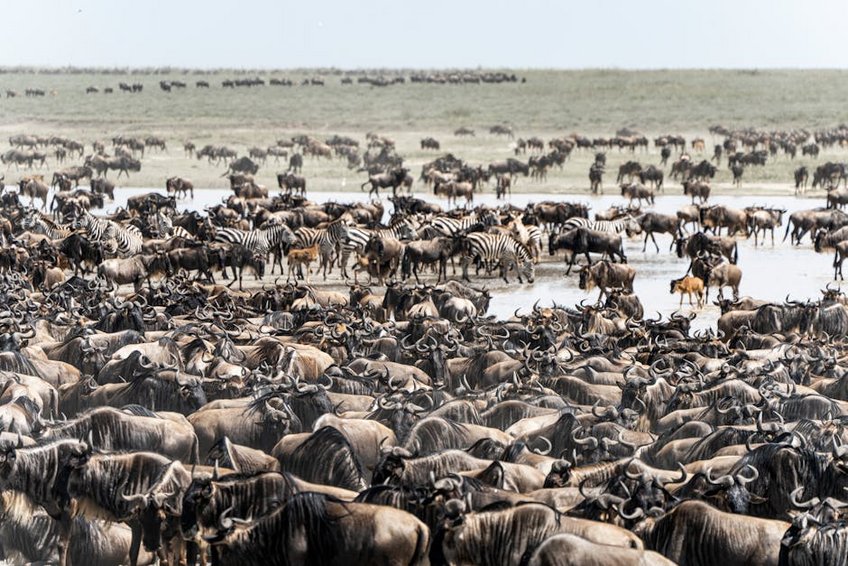
Alt: “serengeti-ndutu-plains-wildebeest-herds-january-calving-season”
Tanzania Serengeti January Migration Season – Planning Your Trip
Successfully experiencing the Tanzania Serengeti January migration season requires strategic planning around location, timing, and tour selection. The herds are specifically in the Southern Serengeti and Ndutu Conservation Area. You must book accommodations within or near this specific region to minimize daily drive times.
January is a popular month despite being the wet season, as the calving spectacle is a major draw. Secure your safari lodge or camp and internal flight transfers at least six to nine months in advance. This ensures access to the best-situated properties closest to the action.
Your itinerary should focus exclusively on the Southern Serengeti ecosystem. Allocating four to five nights here allows for multiple full-day game drives to track the herds. Combining this with the Ngorongoro Crater, which is accessible from the same region, makes a perfect itinerary combination.
Best Time to Visit for Calving Season
The peak calving period typically runs from late January through mid-February. For the absolute best chance to see newborns, plan your visit for the first three weeks of February. However, January offers the buildup to this peak, with fewer visitors and lower rates at many camps.
Early January sees the herds solidly settled on the short-grass plains. The landscape is supremely green from November and December rains. Visiting in early January can mean better lodge availability before the peak calving crowds arrive in force later in the month.
Budget Planning and Costs
A January safari involves three primary cost tiers, influenced by accommodation style and tour operator.
- Budget camping safaris using shared, public campsites cost $250-$400 per person per day. This includes vehicle, guide, park fees, and basic meals. You join a group and handle your own camping gear, offering the most affordable access to the migration.
- Mid-range lodge safaris with private vehicles run $500-$800 per person daily. This includes comfortable lodges, all meals, park fees, and dedicated guide services. It offers excellent value with reliable wildlife viewing and significant comfort.
- Luxury safari experiences at high-end permanent camps cost $1,000-$2,000+ per person daily. This includes premium guiding, gourmet food, spacious tents with ensuite facilities, and exclusive game drive areas. These camps often have prime locations right in the Ndutu region.
- Tanzania National Parks Authority (TANAPA)
- Official Serengeti National Park Information
Essential Preparation Checklist
Packing requires preparation for warm days, cool mornings, and potential rain. Essential items include neutral-colored clothing, a quality rain jacket, broken-in hiking boots, and high-SPF sunscreen. A pair of binoculars and a camera with a zoom lens (200-400mm minimum) are crucial for wildlife viewing.
Required documentation includes a passport valid for six months beyond your stay and a Tanzanian tourist visa, obtainable online or on arrival for $100 USD. Comprehensive travel insurance with medical evacuation coverage is non-negotiable. Book all necessary yellow fever and malaria prophylaxis consultations with a travel doctor 6-8 weeks before departure.
Top Safari Experiences and Activities
Game drives are the central activity, with both morning and afternoon excursions offering different perspectives. The golden light of early morning often reveals predators on the hunt. Afternoon drives can showcase the herds moving to new grazing areas under dramatic skies.
Many luxury camps offer the option of a full-day game drive with a packed lunch. This allows you to venture deeper into the Ndutu region without returning to camp at midday. It maximizes your time where the wildlife action is most intense.
Must-See Highlights
The Ndutu Lake area is a critical hotspot where animals congregate for water and minerals. Here, you can see vast lines of wildebeest and zebra stretching to the horizon. The lake itself attracts flocks of flamingos and other waterbirds, adding another layer to the scene.
The Gol Mountains and Naabi Hill Gate areas provide stunning viewpoints over the sprawling plains. These elevated spots are perfect for panoramic landscape photography. They also offer a sense of the immense scale of the herds moving below.
Visiting a traditional Maasai boma (homestead) provides cultural context to the natural spectacle. Engaging with local guides from Maasai communities offers unique insights into the ecosystem. This cultural exchange adds profound depth to your safari journey.
Photography Tips for the Season
The green grass and often cloudy skies create perfect, soft lighting conditions for photography. Use a beanbag or window mount to stabilize your long lens during game drives. Focus on capturing intimate moments like a calf nursing or a predator stalking, not just wide herd shots.
Patience is your greatest asset; staying with a particular herd or predator family often yields the best behavioral shots. Early morning and late afternoon provide the most flattering “golden hour” light. Always keep your camera protected from dust and potential rain showers with appropriate covers.
Balloon Safaris Over the Plains
A hot air balloon safari offers a breathtaking perspective on the migration’s scale. Floating silently at dawn, you witness the waking plains and the patterns of thousands of animals below. This activity requires booking well in advance and costs approximately $500-$600 per person.
The flight typically lasts about an hour, culminating in a champagne breakfast in the bush. It is a spectacular, albeit premium, addition to the standard safari experience. The view of the endless herds from the air is truly unforgettable.
Practical Travel Information and Logistics
International travelers typically fly into Kilimanjaro International Airport (JRO) near Arusha or Julius Nyerere International Airport (DAR) in Dar es Salaam. From there, you connect to the Serengeti via a scheduled domestic flight to a local airstrip like Ndutu or Seronera. These small-plane flights are scenic and save considerable overland travel time.
Overland travel from Arusha to the Southern Serengeti is possible but involves a full day of driving on rough roads. This option is more tiring but can be more economical for longer, multi-park itineraries. Most visitors opt for the time-saving convenience of domestic flights.
| Accommodation Type | Location & Features | Price Range (USD per night) |
|---|---|---|
| Luxury Tented Camp | Ndutu region, ensuite bathrooms, expert guides, private vehicles | $800 – $2,000+ |
| Mid-Range Lodge | Near Ndutu or Seronera, swimming pool, restaurant, group game drives | $400 – $800 |
| Mobile Migration Camp | Moves with the herds, authentic safari experience, shared facilities | $600 – $1,200 |
| Standard Safari Lodge | Central Serengeti, reliable service, good value, further from Ndutu | $250 – $500 |