Swiss Alps Train Routes: Engineering Marvels Through Alpine Splendor
Swiss Alps train routes represent one of the world’s most spectacular transportation networks, connecting remote villages with soaring peaks through tunnels, bridges, and high mountain passes. The system combines historic cogwheel railways, modern panoramic trains, and efficient regional services that operate with legendary Swiss precision across cantons like Bern, Graubünden, and Valais. This guide provides the essential planning details, seasonal advice, and route-specific insights you need to craft your perfect alpine rail journey, from luxury Glacier Express trips to independent regional explorations.
Understanding Swiss Alpine Rail Travel
Switzerland’s rail network is operated primarily by Swiss Federal Railways (SBB/CFF/FFS), with numerous private companies running specific scenic lines like the Bernina Express or Jungfrau Railway. The entire system is fully integrated, meaning you can use a single ticket or pass across nearly all operators. Train travel here isn’t merely transportation; it’s a core part of the Swiss travel experience, with carriages designed for maximum views and schedules synchronized with postal bus connections to reach trailheads.
Swiss trains are famously punctual, clean, and comfortable, with most major lines offering onboard dining or at least a refreshment cart. The network’s engineering is extraordinary, overcoming gradients of up to 48% on cogwheel sections and navigating spiraling tunnels inside mountains. For travelers, this means you can design itineraries that combine several iconic journeys, like linking the GoldenPass Line with the Gotthard Panorama Express, all within a coherent, stress-free system.
Core Network and Key Operators
Navigating the different companies simplifies trip planning. Here are the primary operators you’ll encounter.
- Swiss Federal Railways (SBB): The national backbone, operating most intercity trains and regional services that connect major hubs like Zurich, Bern, and Interlaken with gateway towns.
- Rhätische Bahn (Rhaetian Railway) – Official RhB Site: Runs the UNESCO-listed Bernina and Albula lines in Graubünden, including the Glacier Express and Bernina Express.
- Matterhorn Gotthard Bahn (MGB): Operates the legendary Glacier Express route from Zermatt to Disentis and the stunning Furka Oberalp line.
- Jungfrau Railways: Manages the ascent to the Jungfraujoch – Top of Europe, Europe’s highest railway station at 3,454 meters.
- Budget Traveler ($80-120/day): Rely on a Swiss Half-Fare Card, booking point-to-point tickets in advance via the SBB app for “Supersaver” discounts. Stay in hostels or budget hotels near stations, and pack picnics from grocery stores like Coop or Migros for onboard meals.
- Mid-Range Explorer ($150-250/day): Invest in a consecutive-day Swiss Travel Pass for 4-8 days of unlimited travel. Book private rooms in mid-range hotels or B&Bs in towns like Spiez or Brig. Enjoy occasional onboard dining in the restaurant car for a splurge.
- Luxury Experience ($350+/day): Opt for a Swiss Travel Pass Flex First Class, guaranteeing front-row seats in panoramic carriages. Book “Excellence Class” on the Glacier Express for premium service. Stay at iconic hotels like the Beau-Rivage Palace in Montreux or Badrutt’s Palace in St. Moritz, arranging private transfers.
- Swiss Federal Railways (SBB) Official Site
- Switzerland Tourism Official Portal
- Rhätische Bahn (Rhaetian Railway)
The Swiss Travel Pass Ecosystem
Various passes offer unlimited travel and are essential for cost-effective exploration. The Swiss Travel Pass provides unlimited travel on trains, buses, and boats, plus free admission to over 500 museums and up to 50% off on mountain railways. For dedicated train enthusiasts, the Swiss Travel Pass Flex offers the same benefits but for a select number of days within a month.
Alternatively, the Half-Fare Card grants 50% discount on all standard tickets for one month, ideal if you plan fewer travel days. Regional passes, like the Berner Oberland Pass or the Tell-Pass in Central Switzerland, offer unlimited travel within specific scenic areas and often include mountain transport. Your choice depends entirely on your itinerary’s geographic focus and travel pace.
Seasonal Considerations for Alpine Rail Travel
Each season transforms the alpine landscape and the train travel experience. Summer (June-September) offers long days, green meadows, and access to all high-altitude lines, with temperatures ranging from 50-75°F (10-24°C). This is peak season, so booking seats on panoramic trains well in advance is crucial.
Winter (December-March) creates a snow-blanketed wonderland, perfect for Christmas market trips and ski connections, with temperatures between 20-35°F (-7 to 2°C). Spring (April-May) and autumn (October-November) are shoulder seasons with fewer crowds, potential for lower fog, and stunning autumn foliage, though some high mountain routes may have reduced schedules.
Alt: “glacier-express-red-train-crossing-alpine-viaduct-snow”
Swiss Alps Train Routes – Planning Your Journey
Crafting your alpine rail itinerary requires balancing iconic journeys with logistical practicality. Start by identifying your “must-ride” routes, then map them geographically to minimize backtracking. A classic week-long circuit might include the Glacier Express from Zermatt to St. Moritz, the Bernina Express to Tirano, and regional trains through the Bernese Oberland. For shorter trips, focus on one region, like spending three days exploring the Jungfrau region’s network from a base in Interlaken or Wengen.
Booking reservations is mandatory for panoramic trains like the Glacier Express, Bernina Express, and Gotthard Panorama Express, and should be done months ahead for summer and winter holiday periods. For regular InterCity (IC) and regional trains, reservations are optional and rarely needed, offering maximum flexibility. Always check engineering works, especially in shoulder seasons, as essential tunnels like the Lötschberg Base Tunnel occasionally close for maintenance.
Best Time for Scenic Alpine Train Travel
The optimal period for clear views and full route availability is between mid-June and late September. Daytime temperatures in valley stations average 65-75°F (18-24°C), while mountain passes may be 40-55°F (4-13°C). This window guarantees all high-altitude lines, like the Gornergrat Railway or Jungfraubahn, are operating at full frequency. July and August are the busiest, so book accommodation and train reservations at least three months prior.
For winter magic with fewer crowds, target January (after New Year) or March. You’ll experience snowy landscapes under crisp blue skies, with temperatures from 15-30°F (-9 to -1°C) in the mountains. The Glacier Express and Bernina Express run year-round, offering stunning winter panoramas. Note that daylight hours are shorter, so plan to take morning trains for the best photography light.
Budget Planning for Alpine Rail Adventures
Train travel in Switzerland is exceptional but requires smart budgeting. Here is a typical cost breakdown.
Essential Preparation Checklist
Packing correctly ensures comfort and adaptability. Essential items include layered clothing for rapidly changing mountain weather: a moisture-wicking base layer, fleece or down mid-layer, and a waterproof/windproof shell. Sturdy, comfortable shoes are vital for exploring station towns. Don’t forget a universal power adapter (Switzerland uses Type J plugs), a portable power bank, and a high-quality water bottle to refill at station fountains.
Digitally, download the indispensable SBB Mobile app for real-time schedules, platform information, and mobile ticketing. Ensure you have digital or physical copies of all reservations and your travel pass. Consider purchasing a local SIM card (available at airports and major stations) for seamless connectivity, as many trains offer free Wi-Fi but signal can be intermittent in remote valleys.
Iconic and Scenic Train Routes
Switzerland’s most famous lines are engineering marvels offering unparalleled vistas. The Glacier Express, often dubbed the “slowest express train in the world,” traverses 291 bridges and 91 tunnels during its 8-hour journey from Zermatt to St. Moritz. The Bernina Express, a UNESCO World Heritage route, climbs from icy glaciers to palm-lined plazas in Italy without using a single cogwheel, reaching its apex at the Bernina Pass (2,253 meters).
Beyond these giants, the GoldenPass Line connects Lake Geneva with Lake Lucerne via the verdant Pays-d’Enhaut and the classic resort of Gstaad. The Gotthard Panorama Express combines a historic paddle-steamer cruise on Lake Lucerne with a train ride through the original Gotthard Tunnel. Meanwhile, regional gems like the Zentralbahn’s line from Interlaken to Lucerne offer equally stunning views without the reservation fuss or premium price tag.
Must-Ride Panoramic Journeys
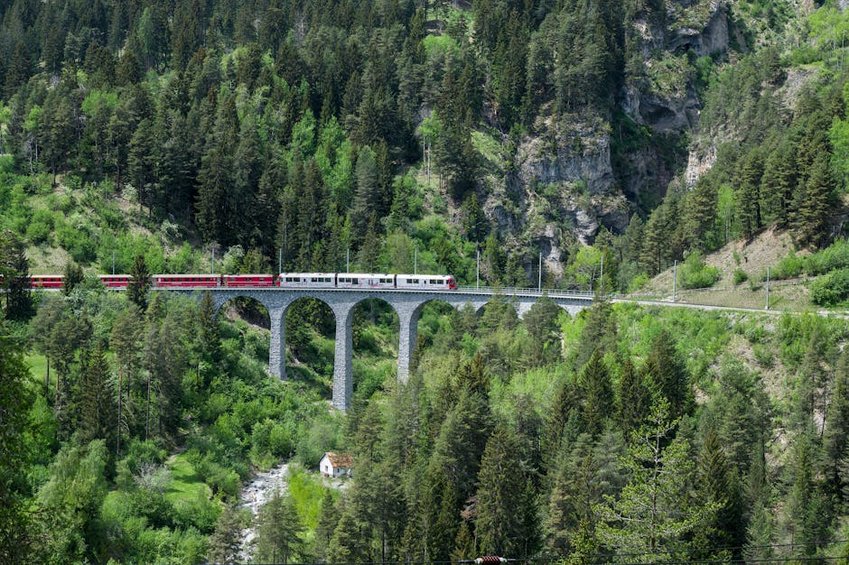
The Glacier Express (Zermatt – St. Moritz) is the quintessential alpine rail experience. The journey showcases the Oberalp Pass, the Rhine Gorge (Swiss Grand Canyon), and the Landwasser Viaduct. Book seats on the right side (direction St. Moritz) for the best views of the viaduct. The onboard multi-course lunch with Swiss wine is a worthy splurge, costing around 45 CHF (approx. $50).
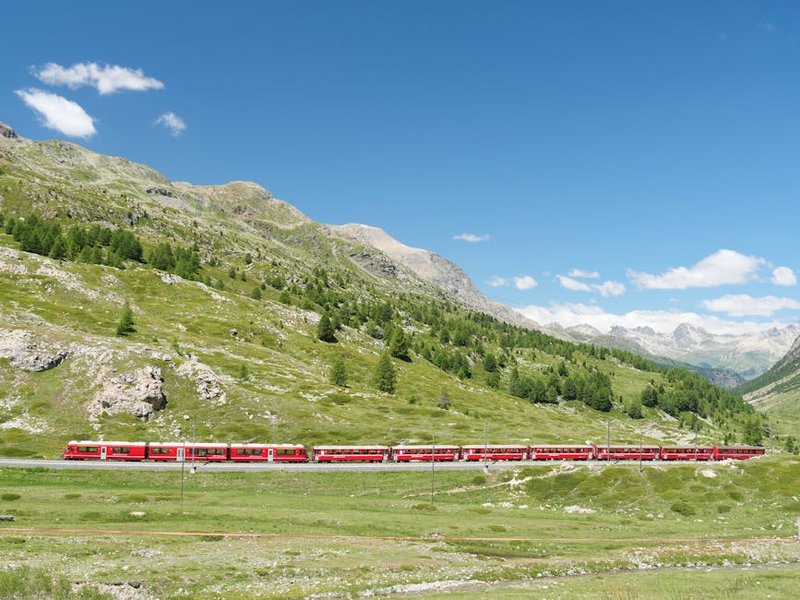
The Bernina Express (Chur – Tirano, Italy) is a UNESCO masterpiece. Its highlights include the spiral Brusio Viaduct, the Morteratsch Glacier, and the dramatic descent into Poschiavo. Sit on the left side heading to Tirano for the most dramatic cliff-side views. In Tirano, you can connect with a bus to Lugano, creating a spectacular cross-country loop back into Switzerland.
Regional Gems and Mountain Ascents
Don’t overlook shorter mountain railways that provide access to iconic viewpoints. The Gornergrat Bahn from Zermatt is the world’s first fully electric cog railway, delivering breathtaking face-to-face views of the Matterhorn. The Jungfraubahn to the Jungfraujoch tunnels through the Eiger and Mönch mountains to a high-altitude scientific wonderland. For a less crowded alternative, the Schynige Platte Railway from Wilderswil offers classic views of the Eiger, Mönch, and Jungfrau trio over flower-filled alpine gardens.
In Central Switzerland, the Pilatus Railway from Alpnachstad is the world’s steepest cogwheel railway, with a maximum gradient of 48%. The Rochers de Naye railway from Montreux climbs to a panoramic summit with a marmot park and stunning views over Lake Geneva. These lines are often covered by regional passes and make perfect half-day excursions from base towns.
Designing a Multi-Route Itinerary
A brilliant 10-day circuit could start in Zurich, taking a train to Lucerne for the Gotthard Panorama Express to Lugano. From Lugano, a postal bus connects to Tirano to board the Bernina Express to Chur or St. Moritz. Next, take the Glacier Express from St. Moritz to Zermatt. Finally, travel from Zermatt to Interlaken via the Lötschberg car-transport train, exploring the Jungfrau region before returning to Zurich. This loop minimizes backtracking and showcases incredible diversity.
For a focused 5-day trip, base yourself in Interlaken. Dedicate one day to the Jungfraujoch, another to the Schynige Platte and a Lake Brienz cruise, and a third to a regional train trip to the capital, Bern. Use the remaining days for hiking from stations like Wengen or Grindelwald, easily reached by the frequent, integrated Bernese Oberland railway network.
Practical Travel and Logistics
Switzerland’s main international gateways are Zurich Airport (ZRH) and Geneva Airport (GVA), both with direct train stations located beneath the terminal. Trains depart frequently to city centers and major hubs; a ticket from Zurich Airport to Zurich Hauptbahnhof (main station) takes 10 minutes. For arrivals into Milan Malpensa (MXP) or Milan Centrale in Italy, direct trains connect to Swiss cities like Lugano, Basel, and Geneva, offering an alternative route into the alpine network.
Within Switzerland, the Swiss Travel System is impeccably organized. Major stations offer luggage lockers, tourist information offices, and a wide range of dining options. For large suitcases, consider the national luggage transfer service, which can send bags from airport to hotel for about 25-35 CHF per piece. This allows you to travel on scenic trains with just a daypack, maximizing comfort and mobility.
| Train Class | Key Features & Differences | Approximate Price Premium* |
|---|---|---|
| Second Class | Comfortable 4-seat compartments, large windows, power outlets at seats. Perfectly adequate for most travelers. | Base Fare |
| First Class | More spacious 3-seat compartments, quieter cabins, often at the ends of trains for better views, includes worktables. | +50-75% |
| Panoramic (e.g., Glacier Express) | Floor-to-ceiling curved windows, included audio guide, assigned seating. Reservation fee mandatory. | Reservation: $30-50 + seat fee |
| Excellence Class (Glacier Express) | Separated premium carriage, exclusive multi-course meal with wine pairing, dedicated attendant, champagne welcome. | +$300-400 per person |