Turkey Cappadocia Spring Hiking: Discover Blooming Valleys and Ancient Trails
Spring in Cappadocia unveils a hiker’s paradise where mild weather, wildflower-covered paths, and surreal rock formations create an ideal outdoor adventure. Your Turkey Cappadocia spring hiking journey offers moderate temperatures between 50-68°F (10-20°C), perfect for exploring deep valleys and ancient cave cities without summer crowds. This guide details trail secrets, seasonal packing, cultural etiquette, and logistics for a seamless trek through Turkey’s most iconic landscape.
Essential Cappadocia Hiking Information
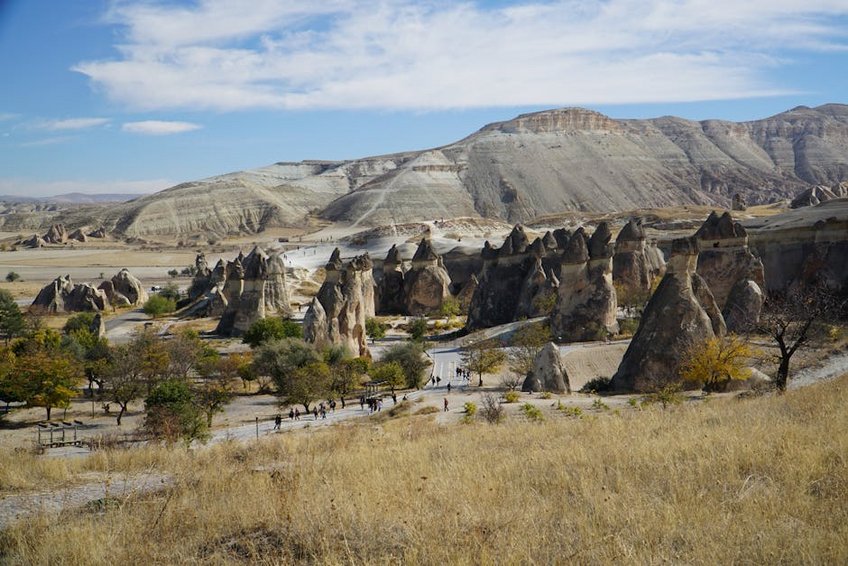
Cappadocia’s unique geology results from volcanic eruptions millions of years ago, eroded into fairy chimneys, caves, and valleys. The region spans roughly 5,000 square kilometers in central Turkey, with Göreme as the central hub for trails. Spring brings renewed greenery and comfortable conditions before the summer heat intensifies across the plateau.
Historical layers add depth to every hike, with early Christian communities carving churches and homes directly into the soft tuff rock. These sites, like those in Göreme Open-Air Museum, are often visible from trails. Understanding this context enriches your connection to the landscape beyond its physical beauty.
Understanding the Spring Climate
Spring weather shifts noticeably from March to May, requiring layered clothing for variable conditions. Daytime temperatures average 55-68°F (13-20°C) in April, but mornings can dip to 41°F (5°C). Evenings remain cool, so packing a warm jacket is essential for comfort after sunset.
Rainfall decreases as spring progresses, with April seeing around 2 inches (50 mm) spread over several days. May offers drier trails and longer daylight hours for extended exploration. Always check forecasts, as sudden showers can make clay paths slippery temporarily.
Key Geographical Features
Cappadocia’s hiking terrain includes valleys, plateaus, and rocky outcrops with distinct characteristics. The soft volcanic rock allows for intricate erosion patterns, creating the famous fairy chimneys and hidden caves. Trails often navigate between these formations, offering constant visual interest.
- Valley Systems: Rose, Love, and Pigeon Valleys provide interconnected routes with varying difficulty levels and panoramic viewpoints accessible within a day.
- Elevation Changes: Most trails range from 3,300 to 3,900 feet (1,000 to 1,200 meters) above sea level, requiring moderate fitness but no technical climbing skills.
- Trail Markings: Official paths are marked with paint stripes, but carrying a GPS app or map prevents disorientation in less frequented sections.
- Budget travelers spend $50-80 daily using hostels, self-catering, and public buses. Entrance fees to sites like Göreme Open-Air Museum cost $15, and grocery meals keep food costs under $10 per day.
- Mid-range explorers allocate $100-150 daily for cave hotel stays, restaurant meals, and a guided half-day hike. Comfortable accommodations with breakfast average $60-100 nightly, while guided group tours run $30-50 per person.
- Luxury experiences exceed $200 daily with boutique cave suites, private guided treks, and fine dining. Premium hotels offer spas and panoramic terraces for $150-300 nightly, while private guides charge $80-120 for full-day customization.
- Turkish Ministry of Culture and Tourism
- Lonely Planet Cappadocia Travel Guide
- Cappadocia Regional Directorate of Culture and Tourism
Historical and Cultural Context
Human habitation in Cappadocia dates back to Hittite times, with later Christian communities expanding underground cities for protection. Many hiking routes pass near these historical sites, though some require separate entrance fees. Respecting these areas means staying on paths and not climbing on fragile structures.
Local villages like Çavuşin and Uçhisar integrate traditional life with tourism, offering glimpses into rural Turkish culture. Engaging with residents politely enhances your experience. Remember that many cave churches are still considered sacred spaces by local communities.
Planning Your Turkey Cappadocia Spring Hiking
Organizing your Cappadocia trekking adventure requires attention to seasonal timing, budget allocation, and physical preparation. Spring offers a sweet spot between winter chill and summer crowds, but advance bookings secure better rates. Your itinerary should balance popular trails with quieter alternatives to experience the region fully.
Accommodations fill quickly for April and May, especially cave hotels with valley views. Reserve your stay at least two months prior to arrival. Combining independent hiking with a guided tour for one day provides local insights while maintaining flexibility.
Best Time to Visit for Spring Hiking
Visit between early April and late May for optimal hiking conditions with blooming flowers and manageable tourist numbers. Early April sees fewer visitors and lower prices, with temperatures around 50-60°F (10-16°C). Mid to late May offers warmer days near 68°F (20°C) but requires earlier trail starts to avoid midday sun.
Shoulder seasons like late March or early June present viable alternatives with potential trade-offs. March may have residual cold snaps, while early June introduces hotter afternoons. Peak wildflower displays typically occur throughout April, creating photogenic trail conditions.
Budget Planning and Costs
Your hiking budget varies based on accommodation style, dining choices, and guided tour inclusions. Daily expenses can range from $50 to $200 per person excluding international flights.
Essential Preparation Checklist
Packing for spring conditions requires versatile layers, sturdy footwear, and navigation tools. Your daypack should include a lightweight jacket, sun protection, and at least 2 liters of water per person. Trail surfaces mix compact earth, gravel, and occasional rocky sections demanding reliable traction.
Documentation includes a passport valid for six months beyond your stay, as US and EU citizens receive a 90-day visa-on-arrival for Turkey. Travel insurance covering hiking activities is recommended, with policies starting around $50 for two weeks. Book hot air balloon rides months ahead if desired, as spring is peak season.
Alt: cappadocia-spring-valley-hiking-trail-wildflowers
Top Attractions and Hiking Activities
Cappadocia’s trail network connects natural wonders, historical sites, and photographic vistas across multiple valleys. Independent hiking allows freedom to set your pace, while guided options reveal hidden caves and local stories. Most trails are well-marked, but downloading offline maps prevents wrong turns in labyrinthine sections.
Combining several valleys in one day is feasible thanks to their proximity around Göreme. Start early to enjoy cooler temperatures and softer morning light for photography. Carry small cash for refreshments at trailside cafes, which accept both Turkish Lira and occasionally Euros.
Must-See Hiking Trails
Rose Valley delivers the quintessential Cappadocia experience with pink-tinged rock formations and hidden churches. The 4-kilometer (2.5-mile) loop from Göreme takes 2-3 hours at a leisurely pace, passing carved frescoes and vineyard terraces. Afternoon light enhances the rosy hues, making this a popular sunset route.
Love Valley features taller fairy chimneys and broader paths suitable for most fitness levels. Its 5-kilometer (3-mile) main trail connects to White Valley, allowing for longer combined hikes. Early mornings here offer solitude before tour groups arrive from nearby parking areas.
Ihlara Valley provides a different ecosystem with a river, lush vegetation, and cliff-side churches 100 kilometers from Göreme. The 14-kilometer (8.7-mile) canyon hike requires a full day including transportation. Entrance costs $5, and the cooler microclimate welcomes hikers even on warmer spring days.
Hidden Gems and Local Favorites
Zemi Valley remains less crowded while offering similar geological formations to popular spots. Access it via a faint path from Göreme’s northern edge, requiring careful navigation. Local shepherds sometimes guide visitors for small tips, sharing knowledge about the area’s history.
Pigeon Valley’s upper sections, beyond the main viewpoint, reveal ancient dovecotes carved into cliffs. These structures once collected fertilizer for vineyards, a practice dating back centuries. Exploring these areas involves some scrambling, so wear proper hiking shoes with ankle support.
Çavuşin Village trails connect to abandoned cave dwellings and a massive rock-cut church. The area feels authentically residential compared to more commercialized zones. Visit late afternoon when day-trippers have departed for quieter exploration.
Photography and Sunset Spots
Sunset Point in Göreme offers panoramic views over the town and surrounding valleys, accessible via a short uphill walk. Arrive one hour before sunset to secure a good spot, as it gets crowded. The warm evening light illuminates fairy chimneys, creating ideal conditions for landscape photography.
Uçhisar Castle’s summit requires a steep climb but rewards with 360-degree vistas across Cappadocia. Entry costs $3, and the site stays open until dusk. For alternative perspectives, hike the ridge behind the castle for free views with fewer people.
Red Valley’s sunset viewpoint is reachable via a 30-minute hike from the parking area. The setting sun casts intense red and orange tones across the rock formations. Bring a headlamp for the return walk, as darkness falls quickly after sunset.
Practical Travel Information
Navigating Cappadocia involves understanding regional transportation, accommodation types, and seasonal considerations. The nearest major airport is in Kayseri (ASR), 75 kilometers away, with direct transfers available. Local dolmuş (shared minibuses) connect towns cheaply but follow fixed schedules less frequently than in cities.
Staying in Göreme provides the most centralized access to trails, with Urgup and Uçhisar offering quieter alternatives. Cave hotels range from basic to luxurious, all featuring unique architecture. Booking platforms like Booking.com list numerous options, but verifying recent reviews ensures quality.
| Category | Options/Features | Price Range (USD) |
|---|---|---|
| Accommodation | Cave hotels, hostels, boutique guesthouses with breakfast | $20-300 per night |
| Guided Hiking Tours | Half-day group tours, full-day private guides, photography-focused treks | $30-120 per person |
| Local Transportation | Dolmuş minibuses, rental cars, airport shuttles, taxis | $5-60 per day |
| Dining & Food | Local kebap restaurants, cave dining experiences, street food simit | $10-50 per meal |