Pergamon Travel Guide: Unlocking Ancient Wonders in Modern Turkey
Exploring the ruins of Pergamon transports you directly into a powerful Hellenistic capital that once rivaled Alexandria and Antioch in cultural significance. Your Pergamon travel guide begins here, at an archaeological site where ancient engineering marvels like the steepest theater in the classical world meet the birthplace of parchment. This guide provides the essential logistics, historical context, and local tips you need to navigate the Acropolis, the Asclepion healing center, and the impressive museum collections effectively.
Pergamon’s Historical Significance
Founded in the 3rd century BCE, Pergamon became the capital of the Attalid dynasty, a Hellenistic kingdom that amassed immense wealth and cultural prestige. The city-state flourished as a major center of learning, medicine, and the arts, strategically positioned to control trade routes across Anatolia. Its influence was so profound that the famous Altar of Zeus, now housed in Berlin’s Pergamon Museum, became a defining symbol of Hellenistic artistry and power.
The city’s legacy extends beyond politics into science and scholarship. The Great Library of Pergamon, said to hold 200,000 volumes, directly competed with the Library of Alexandria. This rivalry famously led to the development of parchment (*charta pergamena*) when Egypt halted papyrus exports, giving the city its name to this writing material. The Asclepion medical center attracted seekers of healing from across the Roman world, blending spiritual and physical treatments.
Key Historical Periods and Rulers
Understanding the timeline clarifies what you see on the ground.
- Attalid Dynasty (282–133 BCE): Founded by Philetaerus, this period saw massive construction, including the Altar of Zeus, the Library, and the city’s defensive walls under rulers like Eumenes II.
- Roman Province (133 BCE onward): Bequeathed to Rome, Pergamon became the capital of the Asian province, receiving further Roman monuments like the Temple of Trajan and a redesigned Asclepion.
- Byzantine & Ottoman Eras: The city remained inhabited, its focus shifting to the medieval Seljuk and Ottoman structures visible in the modern town of Bergama below.
- Budget Traveler ($40-60/day): Stay in a local pension in Bergama, use public buses from Izmir, eat at lokantas (local cafeterias), and focus on the main archaeological ticket. This covers essentials but may skip guided tours.
- Mid-Range Traveler ($80-120/day): This allows for a comfortable hotel with AC, rental car or private transfers, a licensed guide for a half-day tour, and meals at good local restaurants. It offers the best balance of comfort and value.
- Luxury/Comfort Focus ($150+/day): Includes stays at the best boutique hotels with pools, private driver-guide services, fine dining featuring meze platters and grilled sea bass, and perhaps a side trip to the nearby archaeological site of Assos.
- Republic of Türkiye Ministry of Culture and Tourism
- UNESCO World Heritage Centre – Pergamon Listing
Archaeological Zones Overview
The site is divided into two main areas connected by a cable car. The Acropolis, perched on a 1,000-foot hill, contains the monumental heart of the ancient city. Here, you’ll find the renowned theater, the Temple of Trajan, and the foundations of the legendary Altar. The steep ascent rewards visitors with panoramic views of the Bakırçay Plain, illustrating why this was a defensible strategic capital.
Down in the valley, the Asclepion served as an ancient medical sanctuary and spa. This sprawling complex features a sacred spring, a theater, a library, and a long colonnaded treatment street. Meanwhile, the Red Basilica, a massive Roman temple later converted into a church, dominates the modern town center, showcasing architectural repurposing across millennia.
Modern Bergama: Gateway to Antiquity
The contemporary town of Bergama is an integral part of the visit, offering amenities and insights into Turkish daily life. Its bustling bazaar, Ottoman-era mosques, and traditional houses provide a living contrast to the ancient stones above. Staying here allows for early access to the sites and sampling authentic Aegean cuisine, from çöp şiş kebabs to fresh olives and local wines.
Alt: “pergamon-acropolis-ancient-theater-steep-hillside-turkey”
Pergamon Travel Guide – Planning Your Visit
A successful trip to this expansive UNESCO World Heritage site requires strategic planning due to its separate archaeological zones and the Turkish climate. Your Pergamon travel guide should prioritize visiting the Acropolis in the cooler morning hours before the sun reaches its peak. Allocate a full day to cover both the upper city and the Asclepion comfortably, with time for the Bergama Museum. Purchasing the combined museum pass saves money if you’re visiting multiple Turkish archaeological sites.
Comfortable, grippy walking shoes are non-negotiable for navigating the steep, uneven marble paths of the Acropolis. Carry more water than you think you’ll need, as shade is limited on the hilltop, and summer temperatures regularly exceed 95°F (35°C). The cable car (*teleferik*) saves a strenuous climb to the top, but check operating times as it may close for maintenance or wind.
Best Time to Visit Pergamon
The ideal visiting window is during the shoulder seasons of April to May and September to October. During these months, daytime temperatures are pleasant, ranging from 65–80°F (18–27°C), and the sites are less crowded. The landscape is green in spring, while autumn offers clearer skies for photography. These conditions make exploring the extensive outdoor ruins much more enjoyable.
Summer (June-August) can be intensely hot, with temperatures often soaring above 100°F (38°C). If you visit then, start your day at opening time (8:00 AM), focus on the Acropolis first, and retreat to the shaded Asclepion or museum in the afternoon. Winter visits are possible but less ideal, with cooler temperatures of 40–55°F (5–13°C) and a higher chance of rain making the stone paths slippery.
Budget Planning and Costs
Costs can vary based on travel style and season.
Essential Preparation Checklist
Pack sturdy hiking shoes, a wide-brimmed hat, high-SPF sunscreen, and a refillable water bottle. A lightweight scarf is useful for covering shoulders when entering mosques in Bergama. Bring a power bank for your phone, as you’ll use it for maps and photos all day. Download or screenshot your ticket confirmation and a map of the site, as cellular data can be spotty on the Acropolis.
Ensure your passport is valid for at least six months beyond your entry date. U.S., E.U., U.K., and Canadian citizens need an e-Visa for Turkey, which you should apply for online well in advance. Arrange travel insurance that covers medical evacuation. Book accommodation in Bergama at least a month ahead for peak season visits, as options are limited compared to major cities.
Top Attractions and Ancient Sites
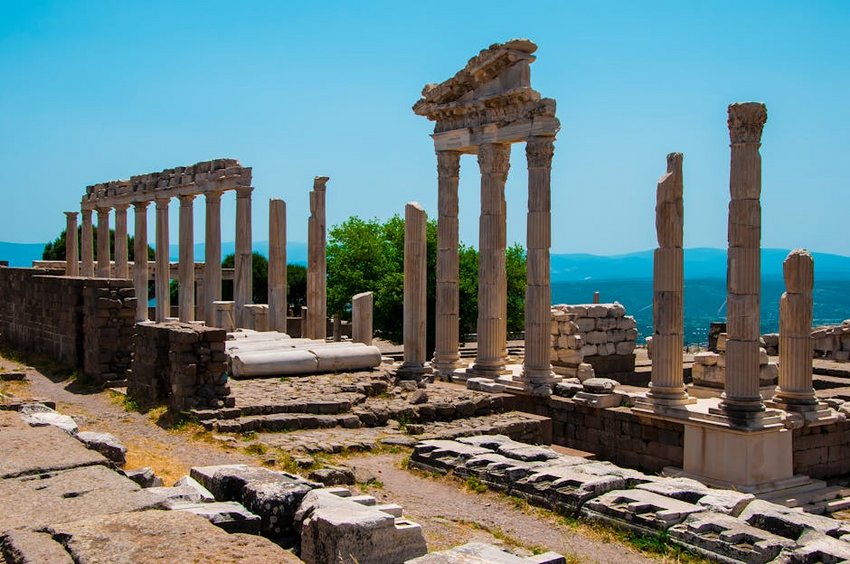
The Acropolis is the undeniable highlight, a masterpiece of urban planning on a dramatic hilltop. The theater, carved into the hillside at a staggering 80-degree incline, seats 10,000 and offers breathtaking views. Nearby, the foundations of the Altar of Zeus mark where the famous structure once stood, its friezes now in Berlin. The Temple of Trajan, partially reconstructed with marble columns, showcases imperial Roman architecture at its most imposing.
The Asclepion provides a different experience as a peaceful sanctuary dedicated to the god of healing, Asclepius. Walk down the ancient Sacred Way to see the treatment rooms, the circular Temple of Asclepius, and the underground passage where patients slept for dream diagnosis. The complex includes a well-preserved Roman theater still used for performances, offering a tangible connection to its past purpose.
Must-See Highlights
The Pergamon Theater is the steepest from the classical world, and sitting in its seats is an unforgettable experience. The Temple of Trajan, dedicated to the Roman emperor and Zeus, features Corinthian columns restored to give a sense of its former scale. The Red Basilica (*Kızıl Avlu*), a massive 2nd-century CE temple to Egyptian gods in downtown Bergama, is one of the largest Roman structures still standing in Anatolia.
Do not miss the Bergama Museum in town. It houses stunning mosaics, sculptures from the Acropolis and Asclepion, and artifacts that provide crucial context missing from the open-air sites. The museum’s collection helps visualize daily life in ancient Pergamon, complementing the monumental ruins. Allow at least 90 minutes to appreciate its well-curated exhibits.
Hidden Gems and Local Favorites
Venture to the lower slopes of the Acropolis to find the Sanctuary of Demeter, a quieter terrace with beautiful views and remnants of a temple dedicated to the goddess of harvest. In Bergama, seek out the historic Ottoman houses in the Şadırvan district and the 14th-century Kulaksız Mosque, which incorporates ancient spolia in its construction. These spots see far fewer tourists.
For an authentic local experience, visit the Bergama Bazaar on a weekday morning. Here, you can observe daily life and find traditional crafts like hand-woven carpets and kilims specific to the region. A short drive or taxi ride outside town leads to the ruins of Allianoi, a recently excavated Roman spa city now submerged, with its entrance area sometimes visible depending on water levels.
Exploring the Acropolis in Detail
Start your Acropolis tour at the Upper Agora, the city’s main public square. From there, proceed to the legendary Library site, which once stood just north of the agora. The remaining foundations hint at its former grandeur. Continue to the Royal Palaces area on the northern edge of the summit, offering the best vantage points over the surrounding plains and the modern city below.
The Arsenals and the extensive Hellenistic defensive walls demonstrate the city’s military prowess. The path along the walls provides exceptional photo opportunities. Finally, visit the Sanctuary of Athena, located near the library, which was part of the same cultural complex. Informational plaques across the site are helpful, but a guidebook or audio guide significantly enriches the experience.
Practical Travel Information
Pergamon is located near the modern town of Bergama, approximately 60 miles (100 km) north of Izmir, Turkey’s third-largest city. Most international travelers fly into Izmir Adnan Menderes Airport (ADB), which has direct European connections. From Izmir, you can reach Bergama by rental car, private transfer, or public bus. The drive takes about 1.5 to 2 hours depending on traffic.
Accommodation ranges from basic guesthouses to a few charming boutique hotels, all located in Bergama. Staying in town is recommended for proximity to the sites, evening dining options, and the authentic local atmosphere. While day trips from Izmir or Çeşme are possible, they involve 3-4 hours of round-trip travel, leaving limited time at the ruins themselves.
| Category | Options/Features | Price Range (USD) |
|---|---|---|
| Budget Accommodation | Family-run pensions, basic rooms with shared bathroom, simple breakfast included, central location. | $25-45 per night |
| Mid-Range Hotels | Boutique hotels in restored houses, private bathrooms, air conditioning, rooftop terraces, enhanced breakfast. | $65-110 per night |
| Guided Tours | Licensed local guides for 3-4 hours, Acropolis & Asclepion focus, historical expertise, pickup in Bergama. | $80-120 per group |
| Daily Food Budget | Local kebabs, mezes, street food, bottled water, occasional restaurant meal. | $15-30 per person |