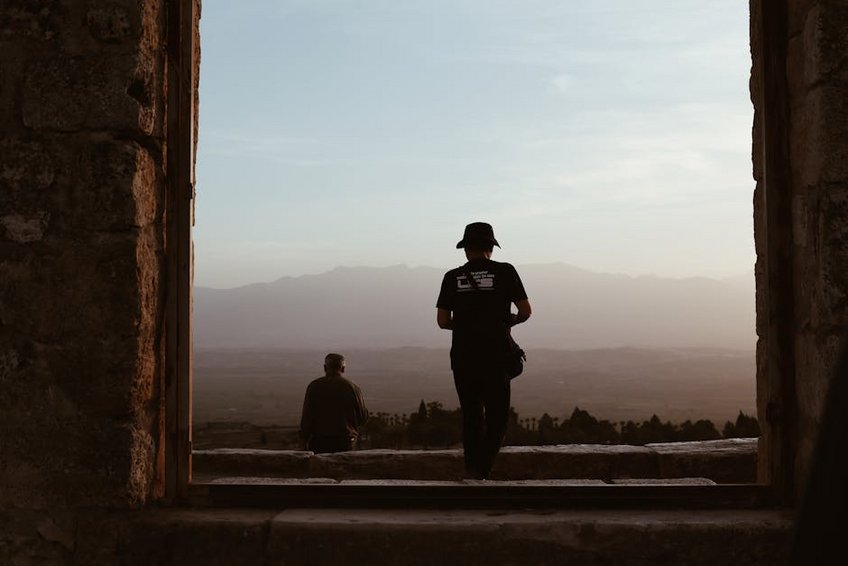
Pamukkale Travel Guide: Experience Turkey’s Cotton Castle Thermal Pools
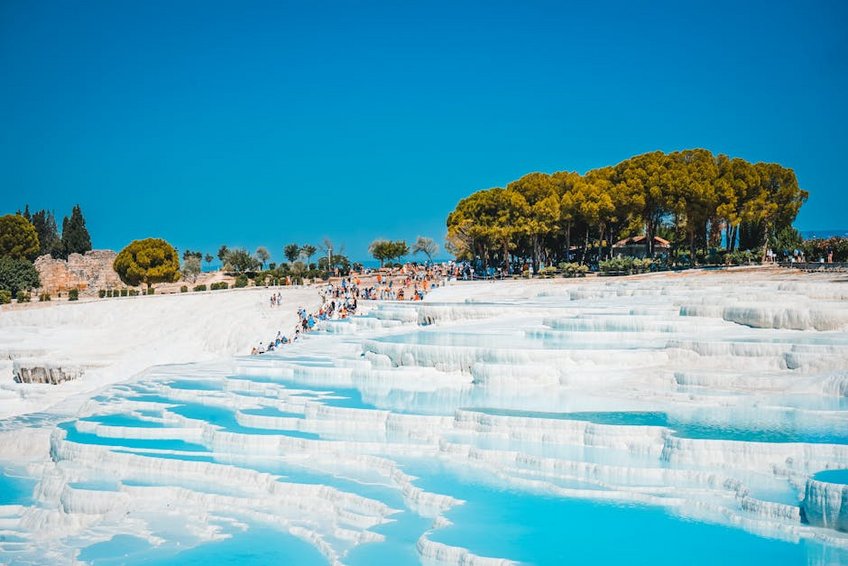
Pamukkale presents a surreal natural landscape in southwestern Turkey, where brilliant white travertine terraces hold warm, turquoise thermal waters. This UNESCO World Heritage site combines the geological wonder of the “Cotton Castle” with the ancient ruins of Hierapolis, offering a unique blend of nature and history. This guide provides essential planning details, accommodation tips, and cultural insights for your visit to this remarkable destination.
Understanding Pamukkale’s Natural and Historical Significance
Pamukkale, meaning “cotton castle” in Turkish, is a geological formation created by mineral-rich thermal springs. Over millennia, flowing water deposited brilliant white calcite on the mountainside, forming the iconic travertine terraces. The site receives over two million visitors annually, drawn to its warm pools and ancient city.
The adjacent ancient city of Hierapolis was founded in the 2nd century BC as a thermal spa. It flourished under Roman and Byzantine rule before earthquakes led to its abandonment. Today, the archaeological site and natural pools form a single, unforgettable experience. The water maintains a constant temperature between 35-36°C (95-97°F).
What Makes Pamukkale Unique
The experience stands apart for its combination of natural thermal bathing and historical exploration.
- The travertines are actively forming, with new layers of calcite deposited daily by the flowing thermal water, creating a constantly evolving landscape.
- The Cleopatra Antique Pool, also called the “swimming pool of the ancients,” allows you to swim amongst submerged Roman columns and marble capitals from earthquakes.
- Entry to the travertine terraces and Hierapolis ruins is combined on a single ticket, making it easy to explore both wonders in one visit.
- Budget: Hostels and basic pensions in Pamukkale village cost $20-40/night. Bus transport from Denizli, street food, and self-guided exploration can keep daily expenses around $40-50 per person, excluding the entrance fee.
- Mid-Range: Comfortable hotels with pools in Karahayıt or Pamukkale cost $60-100/night. Renting a car from Denizli, dining at local restaurants, and hiring a private guide for Hierapolis brings the daily budget to $80-120 per person.
- Luxury: Stay at a thermal spa hotel in Karahayıt for $150-300/night. Enjoy private transfers, gourmet meals, and guided historical tours. This tier offers the most comfort and convenience for a daily spend of $200+ per person.
- Turkish Ministry of Culture and Tourism – Museum Pass Info
- Lonely Planet – Pamukkale Travel Information
The Science Behind the Terraces
The thermal water originates from a spring on the plateau above, saturated with calcium carbonate. As the water cascades down the slope and cools, carbon dioxide degasses and the calcium carbonate precipitates as travertine. This process has created pools with rims that act as natural dams.
The water’s high mineral content is believed to have therapeutic properties, historically attracting visitors seeking relief. The flow is carefully managed to preserve the formations, with specific walking paths to prevent damage. Visitors must walk barefoot on the travertines to protect the delicate surface.
Hierapolis Archaeological Highlights
Beyond the pools, Hierapolis offers extensive ruins to explore. The remarkably intact Roman Theatre, seating 15,000, offers panoramic views. The sprawling Necropolis is one of the largest ancient cemeteries in Anatolia, with elaborate tomb types.
The Frontinus Street, the city’s main colonnaded avenue, and the remains of the Temple of Apollo provide further historical context. The Antique Pool requires a separate entrance fee but offers a unique swimming experience directly atop the ruins.
Alt: “pamukkale-travertine-terraces-turquoise-thermal-pools-turkey”
Pamukkale Travel Guide – Planning Your Trip
Successful visits hinge on timing and preparation. The summer months bring intense heat and large crowds, while winter offers milder weather but colder water temperatures. Your ideal schedule balances pool time with archaeological exploration, typically requiring a full day.
Accommodation in nearby Pamukkale town or the city of Denizli provides easy access. Booking entrance tickets online in peak season can save significant queue time. This planning section covers the key logistical elements to ensure a smooth and enriching experience at the Cotton Castle.
Best Time to Visit Pamukkale
The optimal months are April-May and September-October, when daytime temperatures range from 20-25°C (68-77°F) and crowds are manageable. The thermal water feels wonderfully warm during these shoulder seasons. Summer (June-August) sees temperatures soar above 35°C (95°F) and significant tourist numbers.
Winter (November-March) is quiet but cooler, with daytime highs of 10-15°C (50-59°F). The thermal pools remain warm, but the air temperature can make entering and exiting less comfortable. Early morning or late afternoon visits help avoid the main tour groups regardless of season.
Budget Planning and Costs
Costs vary significantly based on travel style and accommodation choice.
Essential Preparation Checklist
Pack a swimsuit, a large microfiber towel, and waterproof footwear for walking on the rough travertine. Sun protection is non-negotiable; bring a high-SPF sunscreen, sunglasses, and a wide-brimmed hat. A small waterproof bag protects phones and cameras from splashes.
You must carry your passport for ticket purchase if eligible for museum pass discounts. Book your hotel at least one month in advance for peak season visits. Wear light, easy-to-remove clothing over your swimwear for efficient transitions between sites.
Top Attractions and Activities at the Cotton Castle
Allocate a full day to experience both the natural and historical elements without rush. Start early at the travertine terraces to enjoy the morning light and fewer people. Then, explore the sprawling Hierapolis ruins in the late morning before the peak heat.
Finish with a relaxing swim in the Antique Pool in the afternoon. The site is vast, so wear comfortable walking shoes for the archaeological section. Consider bringing snacks and water, as options inside can be limited and pricey.
Must-See Highlights
The main travertine terraces are the undeniable centerpiece. Follow the marked barefoot path down the slope, wading through shallow, warm pools. The upper terraces near the antique city gates offer the most iconic photographic perspectives, especially at sunset.
The Hierapolis Theatre, restored to near-original condition, showcases incredible acoustics and detailed carvings. The Necropolis, stretching two kilometers, reveals fascinating burial customs. The Cleopatra Antique Pool, with its submerged ruins, provides a unique swimming experience for an additional fee (around $10).
Hidden Gems and Local Favorites
Venture to the northern part of Hierapolis to find the less-visited Plutonium, believed to be an entrance to the underworld. The Archaeological Museum of Hierapolis, housed in a restored Roman bath complex, displays exquisite local finds away from the main crowds.
The nearby village of Karahayıt features red thermal waters, distinct from Pamukkale’s white travertines. It offers quieter, locally-frequented thermal hotels. For an authentic experience, visit the local weekly market in Denizli to see regional life beyond the tourist zone.
Photography Tips for the Terraces
Capture the terraces early in the morning for soft light and reflective pools, or during the golden hour before sunset for warm tones. A polarizing filter enhances the contrast between the white travertine and blue sky. For unique angles, use the pathways as leading lines in your composition.
Respect the rules and never step off the designated paths to get a shot. Drones are prohibited without special permission. The view from the hills above the town, especially at the Pamukkale viewpoint cafes, provides a magnificent panoramic perspective of the entire formation.
Practical Travel Information for Pamukkale
Pamukkale is accessible via the city of Denizli. Most international travelers fly into Istanbul (IST or SAW) or Izmir (ADB) and take a connecting flight to Denizli Çardak Airport (DNZ). Alternatively, a comfortable overnight bus from Istanbul or a train/bus from Izmir are cost-effective options.
Stay in Pamukkale village for walkable access to the park’s south gate or in Karahayıt for thermal spa hotels. Denizli city offers more accommodation variety and dining but requires a 20-minute commute. The region is generally safe for tourists, with standard precautions advised.
| Accommodation Area | Best For & Features | Price Range (USD per night) |
|---|---|---|
| Pamukkale Village | Walkable to south gate, budget guesthouses, basic amenities | $20 – $70 |
| Karahayıt (Red Springs) | Thermal spa hotels, quieter atmosphere, distinct red water pools | $50 – $150 |
| Denizli City Center | Wider hotel selection, restaurants, nightlife, requires transport | $30 – $120 |
| Çamlık (Near North Gate) | Mid-range hotels with pools, convenient for drivers, family-friendly | $60 – $100 |