Mountain Villages in Georgia: A Guide to the Caucasus
Exploring the mountain villages in Georgia offers a journey into the heart of the Caucasus, where ancient stone towers stand guard over green valleys and traditional hospitality remains a way of life. These remote settlements, from Svaneti’s UNESCO-listed communities to Tusheti’s summer-only hamlets, provide unparalleled access to hiking trails, centuries-old culture, and landscapes that shift from alpine meadows to rugged peaks. This guide covers essential planning, top destinations, cultural insights, and practical tips for experiencing these high-altitude gems, whether you’re seeking trekking adventures or cultural immersion.
Essential Georgian Mountain Region Information
Georgia’s mountainous north is divided into several distinct historic regions, each with its own identity and topography. Svaneti is famed for its defensive towers and Mestia as a trekking hub, while Kazbegi offers iconic views of Mount Kazbek and Gergeti Trinity Church. Racha is known for its wines and gentle slopes, and the remote Tusheti region is accessible only in summer via a dramatic mountain road.
Understanding the geography is key to planning. The Greater Caucasus Mountain Range forms a natural border with Russia, creating isolated valleys that preserved unique languages and customs for centuries. Infrastructure varies significantly, with some areas having good guesthouses and others offering only basic homestays, directly impacting your travel style and packing list.
Key Historical and Cultural Context
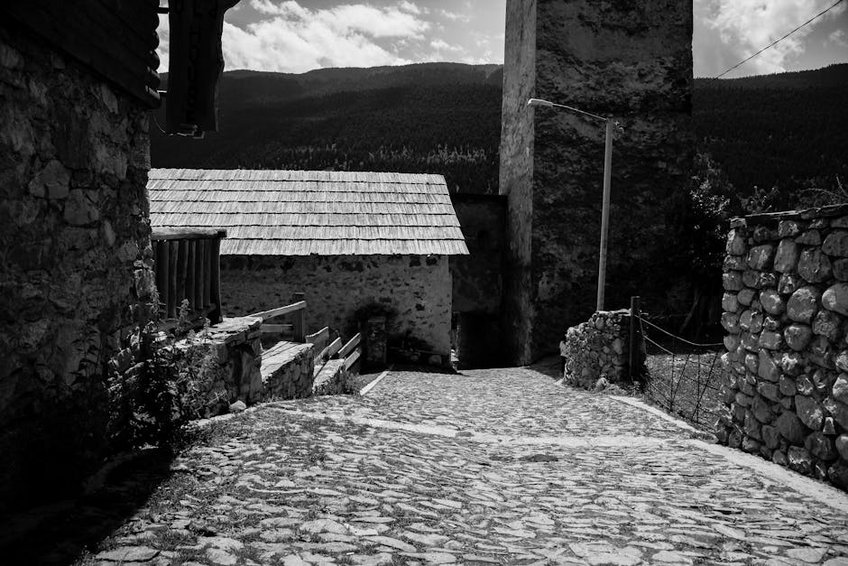
The isolation of these highland areas fostered fierce independence and distinctive cultural practices. Svanetian defensive towers, built from the 9th century onward, protected families from blood feuds and invaders. In Khevsureti and Tusheti, pagan traditions blended with Orthodox Christianity, creating unique festivals and architecture still visible today.
- The Svaneti region has over 200 medieval villages and defensive towers listed as a UNESCO World Heritage site, representing a unique response to medieval Caucasian life.
- Traditional polyphonic singing, recognized by UNESCO, is a cornerstone of community life in mountain areas, especially during festivals and supra feasts.
- Many villages operated as independent communes for centuries, governed by a council of elders, a system that influenced local customs of hospitality and conflict resolution.
- Budget Traveler ($35-50 USD/day): Relies on marshrutkas ($10-20 per leg), dorm beds or homestays ($10-15/night), and meals at guesthouses or simple cafes ($15/day). This works well in Mestia or Stepantsminda but is tough in Tusheti where transport costs are fixed and higher.
- Mid-Range Traveler ($80-120 USD/day): Uses shared taxis or 4×4 transfers ($30-50 per trip), private rooms in guesthouses ($25-40/night), and includes guided day hikes or museum entries ($20-30). This offers the best balance of comfort and experience across all regions.
- Luxury/Active Traveler ($150+ USD/day): Books multi-day guided trekking tours with gear included, stays in boutique hotels in Mestia or Kazbegi ($80+/night), and uses private drivers for flexibility. This maximizes comfort and access to expert local knowledge.
- Georgia National Tourism Administration
- Lonely Planet Georgia Travel Guide
Climate and Seasonal Considerations
Weather in the Caucasus is highly variable and changes with altitude. Summers (June to August) are mild and ideal for trekking, with daytime temperatures ranging from 60-75°F (15-24°C) in valleys. Afternoon thunderstorms are common, so early starts are advised for long hikes. This is the only time to access remote regions like Tusheti and Khevsureti.
Autumn (September-October) brings crisp air and stunning foliage, but snow can close high passes early. Winters are severe, with heavy snow isolating many communities from November to April, though Mestia and Gudauri offer ski opportunities. Spring (May-June) sees melting snow creating swollen rivers and muddy trails, often making travel challenging.
Alt: “svaneti-defensive-towers-caucasus-mountains-georgia-landscape”
Mountain Villages in Georgia – Planning Your Trip
Planning a visit to these highland communities requires more preparation than a standard Georgian itinerary. Your focus should be on seasonal access, transportation logistics, and respecting the remote environment. Road conditions can change rapidly, and guesthouse bookings are essential in peak summer months, even if they seem informal.
Budget-conscious travelers can manage on $35-50 USD per day using marshrutka minibuses and family homestays, while those preferring comfort should budget $80-120 USD for private transfers and guesthouses with en-suite bathrooms. Regardless of budget, carrying cash (Georgian Lari) is mandatory, as ATMs are absent outside of main towns like Mestia and Stepantsminda.
Best Time to Visit Georgian Mountain Villages
The optimal window for visiting most highland villages is from mid-June to mid-September. During these months, all mountain passes are open, hiking trails are snow-free, and daily temperatures average a pleasant 65-70°F (18-21°C). This is the only feasible time to reach Tusheti (Omalo) or Khevsureti (Shatili). July and August are peak season, so book accommodations several weeks in advance.
For hiking with fewer crowds, target early June or September. Be prepared for colder nights, with temperatures dropping to 40°F (4°C). Late September offers incredible autumn colors in Svaneti and Racha. From October to May, many areas are inaccessible due to snow, though the ski resort town of Gudauri operates fully in winter.
Budget Planning and Costs
Daily costs vary dramatically based on your travel style and destination remoteness.
Essential Preparation Checklist
Packing correctly is crucial for comfort and safety. Regardless of summer warmth, always carry layers: a waterproof jacket, fleece or down jacket, and a warm hat. Sturdy, broken-in hiking boots are non-negotiable for trails that are often rocky and uneven. A reliable power bank is essential, as electricity can be intermittent in remote guesthouses.
For documentation, ensure your passport has at least six months validity. U.S. and EU citizens do not need a visa for stays under one year. Purchase travel insurance that explicitly covers hiking at altitudes up to 3,000 meters and includes emergency medical evacuation. Book your first few nights’ accommodation in advance, especially in July and August, to secure a local contact upon arrival.
Top Mountain Village Destinations and Activities
Each mountain region offers a different character and set of attractions. Svaneti is the trekking capital, with villages like Mestia and Ushguli serving as gateways to multi-day routes. Kazbegi provides dramatic scenery and shorter hikes suitable for most fitness levels, centered around Stepantsminda. Tusheti is the ultimate adventure, rewarding a difficult journey with pristine landscapes and deep cultural immersion.
Beyond hiking, these areas offer cultural riches. Visit the Svaneti Museum of History and Ethnography in Mestia to understand tower culture. Attend a local festival if your timing aligns, such as the Khevsuroba festival in Shatili. Simply spending an evening at a family-run guesthouse, sharing wine and stories, is a quintessential experience.
Must-See Highlights
Ushguli, in Upper Svaneti, is often cited as Europe’s highest permanently inhabited settlement. This cluster of four villages sits at 2,100 meters and is a UNESCO site, famed for its skyline of medieval towers against the backdrop of Shkhara Peak. Access requires a 4×4 vehicle from Mestia or a stunning 4-day trek. Visiting the Lamaria Church complex here offers insight into unique Svanetian frescoes.
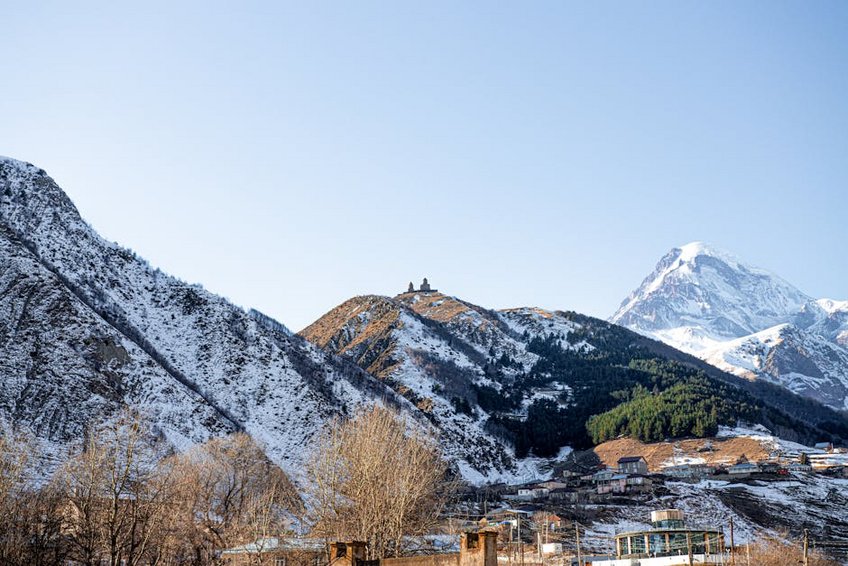
The Gergeti Trinity Church, near Stepantsminda, is Georgia’s most iconic image. Perched at 2,170 meters with Mount Kazbek looming behind, it’s a spiritual and visual highlight. You can hike (2-3 hours up) or hire a 4×4 to reach it. In Tusheti, the fortified village of Dartlo, with its traditional stone houses and medieval architecture, is a breathtaking example of harmonious village planning in a dramatic valley setting.
Hidden Gems and Local Favorites
For those looking beyond the classics, the Racha region offers gentle beauty. The village of Shovi, a former Soviet resort, is a quiet base for hiking to breathtaking glacial lakes like Lamaria and visiting small villages like Ghebi. It’s significantly less crowded than Svaneti and known for its specific mineral water springs and serene pine forests.
In Khevsureti, the fortress village of Shatili is a stunning complex of medieval stone fortresses and dwellings built directly into the rock face on a steep mountainside. The road here is an adventure in itself. It’s less tourist-oriented than Svaneti, offering a raw, authentic glimpse into a fiercely independent highland culture, best visited with a local driver-guide.
Hiking and Trekking Routes
The premier trek is the 4-day Mestia to Ushguli route through Svaneti. It passes through traditional villages like Zhabeshi and Adishi, crosses the Chkhunderi Pass, and requires fording rivers. Tea houses and guesthouses along the way provide basic lodging. For a shorter option, the day hike from Mestia to the Chalaadi Glacier offers rewarding views and is well-marked.
In Kazbegi, the hike from Stepantsminda to the Gergeti Trinity Church is a must. More ambitious hikers can continue to the abandoned Betlemi Monastery or the base camp of Mount Kazbek, which requires proper gear and preparation. In Tusheti, multi-day loop treks connect villages like Dartlo, Parsma, and Girevi, offering unmatched solitude and vistas.
Practical Travel Information
Transportation defines the experience. While marshrutkas connect Tbilisi to main hubs like Mestia and Stepantsminda, services to remote areas like Tusheti are limited to shared 4×4 taxis that depart when full. Renting a car offers flexibility but requires a robust 4×4 vehicle and significant confidence in driving on steep, unpaved mountain roads. Domestic flights from Tbilisi to Mestia operate in summer but are weather-dependent.
Accommodation ranges from basic family homestays, where you sleep on a mattress on the floor and share facilities, to modern guesthouses with private bathrooms and Wi-Fi. In Tusheti, options are almost exclusively homestays, which are part of the cultural charm. Booking platforms like Booking.com work for larger towns, but for remote villages, direct phone or Facebook contact is often necessary.
| Village/Region | Access & Key Features | Accommodation Price Range (USD) |
|---|---|---|
| Mestia (Svaneti) | Main hub. Airport, museums, many trekking trailheads, shops, ATMs. | $15 (homestay) – $80 (boutique hotel) |
| Ushguli (Svaneti) | Remote UNESCO site. Reached by 4×4 from Mestia or multi-day trek. | $10 – $25 (basic family guesthouse) |
| Stepantsminda (Kazbegi) | Easily accessible from Tbilisi. Base for Gergeti Trinity Church hike. | $20 – $100 |
| Omalo (Tusheti) | Very remote. Summer-only access via treacherous Abano Pass road. | $10 – $20 (homestay, full board) |