Hong Kong February Dragon Dance: Lunar New Year Fire & Fortune
Witnessing the Hong Kong February Dragon Dance is a spectacular collision of color, culture, and thunderous sound, marking the Lunar New Year with explosive energy. This ancient ritual, performed by agile martial artists, weaves through packed streets to scare away evil spirits and beckon prosperity for the coming year. Planning your visit around these dynamic performances offers an unforgettable entry into the heart of Chinese tradition during its most important festival.
Lunar New Year in Hong Kong: A Cultural Spectacle
Hong Kong transforms during the Lunar New Year, with celebrations centered on family, fortune, and vibrant public displays. The holiday, also called Chinese New Year or Spring Festival, follows the lunisolar calendar, typically landing in late January or February. The entire city participates, from flower markets symbolizing new beginnings to massive fireworks over Victoria Harbour.
The dragon dance itself is a highlight, with roots stretching back thousands of years as a symbol of power, wisdom, and good luck. In Hong Kong’s modern setting, the tradition thrives, blending historical reverence with contemporary showmanship. Your experience will be shaped by precise timing, as events are scheduled on specific lunar dates, not fixed Gregorian calendar days.
The Significance of the Dragon Dance
The performance is far more than entertainment; it’s a sacred ritual. The dragon represents a benevolent force, and its dynamic movements are believed to summon rain and ensure a bountiful harvest. Today, the focus has shifted toward attracting business success and community wellbeing. Each element of the costume and choreography holds symbolic meaning, from the number of body sections to the colors used.
- The dragon’s length, often reaching 25 meters or more, requires a team of 9 or more dancers who move in unison to create a sinuous, lifelike motion, with the lead dancer manipulating the elaborate head.
- Traditional colors like gold and red dominate, symbolizing wealth and joy, while green represents a great harvest, and the dragon’s beard signifies wisdom and respect.
- A crucial companion is the “Dancing Lion,” often seen alongside the dragon. The lion performance involves playful interaction with the audience, “plucking the green” (lettuce) for good fortune, which is then thrown back to the crowd.
- Budget Traveler ($1,200-$1,800 for 5 days): Stay in a guesthouse in Mong Kok, use public transit, eat at local “cha chaan tengs” that are open, and watch free public dances. Focus on street-level views and community events in the New Territories.
- Mid-Range Traveler ($2,500-$3,500 for 5 days): Book a 4-star hotel in Tsim Sha Tsui or Wan Chai 4-5 months out. Enjoy reserved seating for the harbor fireworks (approx. $100-150 USD) and dine at reputable restaurants with set Lunar New Year menus. Consider a guided cultural tour for deeper insight.
- Luxury Traveler ($5,000+ for 5 days): Secure a harbor-view room at a top hotel like The Peninsula or The Ritz-Carlton. Enjoy exclusive access to private viewing areas for parades, bespoke tours explaining rituals, and gourmet festive banquets. A private car for transfers is advisable during crowded days.
- Hong Kong Tourism Board
- Lonely Planet Hong Kong Travel Guide
Key Dates and Festival Timeline
The Lunar New Year period spans 15 days, but key public events are concentrated. The first three days are public holidays in Hong Kong, with the most significant celebrations. The Dragon Dance often occurs on the second day of the New Year, known as “Ka Ji,” or the “Beginning of the Year.” Major parades are typically scheduled for this evening.
You must verify dates annually, as they change. For a February visit, the festival usually falls within the first two weeks. The famous International Chinese New Year Night Parade along Tsim Sha Tsui is a fixed highlight, while smaller, more traditional dances happen in districts like Sha Tin and Causeway Bay. The festival culminates with the Lantern Festival on the 15th day.
Understanding the Performance Elements
A great dragon dance is a feat of coordination and stamina. The dancers train rigorously, often in Kung Fu schools, to build the strength and agility needed to maneuver the heavy puppet structure. The performance is accompanied by the relentless, rhythmic beating of drums, cymbals, and gongs, which dictate the dragon’s movements—slow and majestic at times, frenetic and powerful at others.
The dragon chases a “pearl of wisdom,” represented by a ball on a pole, which guides its path. The route is carefully planned to bless businesses and public spaces. Watching the team’s seamless coordination, with no visible supports, is a testament to the skill passed down through generations, making it a powerful living tradition.
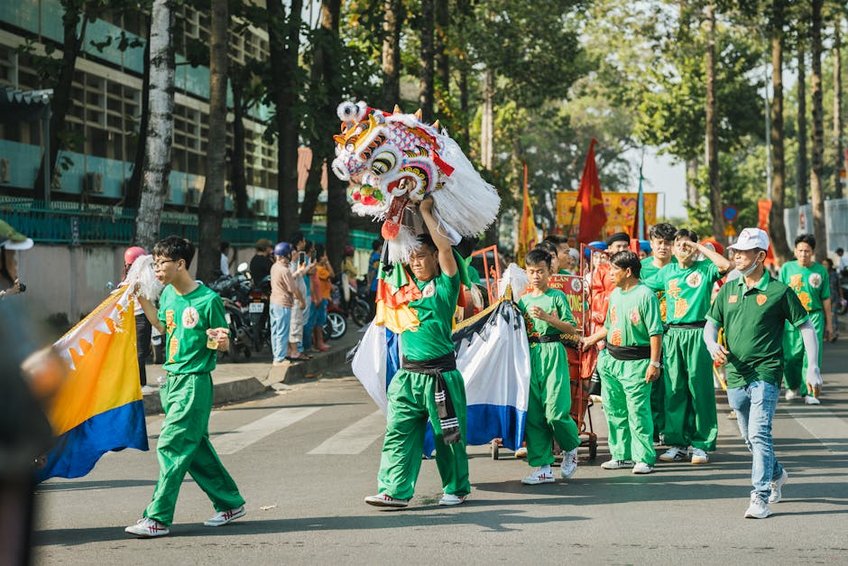
Alt: “hong-kong-lunar-new-year-dragon-dance-vibrant-street-performance”
Hong Kong February Dragon Dance – Planning Your Trip
Attending these celebrations requires strategic planning due to massive crowds and limited schedules. The dragon dance events are free to watch, but positioning is everything. For the major parades, spectators start claiming curb space hours in advance. Your success hinges on researching the specific event calendar released by the Hong Kong Tourism Board each November.
Accommodation prices surge during this peak period, sometimes doubling. Booking your hotel at least four to five months in advance is non-negotiable for securing reasonable rates and a convenient location. Consider staying in Kowloon near Tsim Sha Tsui for easy access to the waterfront parade, or in Causeway Bay for a more local, neighborhood festival atmosphere.
Factor in restaurant closures. Many local eateries shut for the first two days of the New Year as families celebrate privately. Major hotel restaurants and chains remain open, but reservations are essential. Plan your meals ahead and embrace the tradition of eating festive foods like “poon choi” (big bowl feast) or visiting a thriving flower market for snacks.
Best Time to Visit Hong Kong for the Dragon Dance
The optimal window is the three-day core of the Lunar New Year holiday. The dragon dance performances are most concentrated on the second day. Weather in February is mild and relatively dry, with average temperatures ranging from 57°F to 66°F (14°C to 19°C), making outdoor viewing comfortable with a light jacket.
Arrive at least one day before New Year’s Eve to experience the building excitement and visit the flower markets. Be prepared for intense crowds; Hong Kong’s population is joined by millions of tourists and mainland visitors. The days immediately after the holiday see a slight dip in crowds while festive decorations remain, offering a potential compromise.
Budget Planning and Costs
This is a peak travel period, so budgets must adjust. Flight costs from the US West Coast typically increase by 25-35%. A strategic budget covers premium experiences, while savvy planning can mitigate costs.
Essential Preparation Checklist
Your packing list should prioritize comfort and practicality. Essential items include extremely comfortable walking shoes, layered clothing for changeable weather, a compact umbrella, and a power bank for your phone. A small backpack with water and snacks is wise for long waits during parade days.
Ensure your travel documents are in order. US passport holders do not need a visa for stays under 90 days. Purchase comprehensive travel insurance that covers trip interruption. Book all core elements—flights, hotels, and any premium event tickets—as early as possible. Download the MTR mobile app for navigating the subway and Google Maps for offline use in crowded areas.
Top Events and Viewing Locations
While the dragon dance is the centerpiece, the Lunar New Year period is packed with can’t-miss events. The iconic fireworks display synchronizes with music over Victoria Harbour on the second night, creating a breathtaking backdrop. The night parade along Tsim Sha Tsui features international floats, marching bands, and performance troupes alongside the traditional dragon.
For a more intimate experience, venture beyond the main tourist zones. District-level celebrations in Sha Tin, Tai Po, and Cheung Chau island offer authentic, community-focused dragon dances where you can get closer to the action. The famous Wong Tai Sin Temple is also exceptionally lively, with locals praying for good fortune.
Must-See Highlights
The Hong Kong Tourism Board’s International Chinese New Year Night Parade is the flagship event. Floats and performers from around the world join the traditional dragon and lion dancers along a 1.4 km route. Grandstand tickets (around $80-150 USD) guarantee a view, but the free standing areas are packed by mid-afternoon.
The Cathay Pacific International Chinese New Year Night Parade is a visual feast. The fireworks show, set to music, is best viewed from the Tsim Sha Tsui waterfront, Golden Bauhinia Square in Wan Chai, or from a hired junk boat in the harbor. The Flower Markets in Victoria Park (Causeway Bay) and Fa Hui Park (Mong Kok) operate for the three days preceding New Year’s Eve, selling peonies, orchids, and festive trinkets in a carnival atmosphere.
Hidden Gems and Local Favorites
Escape the overwhelming crowds by seeking out neighborhood “kaifong” (community) celebrations. The walled village of Kat Hing Wai in Kam Tin or the Tai Hang Fire Dragon Dance (though held in September) showcases the deep community roots of such traditions. These events feel less staged and more participatory.
Visit a local Kung Fu school or martial arts association in the days before the festival. You might catch a practice session or see the dancers preparing their costumes, offering a unique behind-the-scenes perspective. Sampling traditional New Year cakes like “nian gao” (sweet sticky rice cake) from a century-old shop like Hang Heung is an authentic culinary delight.
Photography Tips for the Dances
Capturing the dynamic movement requires preparation. Use a camera with good low-light performance and a fast lens (f/2.8 or wider). A higher ISO (1600-3200) will help freeze the action. Scout your location early to find a clean background, such as a traditional shopfront, to avoid chaotic modern signage.
Focus on the dragon’s head and the dancer’s expressions for powerful shots. The swirling body creates beautiful motion blur at slower shutter speeds (1/30s to 1/60s). Be respectful; don’t block the performance path or use disruptive flash. Sometimes, the best angle is from a first-floor balcony or café window secured in advance.
Practical Travel Information for February
Navigating Hong Kong during this peak period demands a flexible strategy. The Mass Transit Railway (MTR) is the most efficient way to move, but stations near major events will be extremely congested. Allow significant extra time for all journeys. Taxis are in high demand and may not be readily available post-event.
Accommodation options range from hostels to world-class luxury hotels. Key areas for visitors include Tsim Sha Tsui for parade access, Causeway Bay for a central, vibrant feel, and Central for upscale dining. Many hotels offer special Lunar New Year packages that include festive meals or guided tours, which can provide excellent value and convenience.
| Accommodation Type | Best For & Features | Price Range/Night (USD) |
|---|---|---|
| Budget Guesthouse | Backpackers; simple rooms in Chungking/Mirador Mansions (TST); basic amenities, central location. | $70 – $120 |
| Mid-Range Hotel | Most travelers; 4-star properties in Kowloon or HK Island; modern rooms, often with MTR access. | $250 – $450 |
| Luxury Hotel | Splurging; iconic 5-star hotels with harbor views, exceptional service, and exclusive event access. | $600 – $1,200+ |
| Serviced Apartment | Families or longer stays; more space, kitchenette, multiple bedrooms in areas like Wan Chai. | $300 – $700 |