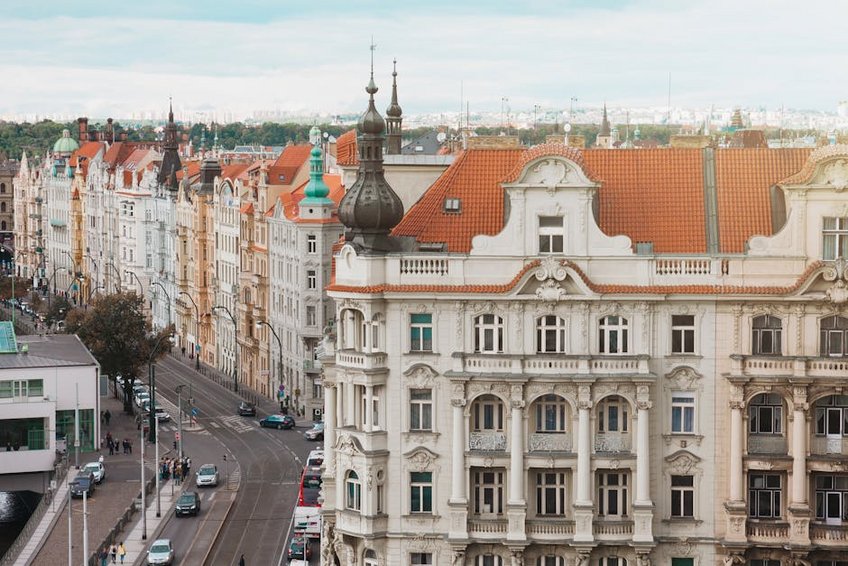
Historic Streets in Prague: A Walking Guide to Timeless Architecture
Exploring the historic streets in Prague feels like stepping directly into a living storybook of European architecture. Your path winds past Gothic spires, Baroque facades, and Renaissance courtyards, with every cobblestone holding centuries of artistic and political history. This guide provides detailed navigation, seasonal tips, and cultural context to help you uncover the authentic character of each legendary lane.
Prague’s Timeless Urban Fabric
Prague’s city center is a UNESCO World Heritage site, celebrated for its remarkably preserved medieval urban plan. The layout of its ancient passages and squares has remained largely unchanged since the 14th century under Holy Roman Emperor Charles IV. This continuity allows modern visitors to walk the same routes as alchemists, kings, and revolutionaries.
The architectural tapestry spans a millennium, from the Romanesque foundations visible in cellar vaults to the ornate Art Nouveau buildings of the 20th century. This dense layering of styles is what makes a walking tour here so uniquely rewarding. You can witness the evolution of design philosophies simply by turning a corner.
Understanding the District Layout
Navigating Prague’s historic core is easiest when you understand its five main districts.
- Staré Město (Old Town): The historic commercial heart, centered on the Old Town Square with its Astronomical Clock and Týn Church. Its lanes are a maze of merchant history.
- Malá Strana (Lesser Town): Located below Prague Castle, this Baroque-dominated district features noble palaces, serene gardens, and steep, winding streets.
- Hradčany (Castle District): Surrounding Prague Castle itself, this area offers regal avenues and stunning panoramic views over the red rooftops below.
- Nové Město (New Town): Founded in 1348, its “new” label is relative. It contains Wenceslas Square and grand 19th-century buildings along broader, more modern avenues.
- Josefov (Jewish Quarter): A compact area within the Old Town, preserving the poignant history and sacred sites of Prague’s former Jewish Ghetto.
- Budget Traveler ($30-50 USD/day): Focus on free wandering, using public transport day passes ($5), eating from street vendors or grocery stores, and staying in hostels outside the center. Many churches and exterior architecture viewing is free.
- Mid-Range Explorer ($75-120 USD/day): Includes a themed guided walking tour ($25-40), entry to one major attraction like the Old Town Hall ($15), sit-down meals at a ‘pivnice’ (beer hall), and a centrally-located hotel or apartment.
- Luxury Experience ($200+ USD/day): Features private guided tours, fine dining in historic settings, stays in boutique hotels in palace buildings, and perhaps a classical concert in a Baroque hall.
- Official Prague Tourism Portal
- UNESCO World Heritage Listing for Prague
Key Architectural Styles to Identify
As you wander, train your eye to distinguish the predominant styles. Gothic architecture features pointed arches, ribbed vaults, and flying buttresses, best seen in the Old Town Hall and St. Vitus Cathedral. Look for intricate stone tracery on windows.
Baroque style followed, characterized by dramatic motion, curved lines, and lavish ornamentation designed to inspire awe. You’ll see it in the sculpted facades of Malá Strana churches and palaces. Renaissance buildings, with their symmetrical fronts and sgraffito etching, offer a more restrained classical beauty.
The Story in the Cobblestones
The very pavement tells a tale. The distinctive cube-shaped cobblestones, called ‘kočičí hlavy’ or cat’s heads, have been used for centuries. Pay attention to small memorial stones embedded in certain streets, like those for the victims of Communist persecution. These ‘Stolpersteine’ or stumbling stones are a subtle but powerful historical record.
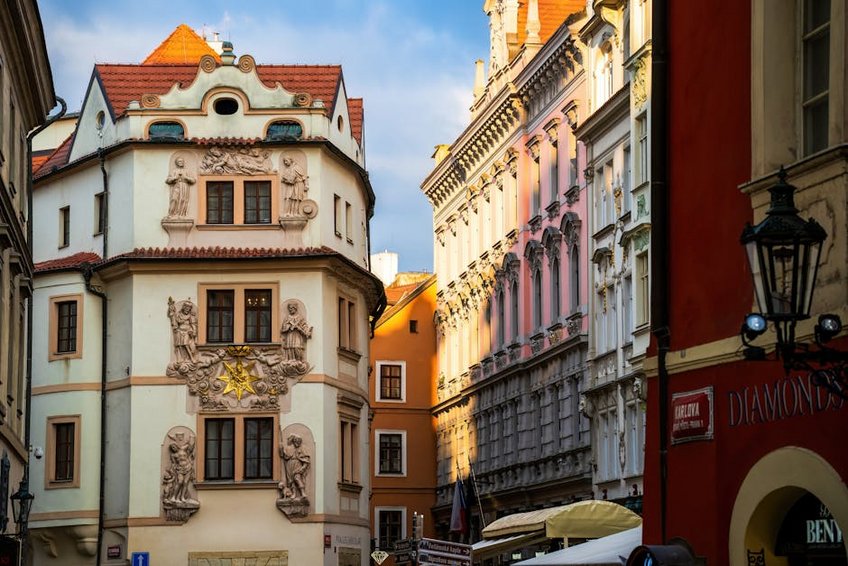
Alt: “prague-old-town-square-cobblestone-streets-astronomical-clock”
Historic Streets in Prague – Planning Your Walk
To fully appreciate the historic streets in Prague, strategic planning is essential. Crowds can be intense, especially around the main squares during midday in summer. Aim for early mornings or late afternoons when the golden light enhances the sandstone buildings and the lanes are quieter. Comfortable walking shoes with good grip are non-negotiable for the uneven surfaces.
Budget around $50-75 USD per day for a mid-range experience, covering a paid guided walking tour, museum entry, meals at traditional taverns, and public transport. The Prague City Card can offer savings if you plan to visit many paid attractions. Always carry some Czech Koruna (CZK) for small shops and cafes that don’t accept cards.
Best Time to Visit for Street Exploration
Visit between late April and early June or during September for ideal conditions, with daytime temperatures of 60-72°F (15-22°C) and manageable crowds. These shoulder seasons provide pleasant weather for hours of walking. The autumn light is particularly beautiful for photography.
July and August see peak crowds and temperatures that can reach 86°F (30°C), making exploration less comfortable. Winter, from December to February, is cold (28-36°F / -2 to 2°C) but magical, with Christmas markets and fewer tourists. Snow-dusted cobblestones create a fairy-tale scene, though some smaller streets can be slippery.
Budget Planning and Costs
Your daily budget varies significantly based on style and priorities.
Essential Preparation Checklist
Pack layers, as weather can change quickly. A waterproof jacket, a warm sweater, and a scarf are useful year-round. Ensure your shoes have been broken in and have slip-resistant soles. A compact umbrella is a wise addition to your daypack.
Check if you need a Schengen visa; US citizens do not for stays under 90 days. Have valid travel insurance and digital copies of your passport. Download the PID Litacka app for public transport tickets and a reliable offline map like Maps.me for navigating narrow lanes without data.
Iconic Lanes and Their Secrets
Beyond the famous Charles Bridge, Prague’s character is defined by its intimate passages. Each street has a unique personality, from royal coronation routes to ancient goldsmiths’ quarters. Taking time to explore these individually reveals the city’s layered soul far more than sticking solely to the squares.
Don’t rush. The magic often lies in looking up at ornate signage, peeking through arched gateways into hidden courtyards, or noticing the decorative door handles. Allow yourself to get slightly lost in the less-trodden alleys of Malá Strana or the northern part of the Old Town.
Must-See Historic Streets
Karlova Street is the main tourist thoroughfare connecting the Old Town Square to the Charles Bridge. While often crowded, its medieval buildings house interesting shops. Visit very early to experience its charm without the masses.
Celetná Street is one of Prague’s oldest roads, part of the Royal Coronation Route. Admire the Baroque façade of the House at the Black Madonna, an early Cubist building. Nerudova Street in Malá Strana climbs steeply toward the Castle, lined with grand Baroque palaces identified by their unique house signs (a red lion, three violins).
Hidden Gems and Quiet Passages
For a quieter experience, seek out Vlašská Street in Malá Strana. It retains a village-like atmosphere with artisan workshops and fewer crowds. Úvoz Street offers one of the best walking views of the city and is flanked by beautiful historic villas.
Discover the Golden Lane (Zlatá ulička) within Prague Castle complex, a row of tiny, colorful 16th-century houses where castle guards and goldsmiths once lived. Franz Kafka briefly lived at number 22. While it requires a Castle ticket, it’s a unique glimpse into miniature-scale history.
Courtyards and Passageways
The true hidden world of Prague lies in its courtyards. Walk through the archway at Fruit Market (Ovocný trh) to discover the elegant St. Havel’s Church and a peaceful square. The Lucerna Passage near Wenceslas Square is a stunning Art Nouveau shopping arcade with a charming suspended sculpture of a horse.
Practical Travel Information
Prague is exceptionally walkable, but its historic districts are best explored on foot. The efficient tram and metro system is ideal for connecting between districts. Purchase a 24-hour or 72-hour transport ticket from a machine or via the app for unlimited rides. Validate paper tickets upon first use.
Accommodation in the historic center commands a premium but allows for immersive early morning and evening walks. Staying just outside the core, in neighborhoods like Vinohrady or Žižkov, offers better value and local flavor with a short tram ride to the action.
| Accommodation Type | Best For / Features | Price Range/Night (USD) |
|---|---|---|
| Historic Center Hotel | Ultimate convenience, period charm, often in restored buildings. May have noise or small rooms. | $120 – $300+ |
| Malá Strana Boutique Hotel | Romantic atmosphere, quieter streets, close to Castle. Excellent service and unique design. | $150 – $400 |
| Old Town Apartment Rental | Families or longer stays, kitchen facilities, living space. Requires careful vetting for location. | $90 – $250 |
| Vinohrady/Zizkov Hotel | Value, local neighborhood vibe, great dining, short tram ride to center. More modern amenities. | $70 – $160 |