Warsaw Travel Guide: Your Essential Companion to Poland’s Resilient Capital
This Warsaw travel guide provides the practical insights and local knowledge you need to explore a city defined by remarkable rebirth. Warsaw’s 85% wartime destruction created a blank canvas for both meticulous historical reconstruction and bold modernist architecture, offering visitors a profound lesson in resilience. You will find a dynamic metropolis where classical music venues sit beside thriving tech hubs, and cobblestone streets lead to vibrant culinary scenes. This resource covers everything from navigating the efficient public transport to understanding the layered history visible on every corner.
Essential Warsaw Information
Warsaw, Poland’s capital and largest city, is a major financial and cultural hub in Central Europe with a metropolitan population exceeding 3 million. The city straddles the Vistula River, historically dividing the left-bank districts like Śródmieście (city center) from the right-bank Praga. Its complex history, marked by the complete destruction of 85% of its buildings during World War II, shapes its unique character today, where UNESCO-listed Old Town reconstructions stand alongside socialist-era landmarks and gleaming skyscrapers.
Warsaw experiences a humid continental climate with distinct seasons. Summers from June to August see average highs around 75°F (24°C), while winters from December to February are cold, with average lows near 26°F (-3°C) and frequent snowfall. English is widely spoken in tourist areas, hotels, and by younger residents, though learning basic Polish phrases is appreciated. The local currency is the Polish złoty (PLN), not the Euro.
Historical Context – A Phoenix City
Understanding Warsaw requires recognizing its dual identity: a centuries-old royal capital and a modern city forged in the 20th century. The 1944 Warsaw Uprising, a 63-day struggle for independence, led to the systematic destruction ordered by Hitler. The post-war decision to rebuild the historic core brick-by-brick using pre-war paintings and plans is a testament to national spirit. This history is not just in museums; it is etched into the city’s very fabric, from bullet marks on buildings to the soaring Warsaw Uprising Monument.
Key City Districts and Their Vibes
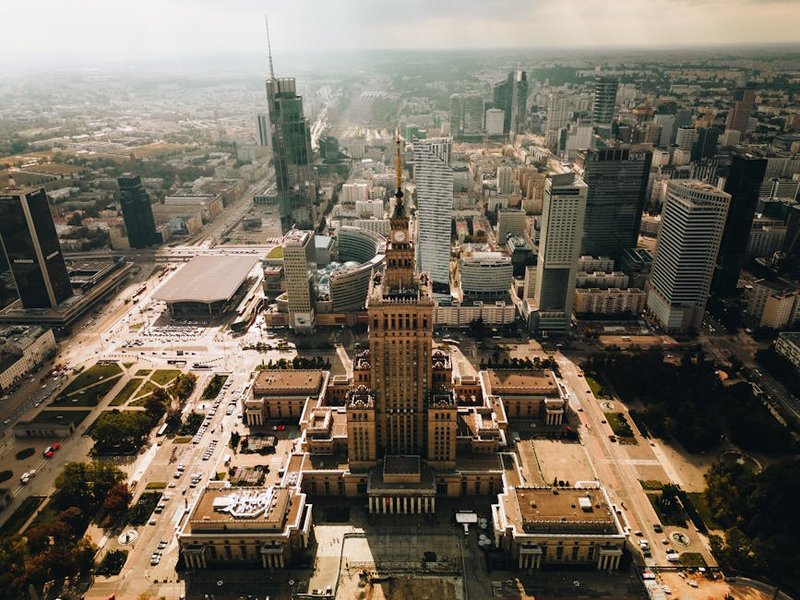
Each district offers a different facet of the capital’s personality. Śródmieście is the bustling downtown, home to the Royal Route, Palace of Culture and Science, and major shops. The Old Town (Stare Miasto) and adjacent New Town (Nowe Miasto) are the picturesque, pedestrianized historic hearts. Across the river, Praga has shed its rough reputation to become the city’s gritty-hip artistic soul, filled with galleries, underground bars, and pre-war architecture that survived the war.
Getting Your Bearings – First-Day Tips
Upon arrival, purchase a Warsaw City Card if you plan to visit multiple museums and use public transport extensively. Start your exploration at the Palace of Culture and Science’s 30th-floor terrace for a panoramic orientation. Use the excellent, color-coded public transit system: trams are ideal for shorter inner-city hops, while the metro is fastest for north-south routes. Always validate your tram or bus ticket upon boarding to avoid a fine.
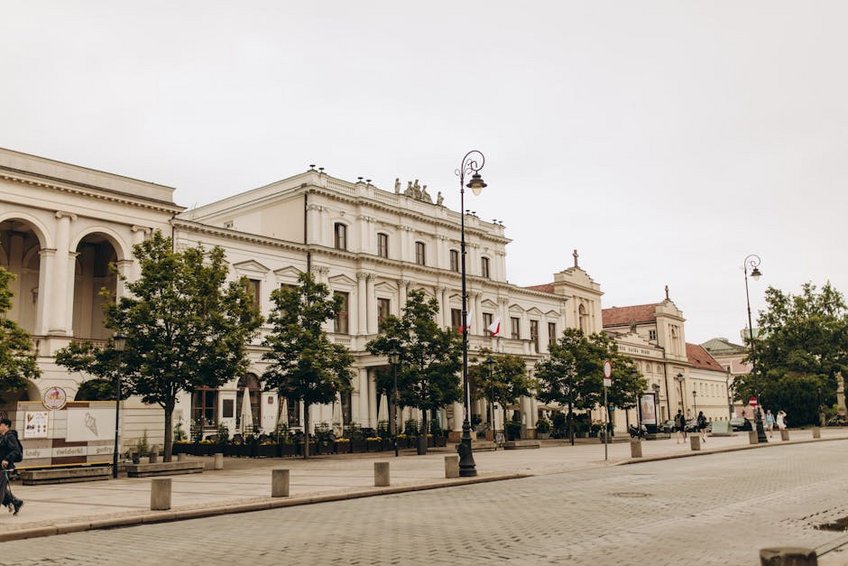
Alt: “warsaw-old-town-square-reconstructed-buildings-horse-carriages”
Warsaw Travel Guide – Planning Your Trip
Effective planning maximizes your time in this sprawling city. A well-structured Warsaw travel guide recommends focusing your itinerary geographically to minimize transit time between districts. Allocate separate days for the Royal Route and Old Town, the Museum District along the Warsaw Uprising Museum and POLIN, and the alternative vibe of Praga. Booking museum tickets online in advance, especially for the POLIN Museum and Warsaw Uprising Museum, is crucial to skip long queues, particularly on weekends and in summer.
Budget wisely, as Warsaw offers excellent value. Accommodation and dining costs are significantly lower than in Western European capitals, though prices in the very center can be comparable. Consider purchasing a 24, 48, or 72-hour public transportation pass for unlimited travel. For seamless payments, carry a contactless credit/debit card, which is accepted almost everywhere, but keep some złoty in cash for smaller shops, markets, and tips.
Best Time to Visit Warsaw
The ideal times for a Warsaw city break are late spring (May to June) and early autumn (September to October). During these months, temperatures are pleasant, ranging from 60°F to 70°F (15°C to 21°C), crowds are manageable, and the city’s parks are beautifully green or autumnal. Summer (July-August) is warm but can be crowded with peak tourist numbers; many cultural events and open-air concerts take place then.
Winter (December-February) is cold, with temperatures often below freezing and daylight limited to about 8 hours. However, this season has its own charm with Christmas markets in the Old Town throughout December, fewer tourists, and the coziness of traditional milk bars and cafes. Late November and March can be gray and damp, offering the lowest prices but less predictable weather.
Budget Planning and Costs
Your daily budget in Warsaw varies dramatically based on style. Here is a realistic breakdown for a per-person daily average, excluding flights.
- Budget Traveler ($50-70/day): Stay in a hostel dorm or budget hotel in Praga/Ochota ($20-35). Eat at traditional ‘milk bars’ (bar mleczny) and street food like zapiekanka ($10-15). Use public transport passes ($3-5) and enjoy free attractions like Łazienki Park, Old Town walks, and church visits. Museum budget is limited.
- Mid-Range Traveler ($100-160/day): Stay in a central 3-star hotel or stylish apartment ($60-100). Enjoy meals at good Polish restaurants and international cafes ($25-40). Use taxis occasionally alongside transit ($10). Visit 1-2 major paid museums or take a guided tour daily ($15-20).
- Luxury Traveler ($250+/day): Stay at a 5-star hotel like the Raffles Europejski or Bristol ($180+). Dine at award-winning restaurants like Bez Gwiazdek or Nolita ($80+). Use private transfers or rental car with driver ($50+). Book exclusive private tours, attend opera performances, and indulge in spa treatments.
- Official Warsaw Tourist Office
- Polish Tourism Organization
- Warsaw Public Transport Authority (ZTM)
Essential Preparation Checklist
Pack for variable weather, including a waterproof jacket, comfortable walking shoes, and layers, regardless of season. From November to March, a warm coat, hat, gloves, and insulated boots are essential. A universal European power adapter (Type E plug, 230V) is required for charging devices. Ensure you have digital or physical copies of your passport, travel insurance documents, and any pre-booked tickets.
EU, US, Canadian, and UK citizens do not need a visa for tourist stays up to 90 days within the Schengen Area. Confirm your passport is valid for at least three months beyond your planned departure date. Book central accommodations 2-3 months in advance for summer and Christmas market visits. Download helpful apps: Jakdojade for public transport routes/tickets, Google Translate for Polish menus, and the official Warsaw Tourist app for maps and events.
Top Attractions and Cultural Experiences
Warsaw’s must-see sites powerfully narrate its history and culture. The meticulously reconstructed Old Town, a UNESCO World Heritage Site, appears centuries old but was rebuilt post-1945. Here, the Royal Castle houses stunning state apartments, while the Market Square buzzes with cafes. The Royal Route, a historic thoroughfare linking the Old Town with royal palaces, is lined with churches, monuments, and aristocratic residences, perfect for a long, insightful stroll.
Beyond the historic core, the city’s world-class museums demand time. The POLIN Museum of the History of Polish Jews uses immersive exhibits to tell a 1000-year story. A short walk away, the Warsaw Uprising Museum offers a visceral, multimedia immersion into the 1944 struggle. For a change of pace, Łazienki Park, a vast 18th-century royal park, provides serene paths, peacocks, the iconic Chopin Monument, and summer piano concerts.
Must-See Historical Highlights
The Royal Castle, painstakingly reconstructed between 1971-1984, is a symbol of national heritage. Inside, the Canaletto room’s paintings were guides for the Old Town’s rebuilding. The Warsaw Uprising Museum, housed in a former tram power station, is emotionally intense but essential. Allow at least three hours for its films, artifacts, and the stunning Flight Over Warsaw 3D movie. The POLIN Museum’s core exhibition is a profound journey; its breathtaking replica of the Gwoździec Synagogue’s painted ceiling alone is worth the visit.
Palace of Culture and Science, the controversial Stalinist “gift,” dominates the skyline. Love it or hate it, the viewing terrace on the 30th floor offers the best city vistas. Wilanów Palace, the “Polish Versailles,” survived the wars and showcases magnificent Baroque architecture and gardens. It’s best visited in the morning on a weekday to avoid crowds, with a combined ticket for the palace and grounds.
Hidden Gems and Local Favorites
Venture into the Praga district, specifically the area around ulica Ząbkowska and the Neon Museum, which preserves Cold War-era neon signs in a post-industrial space. The Warsaw Fotoplastikon, a 1905 stereoscopic photo viewer, offers a unique historical peek. For a green escape, the Warsaw University Library rooftop garden provides surprising panoramic views and ecological gardens free of charge.
Explore the less-visited Nowe Miasto (New Town), just north of the Old Town walls. It feels more local, with charming cafes and the Marie Skłodowska-Curie Museum dedicated to the Nobel-winning scientist. The Warsaw Barbican and surviving fragments of the city walls, especially near ulica Nowomiejska, offer a tangible connection to the city’s medieval defenses, often missed by tourists rushing to the main square.
Arts, Music, and Performance
Warsaw boasts a vibrant performing arts scene rooted in its Chopin connections. Attend a Chopin concert at the Fryderyk Concert Hall in Ostrogski Castle or a free Sunday summer recital at Łazienki Park. The Polish National Opera at the Teatr Wielki presents world-class ballet and opera in a monumental building. For contemporary theater, check the program at TR Warszawa or the National Theatre.
The city’s modern art scene thrives at the Zachęta National Gallery of Art and the contemporary Ujazdowski Castle Centre for Contemporary Art. During summer, the Multimedia Fountain Park in front of the Old Town offers free light and music shows on weekend evenings, a popular local gathering spot for families and couples.
Practical Travel Information and Logistics
Navigating Warsaw is straightforward with its integrated transport network. The city is served by two major airports: Warsaw Chopin (WAW) is the main international hub located just 10km south of the center, connected by train, bus, and taxi. Modlin Airport (WMI), about 40km north, is used primarily by low-cost carriers like Ryanair, with shuttle bus connections to the city. Central train stations are Warszawa Centralna and Warszawa Śródmieście, offering excellent connections across Poland and Europe.
Accommodation options span all budgets and styles. The most convenient areas for first-time visitors are Śródmieście (downtown) for proximity to major sights, the Old Town for picturesque charm, and Powiśle for a trendy, riverside vibe. Praga offers more alternative accommodation and better value, with excellent tram links across the river. For longer stays, serviced apartments in areas like Mokotów provide a local feel.
| Accommodation Type | Best Areas & Features | Avg. Nightly Price (USD) |
|---|---|---|
| Luxury Hotel | Śródmieście/Nowy Świat: Historic properties, concierge, fine dining (Raffles, Bristol). | $180 – $400+ |
| Mid-Range Hotel | Śródmieście/Powiśle: Modern amenities, good transit links, breakfast included. | $80 – $150 |
| Budget Hotel/Apartment | Praga/Ochota/Wola: Simple comforts, self-catering options, local neighborhood feel. | $45 – $85 |
| Hostel | Old Town/Praga: Social atmosphere, dorm/private rooms, communal kitchens. | $15 – $40 |