Paragliding Routes in Turkey: Soaring Over Ancient Landscapes
Turkey offers a world-class paragliding experience with diverse routes spanning from coastal cliffs to mountain peaks, providing reliable thermals and breathtaking scenery for pilots of all skill levels. The country’s unique geography combines the Mediterranean Sea, ancient valleys, and high plateaus, creating ideal flying conditions for much of the year. This guide details the premier launch sites, seasonal flying windows, logistics, and cultural insights for your aerial adventure across this historic landscape.
Essential Information for Paragliding in Turkey
Paragliding in Turkey operates within a well-regulated framework, with the Turkish Aeronautical Association overseeing safety and pilot certifications. Most popular sites have established schools offering tandem flights, training courses, and equipment rentals. The flying season varies significantly by region, from year-round coastal opportunities to specific summer months in high-altitude inland areas.
Pilots must carry third-party liability insurance, which is often arranged through local clubs or schools. Foreign pilots should bring their IPPI card and logbook, as these are recognized by Turkish authorities. Communication at launch sites is typically in Turkish and English, with radio protocols following standard international practices.
Regulatory Framework and Safety Standards
Understanding local regulations ensures a smooth flying experience. Turkish airspace classification is similar to European models, with specific restricted zones near military areas.
- All pilots must have valid insurance covering third-party liability of at least 500,000 Euros, which can be obtained through the Turkish Aeroclub or international providers like FAI.
- Foreign pilot licenses (IPPI 4-5) are recognized, but you must register with a local school or club and obtain a temporary flying permit for the specific site you plan to use.
- Mandatory equipment checks are standard at organized sites, with reserves requiring a valid repack certificate not exceeding six months for tandem operations and twelve months for solo pilots.
- Budget Option ($800-$1,200 for 10 days): Focus on one region like Ölüdeniz, stay in guesthouses, use public transport, and fly 3-4 days with a local school. This includes tandem flights or daily site fees but limited equipment rental.
- Mid-Range Option ($1,800-$2,500 for 14 days): Split time between coastal and inland sites, rent a car for mobility, stay in mid-range hotels, and include a 5-day SIV or cross-country course with a certified instructor.
- Luxury Option ($3,500+ for 14 days): Fully guided flying safari visiting 4-5 premier sites, private transfers, boutique hotel accommodations, all equipment provided, and video documentation of all flights included.
- Turkish Ministry of Culture and Tourism
- Turkish Aeronautical Association (THK)
Climate and Flying Conditions Overview
Turkey’s varied climate creates distinct flying zones. The southern Mediterranean coast enjoys mild winters and consistent sea breezes, making sites like Ölüdeniz flyable almost year-round. Inland regions, such as Cappadocia, have a more continental climate with strong thermal activity in summer and calm conditions ideal for scenic flights in spring and autumn.
Spring months from April to June offer the most stable weather nationwide, with predictable thermal development and light winds. The Meltemi wind affects the Aegean coast in July and August, creating strong but manageable conditions for experienced pilots. Always consult local site guides for daily weather briefings, as valley winds can be unpredictable.
Navigating Cultural and Logistical Considerations
Respect for local customs enhances your visit. While coastal resorts are very liberal, conservative dress is appreciated when traveling to rural villages near landing zones. The Turkish people are famously hospitable, and pilots often share tea with landowners after landing in their fields—a gesture that fosters good community relations.
Transporting gear is straightforward; most airlines accept paragliding equipment as sports luggage. Renting a car provides the most flexibility for accessing remote launches. English is widely spoken in tourist areas and at flying schools, but learning a few Turkish phrases like “İniş yapabilir miyim?” (May I land?) is courteous and practical.
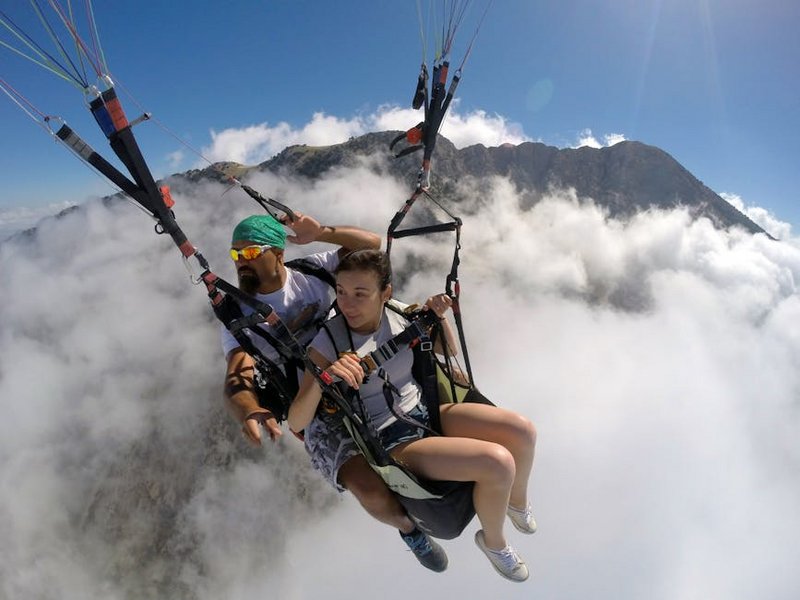
Alt: “tandem-paragliding-oludeniz-turquoise-coast-turkey”
Paragliding Routes in Turkey – Planning Your Flight Adventure
Your paragliding routes in Turkey adventure requires careful planning around seasons, skill levels, and regional characteristics. The country offers everything from coastal ridge soaring to high-altitude cross-country potential. Budget between $1,500 and $3,000 for a two-week flying trip, including accommodations, local transport, and daily flying fees, which range from $10 to $25 per launch at managed sites.
Booking tandem flights or courses in advance is essential during peak season from May to September. For independent pilots, connecting with local clubs via Facebook groups before arrival provides invaluable current information on site conditions and potential hazards. Most regions have dedicated retrieve services, but costs vary from $30 to $80 depending on the distance from the main landing field.
Best Time to Visit for Optimal Flying Conditions
The prime flying season runs from late April through early October. For coastal sites like Ölüdeniz and Babadağ, April to June offers stable thermal conditions with average temperatures of 70-80°F (21-27°C) and consistent sea breezes. July and August bring stronger thermal activity, perfect for experienced pilots seeking longer cross-country flights, though midday temperatures can reach 95°F (35°C).
Shoulder seasons in March and November provide quieter flying with more gentle conditions, suitable for beginners and tandem passengers. Inland sites like Cappadocia are best flown from June to September when thermal activity is reliable. Winter flying is possible along the southern Mediterranean coast, particularly in Antalya, where December to February sees temperatures around 60°F (15°C) and flyable days are common.
Budget Planning and Cost Breakdown
Costs vary dramatically based on your pilot status and travel style. Tandem passengers pay for single experiences, while certified pilots incur daily site and potential retrieve fees.
Essential Preparation Checklist
Physical preparation involves moderate hiking to launch sites, often carrying gear up slopes at 5,000-7,000 feet elevation. Pack light, moisture-wicking clothing, sturdy hiking boots, high-SPF sunscreen, and polarized sunglasses. For pilots, bring your harness, reserve, vario, GPS, and radio, ensuring all batteries are charged and compatible with Turkish power outlets (220V, Type F).
Documentation must include your passport, pilot license, IPPI card, and insurance certificates. Book accommodations near launch sites to minimize daily travel; places like Ölüdeniz and Göreme have numerous pilot-friendly lodgings. Health-wise, ensure your tetanus vaccination is current, and carry a basic first-aid kit for minor scrapes from rough landings in rocky terrain.
Top Paragliding Destinations and Launch Sites
Turkey’s diverse topography creates exceptional flying locations. The Babadağ Mountain above Ölüdeniz is internationally famous, while Cappadocia offers lunar landscapes, and the Aegean coast presents challenging cross-country routes. Each region has unique characteristics, from sea-level launches to high-mountain takeoffs exceeding 6,500 feet.
Site infrastructure varies from fully developed resorts with gondola access to remote mountain tops requiring 4×4 shuttle service. Landing areas are generally spacious agricultural fields or designated tourist zones. Local flying schools provide up-to-date information on airspace restrictions, particularly near military zones which are common in southeastern regions.
Must-See Premier Flying Locations
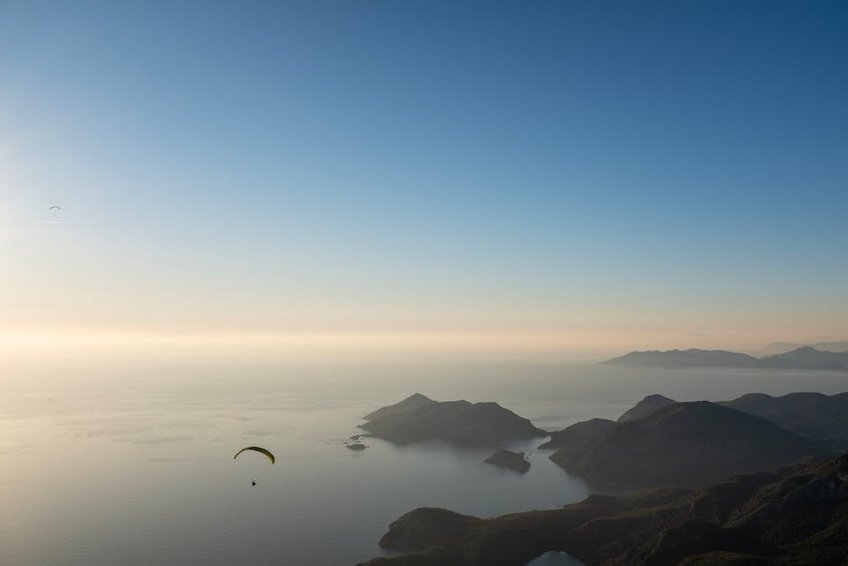
Babadağ Mountain (Ölüdeniz) remains the crown jewel, with multiple launches between 5,900 and 6,500 feet offering flights lasting over an hour. The flight over the Blue Lagoon provides unparalleled photographic opportunities. Peak season sees organized takeoff schedules to manage air traffic, with landing directly on the beach costing an additional $15 fee collected by the municipality.
Cappadocia’s Göreme Valley launches at 3,600 feet provide breathtaking flights over fairy chimneys and ancient cave dwellings. Morning flights catch the most stable air, with landing zones in central valleys. The Pamukkale site offers unique thermal flights over white travertine terraces and ancient Roman ruins, with launches from neighboring hills.
Hidden Gems and Local Favorites
For experienced pilots, the Kaş region offers coastal ridge soaring with technical landing zones in small valleys. The local club organizes retrieves from remote beaches. Sivrihisar, near Eskişehir, is a growing cross-country venue with reliable thermals and vast landing options in the Anatolian plains, frequented by Turkish national team pilots during training camps.
The Assos region in the north Aegean provides spectacular flights over ancient Greek ruins and the island of Lesvos visible on clear days. Launch requires a short hike, but the site sees few foreign pilots. Aladağlar National Park offers high-altitude alpine flying for experts only, with launches above 10,000 feet and demanding weather conditions.
Coastal vs. Mountain Flying Experiences
Coastal flying typically involves dynamic sea breezes and ridge lift, with landing options often limited to specific beaches. The sensation of flying over turquoise water is unforgettable. Mountain flying in regions like Cappadocia relies on thermal activity, providing greater altitude gain and potential for cross-country journeys across dramatic volcanic landscapes.
Each environment demands different skills; coastal sites often have more predictable wind patterns, while mountain thermals can be stronger and more turbulent. Many pilots plan itineraries that include both, starting with coastal sites to acclimate before tackling high-altitude inland launches. Weather patterns differ significantly, requiring separate forecasts for each region.
Practical Travel Information and Logistics
Reaching Turkey’s paragliding hubs is straightforward with international airports in Dalaman, Antalya, and Nevşehir. Domestic flights connect major cities affordably, with airlines like Turkish Airlines and Pegasus offering frequent service. For pilots with gear, renting a medium-sized car provides essential flexibility, with weekly rates from $250-$400 including full insurance coverage.
Accommodation ranges from camping near launch sites to luxury resorts. Many flying schools offer discounted packages with partner hotels. The Turkish Lira offers favorable exchange rates for USD and EUR, making daily expenses like meals and local transport very affordable for international visitors.
| Location | Primary Launch Features | Season & Flight Duration | Approx. Cost (Tandem/Guiding) |
|---|---|---|---|
| Ölüdeniz (Babadağ) | Multiple launches (1,800-2,000m), beach landing, gondola access | Year-round, 30-90 min flights | $120-$180 per tandem |
| Cappadocia (Göreme) | Thermal flights over valleys (1,100m), unique rock formations | Apr-Oct, 45-60 min flights | $140-$200 per tandem |
| Pamukkale | Thermal lift over travertines, combined with historical site visit | Mar-Nov, 20-40 min flights | $100-$150 per tandem |
| Kaş | Coastal ridge soaring, technical landing zones | May-Sep, 60+ min flights | $160-$220 with retrieve |