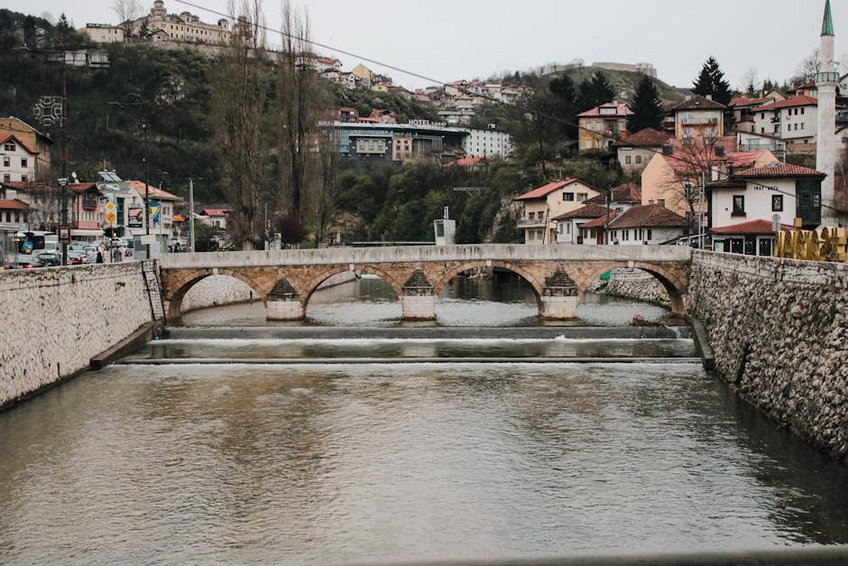
Exploring the Historic Districts in Sarajevo
The historic districts in Sarajevo provide an unforgettable journey through centuries, where Ottoman-era bazaars and Austro-Hungarian avenues exist mere steps apart. This unique urban tapestry tells a story of empires, cultures, and resilience, offering visitors a direct connection to pivotal moments in European history. From the aroma of strong coffee in Baščaršija to the architectural grandeur along Ferhadija Street, a walk through these quarters is essential for understanding the soul of the city.
Essential Sarajevo History and Overview
Sarajevo’s unique character stems from its position as a cultural crossroads for over five centuries. The city’s layout was fundamentally shaped by Ottoman rule starting in the 15th century, which established the dense, winding marketplace core. This oriental foundation was later overlaid with Central European architecture and urban planning during the Austro-Hungarian period, creating a striking visual and cultural contrast.
The city’s 20th-century history is profoundly marked by two world-changing events. The assassination of Archduke Franz Ferdinand in 1914 along the Miljacka River triggered World War I. Decades later, the city endured a devastating siege from 1992 to 1996 during the Bosnian War. Each era left indelible marks on its streets and buildings, which have been meticulously restored.
Understanding the City’s Layout
Sarajevo’s historic center is compact and highly walkable, divided into distinct zones that reflect different historical periods. Navigating them is straightforward for most visitors.
- Baščaršija (Ottoman Quarter): The oldest section, characterized by narrow, cobblestone streets, coppersmith workshops, and traditional sebilj (fountain) squares, centered around Gazi Husrev-beg’s Mosque.
- Ferhadija & Austro-Hungarian Quarter: A pedestrian street marking the transition where cobblestones change to paved tiles, lined with elegant 19th-century buildings, churches, and synagogues.
- Latin Bridge & Miljacka Riverbanks: The area surrounding the famous bridge and the river, containing museums and markers related to the 1914 assassination, forming a linear historic park.
- Budget Traveler ($40-60/day): Stay in a hostel dorm, eat cevapi from street stalls, visit free sites like the Eternal Flame and historic streets, use the efficient tram system, and enjoy affordable Bosnian coffee. Most walking is free.
- Mid-Range Traveler ($80-120/day): Stay in a 3-star hotel or private apartment, enjoy sit-down meals in traditional restaurants (aščinicas), join a paid guided walking tour ($15-25), visit key museums like the Sarajevo Tunnel ($7), and take a taxi to viewpoints.
- Luxury Traveler ($150+/day): Stay in a historic boutique hotel in the Old Town, dine at fine dining establishments, hire a private historian guide for a full day ($100-150), enjoy spa treatments, and arrange private day trips to nearby sites like Mostar.
- Sarajevo Tourist Board
- Encyclopedia Britannica – Sarajevo
Key Historical Periods and Influence
Ottoman rule from 1461 to 1878 established Sarajevo as a major Balkan hub, building mosques, hans (inns), and the covered bazaar. This era defined the city’s religious and mercantile heart. The architectural style features red-tiled roofs, stone foundations, and wooden upper stories designed for dense urban living.
Austro-Hungarian administration after 1878 introduced Western urban planning, constructing wide avenues, electric tramways, and neoclassical institutional buildings. This period created the city’s European facade and modern infrastructure. The juxtaposition of these two worlds within a five-minute walk is what makes Sarajevo’s urban core so uniquely compelling for history enthusiasts.
Cultural and Religious Significance
Sarajevo has long been called the “Jerusalem of Europe” for its close proximity of major religious sites. This multi-confessional heritage is the cornerstone of its identity. The cityscape is a testament to centuries of coexistence, with minarets, church steeples, and a synagogue dome sharing the same skyline.
This interweaving is best experienced on “Sarajevo’s Street of Cultures.” Along a short walk, you pass the iconic Sacred Heart Cathedral, the Old Orthodox Church, the Gazi Husrev-beg Mosque, and the Ashkenazi Synagogue. This concentration of faiths within a few hundred meters is a powerful symbol of the city’s historical pluralism.
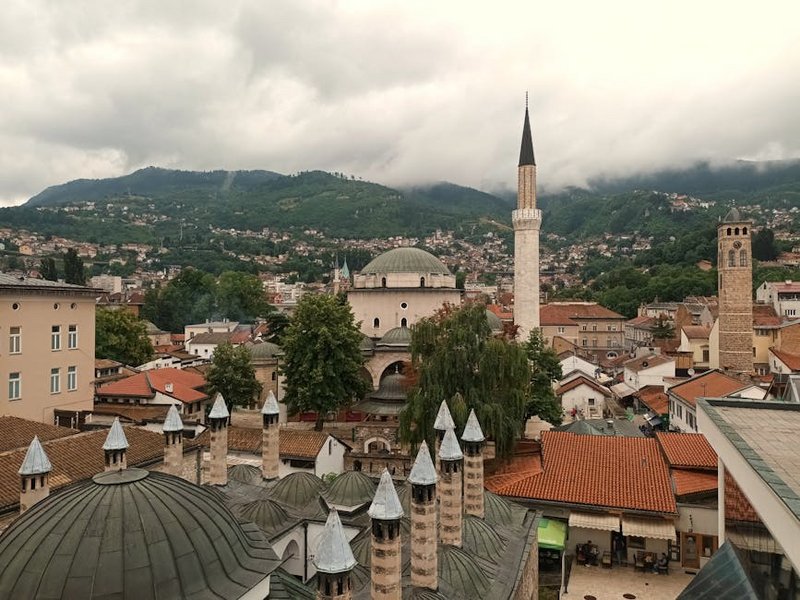
Alt: “sarajevo-bascarsija-old-bazaar-ottoman-architecture-cobblestone”
Historic Districts in Sarajevo – Planning Your Visit
To fully appreciate the historic districts in Sarajevo, strategic planning is key. The compact nature of the old town means you can see the major highlights in a day, but spending two to three days allows for deeper exploration of museums, side streets, and cafes. Focus your accommodation search on areas within a 15-minute walk of Baščaršija to maximize your time on foot.
Your budget should account for museum entry fees, guided walking tours, and meals in traditional restaurants. The city is very affordable for Western travelers, with most costs centered around experiences rather than high-end shopping. Comfortable walking shoes are non-negotiable, as the cobblestone streets are uneven and best explored slowly.
Best Time to Visit Sarajevo’s Old Town
Visit Sarajevo between late April and early June, or September and October, for ideal weather and smaller crowds. Spring offers pleasant temperatures between 55-70°F (13-21°C) with blooming flowers in parks and along the river. Autumn provides a similar mild climate with beautiful foliage in the surrounding hills, perfect for combining city exploration with short hikes.
The summer months of July and August can be warm, with highs reaching 85°F (29°C), and the main squares become crowded with tourists. Winter, from December to February, is cold with average highs of 35-40°F (2-4°C) and frequent snow, which adds a magical atmosphere but can make extensive outdoor walking less comfortable. The Winter Festival in February is a major cultural draw.
Budget Planning and Costs
A daily budget can vary significantly based on your travel style. Below is a breakdown of common spending tiers.
Essential Preparation Checklist
Pack sturdy, broken-in walking shoes with good grip for slippery cobblestones. Bring layers, as weather can shift quickly in the valley, and include a compact umbrella. A power adapter for Type F (European Schuko) outlets is required, as Bosnia uses 230V electricity.
Ensure your passport is valid for at least three months beyond your planned departure date. US and EU citizens do not need a visa for stays up to 90 days. Purchase comprehensive travel insurance that covers medical emergencies. Book popular guided tours and accommodations at least one month in advance for peak season visits.
Top Attractions and Walking Routes
Exploring on foot is the only way to grasp the layered history of Sarajevo’s urban core. Start your journey in the Ottoman heart and walk westward through time into the Austro-Hungarian sector. The main pedestrian thoroughfare, Ferhadija Street, acts as a perfect timeline, visually transitioning from one empire to the next.
Allow time to wander off the main paths into the residential streets (mahalas) of Baščaršija. Here, you’ll find quieter cobblestone alleys, traditional wooden houses, and local cafes. Don’t rush; the magic is often in the small details—a carved doorway, a hidden courtyard, or the sound of a hammer on copper.
Must-See Highlights
The Gazi Husrev-beg Mosque, built in the 1530s, is the architectural and religious centerpiece of Ottoman Sarajevo. Its domed prayer hall and elegant minaret dominate the Baščaršija skyline. Visit in the morning for softer light and fewer crowds, and remember to dress modestly.
The Sebilj wooden fountain is the symbolic meeting point of the Old Bazaar. While it’s a reconstruction, it captures the spirit of the past. Just a few steps away, the Brusa Bezistan covered market now houses a fascinating archaeological museum displaying artifacts from Sarajevo’s earliest days.
The Latin Bridge is an unassuming stone bridge forever linked to world history. The spot where Archduke Franz Ferdinand was assassinated is marked by a museum and plaques. It’s a sobering but essential stop to understand the city’s role in shaping the 20th century.
Hidden Gems and Local Favorites
Venture to the quieter artisans’ street, Kazandžiluk, where coppersmiths still hammer traditional coffee sets and souvenirs by hand. It’s more authentic than the main tourist square. For a panoramic view, climb the narrow streets to the Yellow Fortress (Žuta Tabija) at sunset for a breathtaking vista over the city’s rooftops and minarets.
Discover the “Passage of Spite” (Krošnja), one of the world’s narrowest streets, located near the Cathedral. Visit the Despić House Museum, a preserved Ottoman-era merchant home that shows how wealthy families lived. For a unique experience, find the Sarajevo Roses—concrete scars from mortar explosions filled with red resin as memorials scattered on sidewalks throughout the center.
Museums and Cultural Institutions
The Sarajevo Museum (1878-1918) inside the former City Hall beautifully explains the Austro-Hungarian period. The National Museum of Bosnia and Herzegovina, though often underfunded, holds the renowned Sarajevo Haggadah. The War Childhood Museum offers a profoundly moving and personal perspective on the 1990s conflict through children’s objects and testimonies.
For a deeper understanding of the siege, visit the Sarajevo Tunnel Museum at the former airport. It preserves a section of the lifeline tunnel that supplied the city. While a short taxi ride from the center, it provides crucial context for the modern city’s resilience. Allow at least an hour for your visit.
Practical Travel Information and Logistics
Sarajevo International Airport (SJJ) is the main gateway, located about 9 miles (14 km) southwest of the city center. Taxis are available but agree on a price (around 20-25 BAM / $11-14 USD) beforehand. The public bus (Line 31E) is a reliable and cheap alternative, taking about 30 minutes to the city.
Once in the historic center, everything is accessible on foot. The city’s compactness is a major advantage for visitors. For longer trips or to reach hillside viewpoints, the efficient tram network is useful. Purchase a ticket from a kiosk before boarding. Taxis are affordable for short trips; always ensure the meter is running.
| Accommodation Type | Best Location & Features | Price Range (USD/Night) |
|---|---|---|
| Hostel / Guesthouse | Near Baščaršija; dorm beds or basic private rooms, shared kitchen, social atmosphere. | $12 – $35 |
| Mid-Range Hotel | Along Ferhadija or near Latin Bridge; private en-suite bathroom, breakfast included, elevator. | $50 – $90 |
| Boutique Hotel | Restored historic building in Old Town; unique decor, superior service, central location. | $100 – $180 |
| Apartment Rental | Residential area near center; full kitchen, more space, local neighborhood feel. | $40 – $80 |