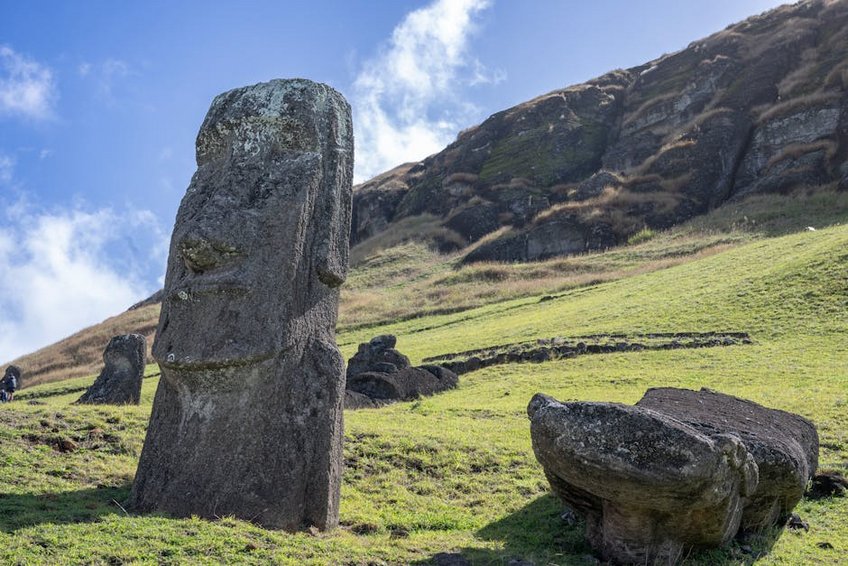
Exploring Chile’s Easter Island Rano Raraku Quarry
Chile Easter Island Rano Raraku Quarry offers an unparalleled archaeological adventure where nearly 400 moai statues remain partially carved into volcanic rock, providing a window into ancient Rapa Nui civilization. Your visit reveals the fascinating history of moai production from the 13th to 16th centuries, with statues ranging from 2 to 20 meters tall scattered across the volcanic slopes. This guide covers essential planning details, must-see attractions, and cultural insights for experiencing this UNESCO World Heritage site authentically.
Essential Rano Raraku Information
Rano Raraku served as the primary moai quarry for Easter Island between approximately 1250 and 1500 AD, with archaeological evidence showing continuous use across generations. The site features two main areas: the exterior slopes with nearly 300 visible moai and the interior crater containing another 90 statues in various completion stages. Visitors today walk along designated paths that protect both the fragile ecosystem and archaeological treasures while offering panoramic views.
The quarry’s significance extends beyond statue production to include ceremonial platforms called ahu and ancient petroglyphs depicting birdman cult symbolism. Rano Raraku’s tuff stone proved ideal for carving due to its relative softness compared to other volcanic rocks found across the island. Conservation efforts now limit visitor numbers to 100 people per time slot, requiring advance reservations through the CONAF park service.
What You Need to Know Before Visiting
Prepare for your Rano Raraku experience with these essential details about access and regulations.
- Purchase your Rapa Nui National Park ticket online beforehand for $80 USD, valid for 10 days and required for all archaeological sites including Rano Raraku.
- Wear sturdy hiking shoes with good traction since the paths involve uneven volcanic terrain and potential slippery sections during occasional rainfall.
- Bring sufficient water, sunscreen, and a hat since shade is limited and the subtropical sun remains intense throughout daylight hours.
- Budget travelers should allocate $100-150 USD daily by staying in hostels, preparing meals, and using bicycles for transportation while still covering the $80 park fee and occasional guided tours for key sites.
- Mid-range visitors spending $200-300 USD daily enjoy comfortable hotels, restaurant meals, rental cars for flexibility, and specialized guided tours focusing on archaeology or culture beyond standard offerings.
- Luxury experiences at $400-600 USD daily include boutique hotels, private guides, flight upgrades, and exclusive access to certain areas or experiences not available to general visitors through special permits.
- Chilean Tourism Board – Easter Island
- UNESCO World Heritage – Rapa Nui National Park
Key Historical Details
Rano Raraku’s operation spanned approximately 250 years before abrupt cessation around the 16th century, coinciding with societal changes and resource depletion on Easter Island. Archaeologists identify three distinct carving periods reflected in stylistic variations, with later moai featuring more refined facial features and larger sizes than earlier examples. The quarry abandonment left statues in various completion stages, from initial outlines to nearly finished monuments ready for transport.
Transportation methods remain partially understood, though oral traditions and experimental archaeology suggest moai were moved using log rollers and rope systems. The largest unfinished moai measures 21 meters long and would have weighed approximately 270 tons if completed, demonstrating the extraordinary ambition of Rapa Nui stoneworkers. Today, the site provides crucial insights into Polynesian engineering capabilities and cultural practices before European contact.
Archaeological Significance
Rano Raraku represents one of archaeology’s most important sites for understanding monument construction techniques in pre-industrial societies. The quarry contains moai in every production phase, from initial rock selection to final polishing, creating an open-air museum of ancient technology. Research continues using laser scanning and 3D modeling to document erosion patterns and preserve the site digitally for future generations.
Scholars debate whether resource depletion or societal transformation caused the quarry’s abandonment, with evidence supporting both environmental and cultural factors. The site’s preservation allows visitors to witness archaeology in progress, with ongoing excavations occasionally revealing new statues or tools. Your visit contributes to conservation through park fees funding both research and maintenance programs.
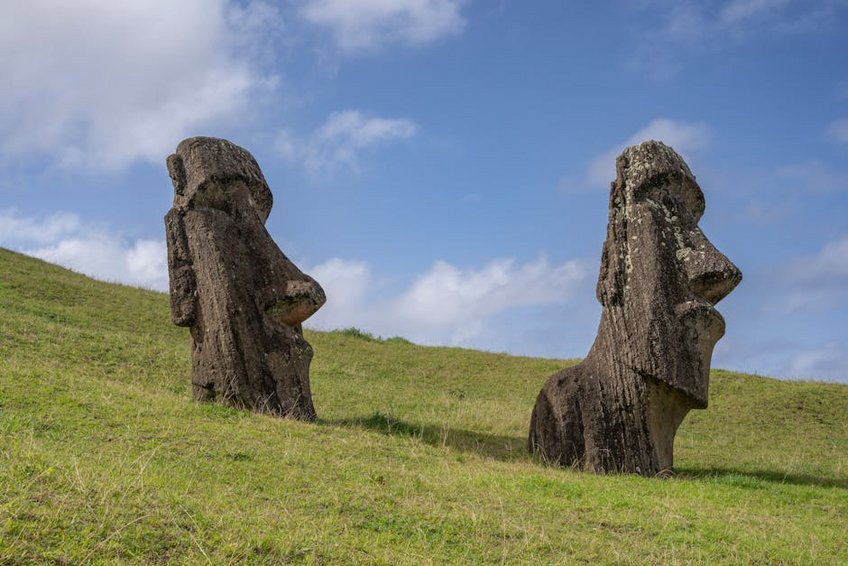
Alt: “rano-raraku-moai-statues-volcanic-slope-easter-island”
Planning Your Chile Easter Island Rano Raraku Quarry Trip
Your Chile Easter Island Rano Raraku Quarry visit requires careful coordination due to the island’s remote location and protected status. Flights from Santiago take approximately five hours and cost $600-900 USD roundtrip, with LATAM Airlines as the sole commercial carrier serving Mataveri International Airport. Accommodation reservations should be made three to six months in advance, especially for visits during the dry season from October through April.
Budget $150-250 USD daily for moderate travel expenses including meals, transportation, and guided tours beyond the mandatory park fee. The Rapa Nui National Park ticket grants access to Rano Raraku and other key sites like Orongo and Anakena Beach across multiple days. Consider hiring local guides for $50-80 USD per half-day to gain deeper insights into moai history and cultural significance.
Respect current visitor limitations at Rano Raraku, with time slots available from 9:00 AM to 6:00 PM and a maximum stay of two hours per visit. The Chilean government implemented these measures in 2018 to prevent overtourism damage, requiring online reservations through the CONAF website. Plan your itinerary to include other archaeological sites since the park ticket covers all locations within the national park boundaries.
Best Time to Visit Rano Raraku
Visit between December and March for the warmest weather, with temperatures ranging from 70-80°F (21-27°C) and minimal rainfall averaging under 2 inches monthly. These summer months offer the longest daylight hours for photography but also attract the largest crowds, necessitating earlier booking for flights and accommodations. Shoulder seasons in April-May and September-October provide comfortable conditions around 65-75°F (18-24°C) with fewer visitors.
Avoid the rainy season from June to August when precipitation reaches 4-5 inches monthly and temperatures drop to 60-68°F (16-20°C), though this period offers the lowest tourist numbers. The Tapati Rapa Nui festival in early February showcases traditional culture but significantly increases accommodation prices and demand. Regardless of season, morning visits typically provide better lighting for photography and cooler hiking conditions.
Budget Planning and Costs
Manage your Easter Island expenses with these tiered budget options covering essential categories.
Essential Preparation Checklist
Pack quick-dry clothing, layered options for temperature changes, and waterproof gear since weather shifts rapidly in this subtropical climate. Include binoculars for distant moai viewing, a powerful camera with extra batteries, and a portable power bank since electricity outages occasionally occur across the island. Sturdy hiking shoes prove essential for navigating the uneven quarry terrain safely and comfortably.
Secure comprehensive travel insurance covering medical evacuation given the island’s remote location and limited healthcare facilities beyond basic services. Book flights and accommodations three to six months early, especially for December-March visits when demand peaks and availability decreases rapidly. Learn basic Spanish phrases and Rapa Nui greetings like ‘iorana’ (hello) to enhance cultural connections during your stay.
Top Attractions and Activities
Rano Raraku’s main trail spans approximately 1.5 miles (2.4 km) roundtrip with moderate elevation gain, taking most visitors 90-120 minutes to complete at a leisurely pace. The route begins at the quarry entrance where interpretive signs explain the moai carving process before ascending the volcanic slope past dozens of partially completed statues. Your journey culminates at the crater rim offering panoramic views across the island and Pacific Ocean.
Beyond the standard trail, special guided tours access restricted areas showing unique moai features like detailed tattoo markings on their backs. These tours require advance booking through authorized operators and provide deeper archaeological context than self-guided visits. Combine your Rano Raraku experience with nearby Ahu Tongariki, where 15 restored moai stand against the sunrise, creating iconic photography opportunities.
Must-See Highlights
El Gigante represents the largest moai ever attempted at Rano Raraku, measuring 21 meters long and weighing an estimated 270 tons in its unfinished state. Located near the quarry’s upper section, this massive statue demonstrates the extraordinary ambition of Rapa Nui craftsmen before quarrying ceased. Visitors can compare El Gigante with the transported moai at Ahu Tongariki to understand scale differences between quarry and ceremonial sites.
The kneeling moai called Tukuturi stands unique among Rano Raraku’s statues with its beard, rounded head, and kneeling position unlike the standard standing figures. Archaeologists believe Tukuturi represents a later stylistic development or possibly a singer based on its posture and anatomical features. This red scoria stone statue sits separate from the main quarry area near the crater lake.
Moai 295 features exceptionally detailed carvings including elaborate hand patterns and back tattoo designs that remain clearly visible despite centuries of weathering. This nearly completed statue shows the final polishing stage before transportation would have occurred, offering insights into finishing techniques. Its location on the exterior slope makes it easily accessible for close observation and photography.
Hidden Gems and Local Favorites
Few visitors explore the quarry’s northern slope where several moai display unique facial expressions and stylistic variations not found elsewhere at Rano Raraku. These statues received less attention from early archaeologists and tourists, preserving more subtle carving details and potential symbolic elements. Local guides often know the best viewpoints for photographing these less-crowded moai during golden hour lighting.
The quarry’s interior crater contains a freshwater lake surrounded by reeds and additional moai partially submerged or hidden vegetation. This area requires special permission for access but offers a completely different perspective on the site’s geology and archaeological preservation. The lake itself holds cultural significance in Rapa Nui traditions as a source of freshwater and ceremonial importance.
Moai Photography Tips
Capture Rano Raraku’s statues effectively by visiting during early morning or late afternoon when angled sunlight enhances texture and depth in the volcanic stone. Use a polarizing filter to reduce glare from the tuff rock surface and bring out details in carvings that might otherwise appear flat. Include human figures for scale since moai sizes vary dramatically from small statues to monumental works.
Avoid using tripods in crowded areas where they might obstruct paths or damage archaeological features, instead opting for image stabilization technology. The golden hour before sunset provides particularly dramatic lighting as shadows lengthen across the volcanic slopes, highlighting the statues’ three-dimensional qualities. Respect all signage and barriers designed to protect both visitors and the fragile archaeological resources.
Practical Travel Information
Easter Island’s infrastructure supports tourism adequately though services remain limited compared to mainland Chile, with one hospital, several supermarkets, and restaurants concentrated in Hanga Roa. Most visitors rent vehicles for flexibility, with options including cars ($50-80 USD daily), motorcycles ($30-50 USD), or bicycles ($15-25 USD) available from multiple rental agencies. The island measures only 63 square miles (163 km²), making all sites accessible within 30 minutes drive from Hanga Roa.
Accommodation ranges from budget hostels to luxury hotels, with most properties family-owned and featuring authentic Rapa Nui hospitality and design elements. Booking.com and Airbnb list numerous options, though direct reservation through hotel websites sometimes offers better rates and package deals including tours. Electricity operates on 220V with European-style outlets, requiring adapters for North American devices.
| Category | Options/Features | Price Range (USD) |
|---|---|---|
| Accommodation | Hostels with shared facilities, mid-range hotels with breakfast, luxury resorts with ocean views | $40-50, $120-180, $300-500 |
| Transportation | Bicycle rental, scooter rental, compact car rental, guided tour transportation | $15-25, $30-50, $50-80, $70-100 |
| Food & Dining | Market self-catering, casual restaurants, upscale dining with seafood | $15-25, $30-50, $70-100 |
| Activities | National Park fee, basic guided tour, specialized archaeology tour, cultural shows | $80, $50-80, $100-150, $30-50 |