Casablanca Travel Guide: Your Essential Companion to Morocco’s Vibrant Metropolis
Navigating Casablanca’s unique blend of French colonial grandeur, Moroccan energy, and modern business hustle demands a clear plan. This Casablanca travel guide offers specific, practical advice for exploring the city’s art deco architecture, legendary coastline, and authentic markets while avoiding common tourist pitfalls. We cover essential logistics, hidden cafes, cultural etiquette, and the best ways to allocate your time between must-see landmarks and local neighborhoods.
Essential Casablanca Information
Casablanca, or “Casa” as locals call it, is Morocco’s economic powerhouse and largest city with over 4 million residents. Unlike the imperial cities of Marrakech and Fez, its charm lies in its 20th-century history and contemporary, cosmopolitan vibe. Founded by Berber kingdoms, the city gained its modern identity under French protectorate rule from 1912 to 1956.
You will find a city constantly evolving, where historic quarters sit alongside gleaming skyscrapers. The official languages are Arabic and French, but English is increasingly understood in tourist areas and hotels. The Moroccan Dirham (MAD) is the local currency, and it is best to obtain cash from ATMs upon arrival for the most favorable rates.
What You Need to Know Before Visiting
Understanding a few key points will dramatically improve your experience in this North African hub.
- The city experiences a mild coastal climate year-round, with average temperatures ranging from 55°F (13°C) in winter to 82°F (28°C) in summer. Coastal fog, especially in mornings, is common.
- Casablanca is generally safe for tourists, but standard precautions apply: be aware of your belongings in crowded areas like the Central Market and avoid poorly lit streets at night.
- Dress is relatively liberal compared to other Moroccan cities, but modest attire is respectful when visiting religious sites like the Hassan II Mosque.
- Budget travelers can manage on $40-60 per day by staying in hostels or budget riads ($15-25/night), eating at local markets and street stalls ($2-5 per meal), and using tram or bus transport ($0.50 per ride). Free activities include walking the corniche and exploring the Habous quarter.
- A mid-range daily budget of $80-150 covers comfortable 3-4 star hotel rooms ($60-100/night), meals at decent restaurants ($10-20 per meal), taxi trips between districts, and entrance fees to key attractions like the Hassan II Mosque tour ($13).
- Luxury visitors spending $250+ daily will find 5-star oceanfront hotels ($200+/night), fine dining at places like La Sqala ($50+ per meal), private guided tours, and chauffeur services. Upscale shopping in Maarif or at Morocco Mall is also an option.
- Moroccan National Tourist Office (ONMT)
- Lonely Planet Casablanca Guide
- UNESCO: Casablanca, Twentieth-Century City
Key Cultural Context and Vibe
Do not expect the romanticized Hollywood version from the classic film. Instead, Casablanca presents a real, working Moroccan city with a distinct identity. The art deco district in the city center showcases stunning architectural heritage from the 1930s, featuring curved facades and ornate ironwork. Meanwhile, the Ain Diab corniche buzzes with modern cafes and seaside leisure.
While not as tourist-focused as Marrakech, Casablanca offers a more authentic slice of contemporary Moroccan life. Your interactions will often be with businesspeople, students, and families going about their daily routines. This provides a unique opportunity to observe the country’s dynamic present and ambitious future.
The City’s Layout and Neighborhoods
Central Casablanca is walkable, with main attractions clustered in distinct districts. The Medina (Old City) is compact and manageable, centered around lively markets and traditional eateries. Just south lies the Habous Quarter, or “New Medina,” a 20th-century planned district with beautiful arches and artisan workshops.
The city center, around Mohammed V Square, is the art deco heartland and main business district. For coastal views and upscale dining, head to the Ain Diab coastline west of the center. Most visitors find basing themselves near the city center or the corniche provides the best access to major sites.
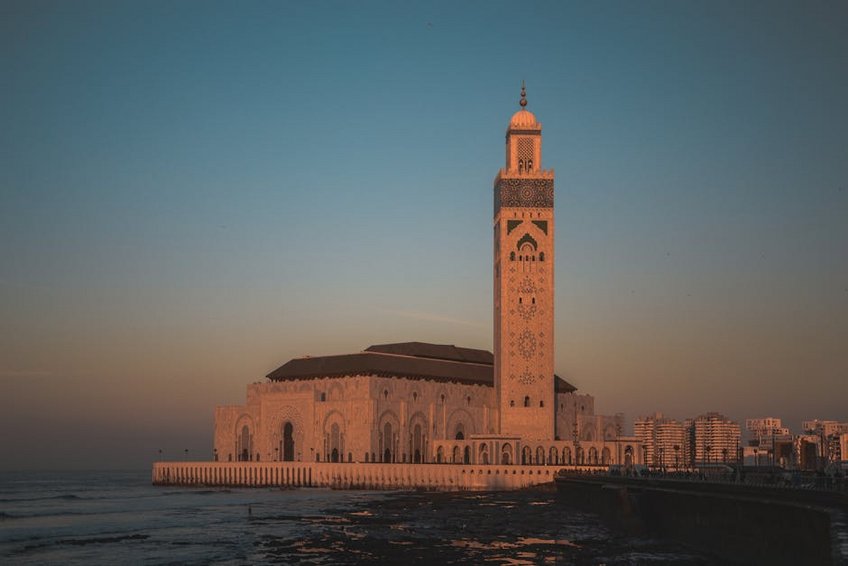
Alt: “casablanca-hassan-ii-mosque-coastal-sunset-view”
Casablanca Travel Guide – Planning Your Trip
Effective planning transforms a visit to this sprawling city from overwhelming to exhilarating. Focus your itinerary around a few key landmarks while leaving room for spontaneous exploration of its diverse neighborhoods. Booking accommodations and key tours in advance is wise, especially if your visit coincides with Moroccan holidays or weekends.
We recommend allocating two to three full days to experience the city’s highlights without rushing. This allows time for a guided tour of the Hassan II Mosque, exploration of the art deco district, a visit to the Rick’s Cafe recreation, and leisurely meals along the corniche. A well-planned Casablanca travel itinerary balances iconic sights with local market immersion.
Best Time to Visit Casablanca
The ideal months for a visit are from April to June and September to November. During these periods, daytime temperatures are a pleasant 70-80°F (21-27°C) with minimal rainfall and less frequent coastal fog. This is perfect weather for walking tours and coastal strolls.
Summer (July-August) can be warm and humid, with averages around 82°F (28°C), but the sea breeze provides relief. Winter (December-March) is mild but wetter and cooler, around 55-63°F (13-17°C). The city is lively year-round, but spring and fall offer the most consistently comfortable conditions for sightseeing.
Budget Planning and Costs
Casablanca can suit various budgets, with costs generally lower than major European cities but higher than other Moroccan destinations.
Essential Preparation Checklist
Pack lightweight, breathable clothing for daytime and a light jacket for cooler evenings. Include comfortable walking shoes, a power adapter for Type C/E plugs (220V), and a scarf for women to cover shoulders if visiting mosques. Sunscreen is essential due to the coastal location.
Ensure your passport is valid for at least six months. US and EU citizens do not need a visa for tourist stays under 90 days. Purchase comprehensive travel insurance that covers medical emergencies. Download offline maps of the city and consider a local SIM card from providers like Maroc Telecom for reliable data.
Top Attractions and Signature Experiences
The city’s landmarks reflect its historical layers and architectural ambition. The Hassan II Mosque dominates the coastline, while the historic medina offers a more traditional atmosphere. Beyond these, the art deco heritage trail provides a unique walking tour through the city center’s glamorous past.
Allocate at least half a day to properly appreciate the Hassan II Mosque complex, including its interior tour and exterior plaza. The adjacent medina and nearby Quartier Habous can be explored in another half-day. Save time to simply wander the corniche at sunset, joining locals for a stroll and fresh orange juice from a seaside vendor.
Must-See Highlights
The Hassan II Mosque is an absolute non-negotiable. This architectural masterpiece, partially built over the Atlantic Ocean, features the world’s tallest minaret at 210 meters. Guided tours, available to non-Muslims at specific times, reveal breathtaking zellij tilework, a retractable roof, and a massive prayer hall.
Explore the Old Medina, a fortified historic quarter with bustling souks selling spices, leather, and ceramics. It is more manageable and less intense than medinas in other cities. Afterwards, visit the nearby Quartier Habous, a charming “new medina” built by the French, known for its orderly lanes, archways, and excellent pastry shops.
For a taste of Hollywood nostalgia, stop by Rick’s Cafe, a faithful recreation of the film’s iconic bar. While it’s a modern business, the ambiance, piano music, and classic cocktails make for a fun evening. Reservations are recommended for dinner.
Hidden Gems and Local Favorites
Venture into the city center for a self-guided art deco architecture tour. Start at Place Mohammed V and explore surrounding streets like Boulevard Mohammed V and Rue du Prince Moulay Abdellah. Look for details like stained glass, wrought iron, and curved facades on buildings from the 1930s.
Discover the Villa des Arts, a beautiful art deco villa housing a contemporary art gallery with rotating exhibitions of Moroccan artists. Entry is often free. For a local market experience beyond the tourist track, visit the Marché Central, a covered market bursting with fresh seafood, produce, and flowers, offering fantastic photo opportunities.
Coastal Walk and Modern Landmarks
The Ain Diab Corniche is a long seafront promenade perfect for a stroll, jog, or bike ride. It is lined with pools, cafes, and restaurants. While the public beaches can be crowded, the walking path offers fantastic views, especially at sunset.
Visit the massive Morocco Mall, one of Africa’s largest shopping centers, not just for shopping but to see its indoor aquarium and dancing fountain show. For a panoramic city view, head to the rooftop terrace of the Kenzi Tower hotel for a coffee or drink, offering a stunning perspective, particularly at dusk.
Practical Travel Information and Logistics
Moving around the city is straightforward with a mix of modern and traditional options. The city’s tram system is clean, efficient, and covers most central areas and key corridors. It is the most reliable way to bypass traffic. Petits taxis (small, beige cars) are plentiful for shorter journeys; always ensure the meter is running or agree on a fare beforehand.
For trips to the airport or longer excursions, grand taxis (larger, shared vehicles) are available. Ride-hailing apps like Careem and Heetch operate reliably and often provide a more convenient, fixed-price alternative to street-hailed cabs, especially for visitors unfamiliar with the city layout.
| Transport Type | Best For / Key Details | Price Range (USD) |
|---|---|---|
| Tram | Efficient travel along major corridors from the port to suburbs. Buy rechargeable card at stations. | $0.50 per ride |
| Petit Taxi | Short trips within the city. Use metered fare or negotiate before getting in. Fits 3 passengers. | $3-$10 per trip |
| Careem/Heetch App | Convenient, fixed-fare rides; English app interface; cash or card payment. | $5-$15 per trip |
| Grand Taxi | Airport transfers or trips to nearby towns like Rabat. Often shared; negotiate fare. | $20-$40 to airport |