Road Trip Guide in New Zealand: Epic Scenery on Your Terms
Embarking on a road trip guide in New Zealand offers unparalleled freedom to explore dramatic coastlines, majestic mountains, and serene lakes at your own pace. This nation’s compact size and well-maintained network of scenic highways connect you to world-class adventures, from glacier hikes to geothermal wonders, within just a few hours of driving. Our guide provides essential logistics, route recommendations, and local insights to craft your perfect self-drive journey across both the North and South Islands.
Essential New Zealand Travel Information
New Zealand comprises two main islands, each with a distinct personality, separated by the Cook Strait. The North Island is renowned for its volcanic landscapes, Maori culture, and geothermal activity, while the South Island boasts the Southern Alps, spectacular fiords, and adventure sports capitals. Driving is the most rewarding way to experience the country’s diverse beauty, with major rental companies available at all international airports.
International visitors must hold a passport valid for at least three months beyond their intended departure date. Citizens of the US, UK, Canada, and most EU countries do not need a visa for tourist stays of up to 90 days but must obtain an NZeTA (New Zealand Electronic Travel Authority) before travel. The official currency is the New Zealand Dollar (NZD), and credit cards are widely accepted, though carrying some cash is wise for rural areas.
Key Documents and Entry Requirements
Ensure you have these items prepared well before your departure date.
- A valid passport and approved NZeTA, which costs NZD $23 via the official mobile app and requires processing several days in advance of your flight.
- Evidence of onward travel and sufficient funds for your stay, which customs officials may request upon your arrival at Auckland (AKL), Christchurch (CHC), or Wellington (WLG) airports.
- An International Driving Permit (IDP) alongside your domestic license if your license is not in English; it’s required by most rental companies and serves as a helpful translation.
- Budget Travelers: Allow $100-$150 USD per day. This covers a small rental car, hostel or campsite stays, self-catered meals from supermarkets, and free natural attractions like hikes and beaches.
- Mid-Range Travelers: Plan for $200-$350 USD per day. This budget fits a standard SUV rental, comfortable motel or holiday park cabin stays, a mix of cafe meals and self-catering, and paid activities like a Milford Sound cruise or glacier heli-hike.
- Luxury Travelers: Budget $500+ USD per day. This enables a premium 4WD rental, stays at boutique lodges and luxury hotels, dining at top restaurants, and exclusive guided tours such as private wine tours or scenic helicopter flights.
- Tourism New Zealand Official Site
- Jasons Travel Media – NZ Travel Guides
Understanding the Climate and Geography
New Zealand’s climate is temperate maritime, meaning weather can change rapidly across microclimates. Summer (December-February) brings average temperatures of 68°F to 77°F (20°C to 25°C) in the north, perfect for beach visits. Winter (June-August) sees South Island alpine areas dip below freezing, ideal for skiing, while North Island cities average 46°F to 57°F (8°C to 14°C).
Always pack layers, including a waterproof jacket, regardless of the season. Mountain passes like the Crown Range or Desert Road can close unexpectedly due to snow or high winds, so checking the NZ Transport Agency website for real-time road conditions is a daily must. The country sits across two tectonic plates, making it geologically active with occasional earthquakes; familiarize yourself with safety procedures.
Local Customs and Connectivity
New Zealanders, known as “Kiwis,” are generally informal, friendly, and environmentally conscious. Tipping is not expected but appreciated for exceptional service, usually around 10%. Free public Wi-Fi is limited, so purchasing a local SIM card from providers like Spark or Vodafone upon arrival is recommended for reliable navigation and communication.
Respect the Maori concept of “kaitiakitanga” (guardianship) by following all conservation rules, staying on marked tracks, and using designated camping areas. Power outlets are Type I, operating on 230V, so travelers from North America will need a plug adapter and potentially a voltage converter for certain devices.
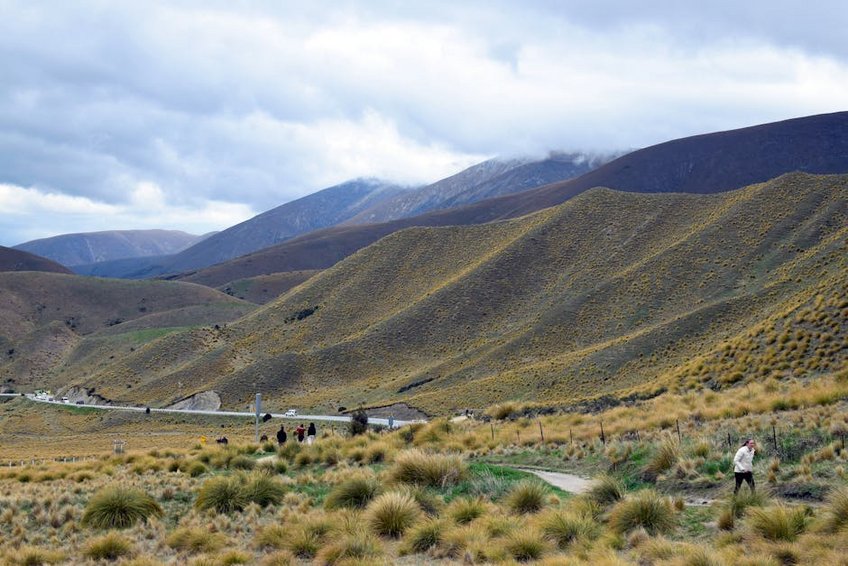
Alt: “new-zealand-south-island-milford-road-scenic-drive”
Road Trip Guide in New Zealand – Planning Your Journey
Crafting the perfect New Zealand self-drive adventure requires balancing ambition with realism, as distances can be deceiving. A successful journey accounts for winding roads, frequent photo stops, and variable weather. Focus on exploring fewer regions deeply rather than rushing between highlights, allowing time for spontaneous detours to local markets or hiking trails.
Your budget should allocate funds for the rental vehicle, fuel (petrol), accommodations, activities, and food. Fuel prices fluctuate but averaged NZD $2.70 per liter (approximately USD $6.50 per gallon) in 2023. Booking your rental car and key accommodations three to six months in advance is crucial for peak season travel from December to March, securing better rates and availability.
Best Time to Visit New Zealand for a Road Trip
The ideal time for a New Zealand driving tour is during the shoulder seasons of late spring (October-November) and early autumn (March-April). These months offer a balance of pleasant weather, with temperatures between 59°F and 68°F (15°C and 20°C), fewer tourists, and generally stable road conditions across both islands. Wildflowers bloom in spring, while autumn features stunning golden foliage.
Summer (December-February) delivers the warmest and longest days but coincides with school holidays, leading to crowded attractions and higher prices. Winter (June-August) is excellent for a South Island trip focused on alpine scenery and skiing, but requires caution for driving in snow and ice, potentially with chains. Some remote walking tracks may be closed.
Budget Planning and Costs
Your daily expenditure will vary dramatically based on accommodation style, dining choices, and planned activities. Here’s a realistic breakdown for two people.
Essential Preparation Checklist
Beyond your passport and license, specific gear will enhance your comfort and safety on the road. Pack versatile, quick-dry clothing, sturdy walking shoes or hiking boots, a high-quality rain jacket, sunscreen, and a reusable water bottle. A power bank for devices, a physical road atlas as a backup, and a cooler bag for picnic supplies are highly recommended.
Book your international flights and secure your rental vehicle first. Next, reserve accommodations for at least your first and last nights, plus any stays in peak destinations like Queenstown or Rotorua. Purchase comprehensive travel insurance that specifically covers rental vehicle excess and adventure activities. Finally, download offline maps on Google Maps or Maps.me and the essential “CamperMate” app for locating facilities.
Top Routes and Iconic Drives
New Zealand’s highways are destinations themselves, offering continuous vistas that demand frequent stops. The classic itinerary for a first visit is two weeks split between both islands, though dedicating ten days to just the South Island is equally popular. Allow for driving times that are 20-50% longer than what Google Maps estimates due to the curvy, single-lane nature of many roads.
For a comprehensive tour, fly into Auckland, explore the North Island, take the Interislander ferry from Wellington to Picton, then tour the South Island before departing from Christchurch. Alternatively, focus on one island for a more relaxed pace, perhaps looping from Christchurch to Queenstown via the rugged West Coast. Always build in “buffer days” for unexpected weather or discoveries.
Must-See Highlights and Drives
The South Island’s Milford Road (State Highway 94) to Milford Sound Piopiotahi is arguably the world’s finest scenic drive, passing through the Eglinton Valley and the Homer Tunnel. A Milford Sound cruise is essential, with prices starting around $75 NZD per person. On the North Island, the Pacific Coast Highway (SH2 & 35) offers a stunning coastal route from Auckland to the Coromandel Peninsula, famous for Hot Water Beach.
Queenstown to Glenorchy is a short but breathtaking 45-minute drive along Lake Wakatipu, with multiple filming locations for *The Lord of the Rings*. In the central North Island, the Thermal Explorer Highway (SH5) connects Rotorua’s geothermal parks with Taupo’s vast lake. Entry to Wai-O-Tapu Thermal Wonderland costs around $32 NZD and is worth the fee for its vibrant Champagne Pool.
Hidden Gems and Local Favorites
Venture beyond the Great Walks to discover roads less traveled. The Forgotten World Highway (SH43) on the North Island is a remote, unsealed road journey through pioneer history, requiring a full day and a sturdy vehicle. On the South Island, the road to Wharariki Beach near Cape Farewell leads to windswept dunes and iconic archway rock formations, with seals often lounging on the sand.
For a stunning alternative to the busy Fox and Franz Josef Glaciers, take a detour to the Okarito Lagoon, New Zealand’s largest unmodified wetland. Kayak tours here offer serene wildlife viewing. In Hawke’s Bay, explore the backroads of the “Art Deco Trail” around Napier by vintage car, or cycle the winery trails for a taste of world-class Syrah and Chardonnay.
Adventure Activities Along the Way
Your self-drive tour provides easy access to iconic adventures. Book a heli-hike on the Franz Josef Glacier for a guided ice walk, with tours starting at approximately $450 NZD. In Queenstown, try bungy jumping at the Kawarau Bridge, the world’s first commercial site, or opt for a thrilling jet boat ride through the Shotover Canyon.
For a unique cultural adventure, join a guided kayak tour of the glowworm caves in Waitomo, paddling under a celestial ceiling of bioluminescence. Less extreme but equally memorable, take a scenic cruise on the historic TSS Earnslaw steamship across Lake Wakatipu to a high-country sheep station for a farm tour and dinner.
Practical Travel Information and Logistics
Navigating New Zealand’s logistics is straightforward with proper planning. Rental cars are plentiful, but booking early ensures the best selection and price. Consider your itinerary when choosing a vehicle; a 2WD car suffices for main highways in summer, while a 2WD or 4WD SUV offers more comfort and space for gravel roads like those in Central Otago.
For a truly flexible experience, consider a campervan, which combines transport and accommodation. Strict freedom camping rules apply; you must stay in designated areas if your vehicle is not self-contained. Pre-booking holiday park sites or Department of Conservation (DOC) campsites is highly recommended, especially from December through February.
| Accommodation Type | Best For & Features | Avg. Price/Night (USD) |
|---|---|---|
| Holiday Parks & Motels | Families & road trippers; often include kitchenettes, parking, and laundry facilities. | $80 – $150 |
| Bed & Breakfasts | Couples & scenic stays; personalized service, home-cooked breakfast, local hosts. | $120 – $250 |
| Department of Conservation (DOC) Campsites | Budget travelers & nature lovers; basic facilities in stunning natural locations. | $15 – $30 per person |
| Boutique Lodges & Luxury Hotels | Splurge & special occasions; premium amenities, fine dining, and guided experiences. | $350+ |