Namibia Skeleton Coast Seal Colonies: A Guide to the Atlantic’s Wild Coast
The Skeleton Coast of Namibia is one of the planet’s most dramatic and desolate shorelines, where the relentless Atlantic Ocean meets the oldest desert on Earth. This unforgiving landscape is home to a thriving wildlife spectacle: the massive Cape fur seal colonies that carpet specific stretches of coastline with life. Visiting the Namibia Skeleton Coast seal colonies offers a raw, powerful encounter with nature, set against a backdrop of shipwrecks, towering dunes, and relentless ocean spray.
Essential Skeleton Coast Information
The Skeleton Coast stretches over 500 kilometers from the Ugab River in the south to the Kunene River on the Angolan border. Its name originates from the whale and seal bones that once littered the shore from the whaling industry, and the numerous shipwrecks claimed by its treacherous fog and currents. This area forms part of the Namib Desert, receiving less than 10mm of annual rainfall, creating a stark, beautiful environment.
Access is highly controlled, with the northern section above Terrace Bay falling within the Skeleton Coast National Park. Independent travel here requires a 4×4 vehicle, permits, and self-sufficiency. The climate is dominated by the cold Benguela Current, which brings dense morning fog and sustains the rich marine life that the seals depend on for survival.
Understanding Cape Fur Seals
These marine mammals are the stars of the coastline. They are not true seals but are part of the eared seal family, capable of using their front flippers to “walk” on land.
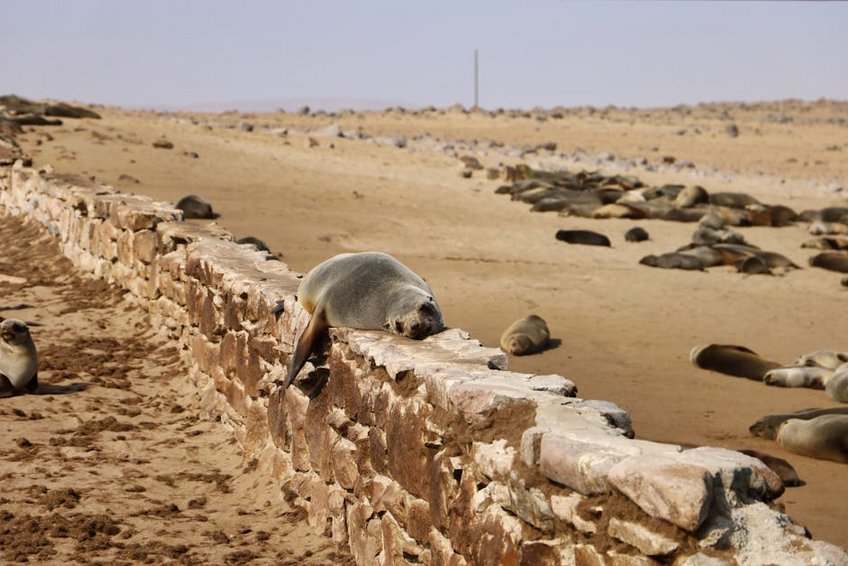
- The colony at Cape Cross Seal Reserve is one of the largest and most accessible, with a population that can swell to over 200,000 animals during the November/December breeding season.
- Bulls can weigh up to 350kg and are highly territorial, while cows are significantly smaller. Pups are born with black fur and learn to swim at about two months old.
- Their diet consists mainly of fish like pilchards and anchovies, and they are a crucial food source for the coast’s predators, including brown hyenas and jackals.
- Budget Self-Drive: $70-120 per day. Includes camping fees ($20-40), park permits ($10 pp/day), your own 4×4 rental ($80+), and self-catered food. This requires full preparation and offers maximum independence.
- Mid-Range Guided Tour: $250-450 per day. Includes guided 4-7 day tours from Swakopmund with transport, park fees, comfortable lodge or guesthouse stays, and most meals. This provides expertise and reduces logistical hassle.
- Luxury Fly-In Safari: $800-1500+ per day. Includes scenic flights from Windhoek, exclusive lodge stays within or near the park (like Shipwreck Lodge), all gourmet meals, and guided activities. This maximizes comfort and unique access.
- Namibia Tourism Board – Skeleton Coast
- Namibia Wildlife Resorts – Park Information
Best Viewing Spots Along the Coast
While Cape Cross is the flagship location, other significant colonies exist. Terrace Bay, accessible only via the national park, hosts a substantial colony with far fewer visitors. The area around the wreck of the Suiderkus also has seal populations, viewable from the beach with a good pair of binoculars.
Timing your visit is critical for the experience. The breeding season from late November to early December is incredibly active but also pungent and chaotic. The weaning period in January sees the beaches filled with curious, playful pups, offering fantastic photographic opportunities of their early swimming lessons.
Weather and Climate Patterns
Expect a cool, arid climate year-round due to the cold ocean current. Summer temperatures (December-February) range from 15-25°C (59-77°F), while winter (June-August) sees temperatures of 10-20°C (50-68°F). The hallmark of the coast is the dense, rolling fog that can appear any morning, reducing visibility dramatically but creating an eerie, photogenic atmosphere.
Alt: “cape-cross-seal-reserve-namibia-skeleton-coast-aerial-view”
Namibia Skeleton Coast Seal Colonies – Planning Your Trip
A journey to see the seal colonies requires careful logistical planning. The remoteness means services are sparse, and fuel stops are critical planning points. You must decide between a self-drive 4×4 adventure or joining an organized tour, as public transport does not exist here. Permits for the national park sections must be booked in advance through the Namibia Wildlife Resorts website.
Your budget will vary significantly based on your travel style. A self-drive camping trip can be relatively economical, while fly-in luxury safaris that include the Skeleton Coast represent the high end of travel in Southern Africa. Allocate at least three full days for the coastal experience to account for driving distances and potential fog delays.
Best Time to Visit the Seal Colonies
The optimal months for wildlife viewing are between October and March. October and November see the arrival of bulls staking territories, leading up to the intense breeding peak in late November. December and January are fantastic for observing newborn black pups and their first ventures into the ocean.
From February to April, pups are more active and the weather is generally warmer and clearer, around 18-24°C (64-75°F). The winter months of May to September offer cooler temperatures, 10-18°C (50-64°F), less odor, and often clearer skies, though the seas can be rougher and fog persists.
Budget Planning and Costs
Costs can be broken into three primary travel styles for this remote region.
Essential Preparation Checklist
Packing correctly is non-negotiable. You need warm layers for the cold mornings, windproof and waterproof jackets, sturdy closed-toe shoes, and wide-brimmed hats for sun protection. Essential gear includes high-quality binoculars, a camera with a zoom lens (200mm minimum), and protective covers for your electronics against the salty, sandy air.
Ensure your vehicle is a reliable 4×4 with two spare tires, extra fuel, and recovery equipment. Carry all necessary documentation: passport, international driver’s license, vehicle rental papers, and printed permit confirmations. Book accommodations and park entries months in advance, especially for peak season travel between June and October.
Top Attractions and Coastal Activities
Beyond the seal colonies, the Skeleton Coast is a landscape of profound beauty and history. The contrast between the living, barking masses on the beaches and the silent, rusting shipwrecks just offshore is unforgettable. Activities focus on appreciating this stark environment, from scenic flights that reveal its scale to 4×4 explorations of its hidden corners.
Wildlife spotting extends beyond seals. Look for desert-adapted elephants near the Hoarusib River, brown hyenas scavenging at dusk, and countless seabirds like cormorants and pelicans. The constant wind shapes the dunes into sharp ridges, and the colors shift from gold to deep red throughout the day.
Must-See Highlights
The Cape Cross Seal Reserve is the undeniable centerpiece. A walkway allows you to observe thousands of seals from a safe, elevated platform. The sound and smell are overwhelming, offering a truly immersive sensory experience. Visit early morning or late afternoon for the best light and slightly lower winds.
The Zeila shipwreck, south of Terrace Bay, is one of the most photogenic wrecks, sitting starkly on the beach. Further north, the landscape transforms with the Clay Castles of the Hoarusib Canyon and the roaring dunes at Sandwich Harbour, where dunes plunge directly into the Atlantic. Each site requires a capable vehicle and respect for the tide schedules.
Hidden Gems and Local Favorites
For a more secluded seal encounter, ask local guides about smaller, unnamed colonies accessible via 4×4 tracks south of Torra Bay. The lichen fields near Wlotzkasbaken are a fragile, colorful ecosystem that takes decades to grow—view only from a distance. The skeleton of the Dunedin Star wreck tells a dramatic survival tale from 1942.
Engage with the local Topnaar community, one of the few groups that has historically inhabited this harsh coast. Some guided tours offer insights into their traditional knowledge and use of the !nara plant for survival. These interactions provide cultural context often missed by visitors rushing between sights.
Photography and Scenic Flight Tips
Photographing the seals requires patience and a long lens. Focus on capturing behavior: bulls fighting, mothers nursing pups, or the chaotic rush of seals entering the surf. For landscape shots, the golden hour light just after dawn or before dusk softens the harsh shadows on the dunes and wrecks.
A scenic flight is highly recommended to grasp the coast’s vast, empty beauty. Flights from Swakopmund or Windhoek pass over the dune sea, shipwrecks, and massive seal colonies, revealing patterns impossible to see from the ground. This perspective clearly shows where the green Atlantic meets the apricot dunes of the Namib.
Practical Travel Information
Reaching the Skeleton Coast typically involves flying into Hosea Kutako International Airport (WDH) in Windhoek. From there, you’ll drive or catch a domestic flight to Swakopmund, the main gateway for coastal adventures. The drive from Swakopmund to the Cape Cross turn-off is about 120km on well-maintained gravel roads, taking roughly 1.5 hours.
Accommodation ranges from basic national park rest camps to ultra-luxurious lodges. Options are limited and fill quickly, so booking 6-12 months in advance for peak season is standard. Cell phone reception is virtually non-existent outside of Swakopmund and Henties Bay, so download offline maps and inform others of your itinerary.
| Accommodation Type | Location & Features | Price Range (USD per night) |
|---|---|---|
| National Park Rest Camp | Terrace Bay or Torra Bay; basic bungalows or campsites with shared facilities; fuel station available. | $40 – $120 |
| Mid-Range Guesthouse | Henties Bay or Swakopmund; comfortable rooms, private bathrooms, often includes breakfast. | $100 – $200 |
| Full-Service Lodge | Near the Ugab River; guided activities, swimming pool, restaurant, and stunning desert views. | $300 – $500 |
| Luxury Wilderness Lodge | Inside the Park (e.g., Shipwreck Lodge); all-inclusive, unique architecture, guided 4×4 drives and scenic flights. | $800 – $1,500+ |