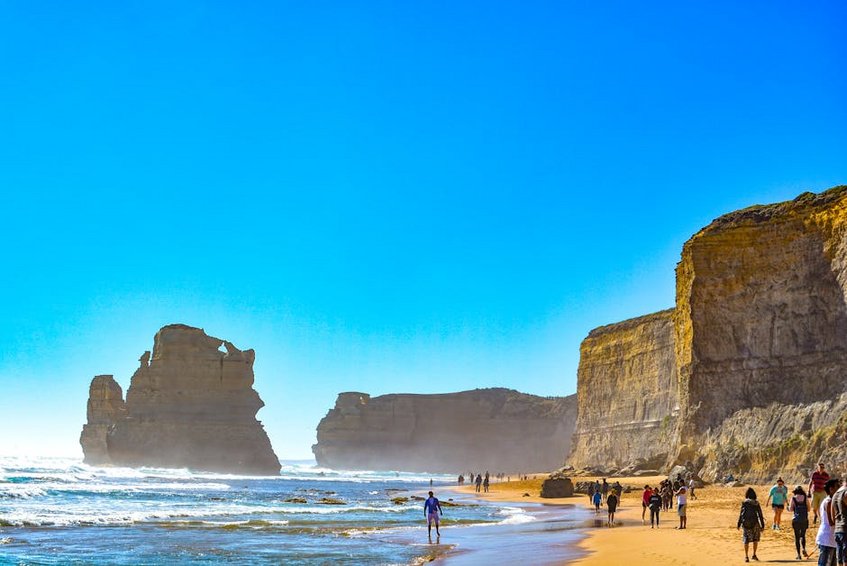
Australia Great Ocean Road Twelve Apostles: Epic Coastal Drive
Driving Australia’s Great Ocean Road to witness the Twelve Apostles offers one of the world’s most spectacular coastal journeys across Victoria’s rugged shoreline. This 243-kilometer route delivers dramatic limestone stacks, pristine beaches, and lush rainforests accessible through well-maintained roads with numerous lookout points. Your Australia Great Ocean Road Twelve Apostles adventure combines natural wonders, wildlife encounters, and rich Australian history within a flexible self-drive itinerary.
Essential Great Ocean Road Information
The Great Ocean Road represents the world’s largest war memorial, constructed by returned soldiers between 1919 and 1932. This engineering marvel stretches from Torquay to Allansford, protecting vulnerable coastlines while providing employment after World War I. Today, it welcomes over seven million annual visitors seeking its iconic landscapes and outdoor activities.
Historical Background and Significance
Returned servicemen built this coastal highway as a permanent memorial to comrades lost during World War I. The project employed approximately 3,000 veterans who used basic tools and dynamite to carve through cliffs. This historical context adds profound meaning to your journey beyond the visual spectacle.
Geographic Overview and Route Details
The Great Ocean Road covers 243 kilometers along Victoria’s southern coast within the Traditional Lands of the Eastern Maar and Gunditjmara Peoples. It traverses five distinct regions: Surf Coast, Shipwreck Coast, Otway Ranges, Colac Otway, and Moyne Shire. Each section presents unique landscapes from surfing beaches to temperate rainforests.
- Surf Coast spans Torquay to Anglesea featuring world-class surf breaks like Bells Beach and family-friendly beaches with calm swimming conditions
- Otway Ranges section incorporates ancient rainforests with walking trails through fern gullies and towering eucalyptus trees accessible via short detours
- Shipwreck Coast highlights dramatic limestone formations including the Twelve Apostles, Loch Ard Gorge, and London Arch with numerous shipwreck histories
- Budget travelers spend $75-125 daily using campgrounds or hostel dormitories, self-catering meals, and free activities like beach visits and lookout points while saving on rental car insurance through credit card coverage
- Mid-range visitors allocate $150-250 per day covering comfortable motels or vacation rentals, cafe lunches and occasional restaurant dinners, and one paid attraction like Otway Fly Treetop Walk or wildlife park entry
- Luxury experiences cost $300-500+ daily featuring boutique hotels with ocean views, fine dining at establishments like Chris’s at Beacon Point, private tours, and helicopter flights over the Apostles
- Great Ocean Road Regional Tourism
- Parks Victoria Official Site
Climate and Weather Patterns
Victoria’s southern coast experiences a temperate maritime climate with four distinct seasons affecting travel conditions. Summer temperatures range from 59-77°F (15-25°C) with longer daylight hours ideal for photography. Winter brings 46-57°F (8-14°C) temperatures and increased rainfall that intensifies coastal drama.
Weather changes rapidly along this coastline due to Antarctic influences and ocean currents. Pack layered clothing including waterproof jackets regardless of season since conditions shift within hours. Check Bureau of Meteorology forecasts frequently during your drive.
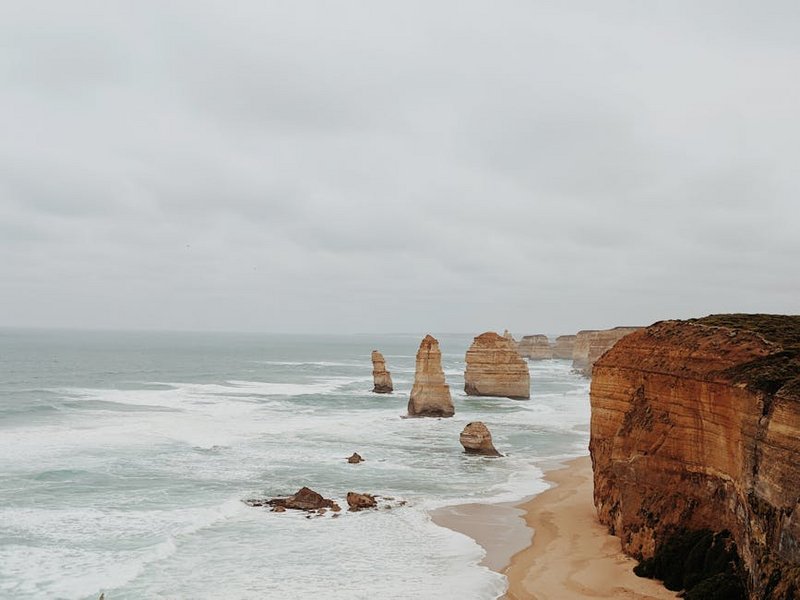
Alt: “great-ocean-road-twelve-apostles-coastal-sunset”
Australia Great Ocean Road Twelve Apostles – Planning Your Trip
Strategic planning ensures you experience the Great Ocean Road’s highlights without rushing through its diverse landscapes. Allocate minimum three days for this journey to accommodate stops at lookouts, walks, and unexpected discoveries. Your Australia Great Ocean Road Twelve Apostles itinerary benefits from early morning departures to avoid tour bus crowds at popular sites.
Direction matters when planning this coastal drive – traveling east to west (Melbourne toward Warrnambool) positions you on the ocean side for easier pullovers. Alternatively, west to east travel offers different perspectives with afternoon light favoring photography. Consider your priorities when determining driving direction.
Best Time to Visit Great Ocean Road
Visit between December and February for warm weather averaging 68-77°F (20-25°C) with up to 14 hours of daylight maximizing exploration time. These summer months attract peak crowds requiring advanced accommodation bookings and patience at popular viewpoints. March through May offers pleasant 59-68°F (15-20°C) temperatures with autumn colors in the Otways.
Shoulder seasons (March-May and September-November) provide comfortable 54-64°F (12-18°C) conditions with fewer visitors and better accommodation rates. Winter (June-August) sees 46-57°F (8-14°C) with stormy seas creating dramatic photography opportunities at the Twelve Apostles.
Budget Planning and Costs
Your Great Ocean Road budget varies significantly based on accommodation style, dining preferences, and activity selections. These estimates assume a three-day itinerary for two people sharing vehicle and accommodation costs.
Essential Preparation Checklist
Pack versatile clothing layers including waterproof jackets, sturdy walking shoes, swimwear, sun protection, and camera equipment with polarizing filters. Download offline maps since mobile reception fluctuates along remote sections between Apollo Bay and Port Campbell. Carry Australian dollars for small businesses that don’t accept credit cards.
Book accommodations three months ahead for summer visits, especially in Lorne, Apollo Bay, and Port Campbell. International drivers need valid licenses and should familiarize themselves with Australian road rules including left-side driving. Purchase comprehensive travel insurance covering rental vehicle excess and medical emergencies.
Top Attractions and Activities
The Great Ocean Road delivers countless natural wonders beyond the famous limestone stacks. Schedule stops at designated lookouts while remaining flexible for unexpected discoveries like whale sightings or empty beaches. Balance iconic sites with lesser-known gems to create a personalized journey.
Most attractions along the Shipwreck Coast operate without entrance fees, though parking charges apply at Twelve Apostles and Loch Ard Gorge. Parks Victoria manages these sites with well-maintained boardwalks, stairs, and interpretive signage enhancing visitor experiences.
Must-See Highlights
The Twelve Apostles represent eight limestone stacks (despite the name) rising up to 45 meters from the Southern Ocean, best viewed at sunrise or sunset. Arrive before 9am or after 3pm to avoid peak crowds and capture optimal light conditions. Helicopter flights from Port Campbell provide breathtaking aerial perspectives.
Loch Ard Gorge commemorates the 1878 shipwreck where only two survivors reached this secluded beach. Explore multiple viewing platforms, cave formations, and cemetery memorials within easy walking distance. Nearby Gibson Steps offers beach access beside towering cliffs not visible from the main lookout.
London Arch (formerly London Bridge) collapsed dramatically in 1990, stranding two tourists who required helicopter rescue. This geological formation demonstrates coastal erosion processes with viewing platforms showcasing the remaining arch. Combine with The Grotto and Bay of Islands on western sections.
Hidden Gems and Local Favorites
Blanket Bay in Cape Otway National Park offers a secluded pebble beach accessible via a 1.5-kilometer walk through coastal woodland. This peaceful cove provides swimming opportunities in protected waters with minimal visitors compared to popular beaches. Nearby Station Beach requires low tide access revealing rock pools and shipwreck remnants.
Melba Gully features glow worm displays after dusk along a short, accessible boardwalk through dense rainforest. Arrive 30 minutes after sunset for optimal viewing of these bioluminescent creatures. Daytime visits reveal ancient myrtle beech trees and fern gullies with picnic facilities available.
Adventure and Wildlife Experiences
Otway Fly Treetop Walk suspends visitors 25 meters above the forest floor along a 600-meter steel canopy walkway. This accessible attraction provides unique perspectives on temperate rainforest ecosystems with optional zipline adventures for thrill-seekers. Book ahead during holiday periods to secure preferred time slots.
Winter brings Southern Right Whale sightings between June and September along the Logan’s Beach platform in Warrnambool. These majestic mammals calve in protected waters visible from shore with binoculars recommended for better viewing. Summer offers dolphin sightings and fur seal colonies at Marengo Reefs.
Practical Travel Information
Transportation options range from self-drive vehicles to organized tours, with rental cars offering maximum flexibility for itinerary customization. Major rental companies operate from Melbourne Airport and city locations with one-way rentals available between Melbourne and Adelaide. Compare insurance coverage and mileage policies before booking.
Accommodation spans luxury resorts to campgrounds, with concentrations in Torquay, Lorne, Apollo Bay, and Port Campbell. Book well ahead for summer weekends when properties fill months in advance. Consider splitting stays between coastal towns to minimize daily driving distances.
| Accommodation Type | Features and Locations | Price Range (USD) |
|---|---|---|
| Beachfront Hotels | Ocean views, restaurant facilities, walking distance to town centers in Lorne and Apollo Bay | $180-400/night |
| Vacation Rentals | Full kitchens, multiple bedrooms, parking included, available throughout coastal towns | $120-300/night |
| Motels and B&Bs | Basic amenities, convenient locations, breakfast included at B&Bs, family-friendly options | $80-180/night |
| Campgrounds and Holiday Parks | Powered sites, shared facilities, swimming pools, located near beaches and towns | $25-60/night |