Historic Cities in Poland: A Journey Through Time
Exploring historic cities in Poland offers a direct connection to a thousand years of European history, art, and resilience. From perfectly preserved medieval squares to poignant World War II sites and vibrant post-war reconstructions, these urban centers tell compelling stories of survival and cultural pride. This guide details the essential destinations, practical travel advice, and cultural insights to plan your visit across Poland’s most remarkable historical landscapes.
Discovering Poland’s Urban Heritage
Poland’s history is deeply etched into the stone and brick of its cities, each representing a different era. The country’s location in Central Europe made it a crossroads of cultures, conflicts, and commerce, with influences from German, Jewish, Austrian, and Russian neighbors. This complex past is visible in architectural styles ranging from Gothic to Art Nouveau, all woven into the modern urban fabric.
Major historical periods you will encounter include the Piast dynasty’s medieval foundations, the prosperous Polish-Lithuanian Commonwealth, the devastating Partitions, and the 20th-century trials of war and communism. Understanding this timeline enriches a visit, turning each cathedral and cobblestone street into a page from a living history book. Many city centers are UNESCO World Heritage Sites, recognized for their outstanding universal value and meticulous preservation efforts.
Why Polish History is Unique
Poland’s national narrative is one of repeated destruction and rebirth, which is central to its cultural identity. Unlike Western European nations, much of its tangible history was obliterated in the 20th century, leading to extraordinary feats of reconstruction.
- The Warsaw Uprising of 1944 led to the systematic destruction of 85% of the capital, making its post-war Old Town reconstruction a symbolic act of defiance.
- The Kazimierz district in Kraków preserves one of Europe’s most significant Jewish heritage sites, with a history dating back to the 14th century.
- Gdańsk’s Main Town showcases the opulence of a Hanseatic League trading powerhouse, rebuilt after World War II using original plans and salvaged materials.
- Budget travelers can manage on $50-70 per day by staying in hostels, using public transport, eating at ‘bar mleczny’ (milk bars), and visiting many free historical sites like city squares and churches. A 3-day museum pass in Kraków costs around $30.
- Mid-range visitors spending $100-150 daily enjoy comfortable hotel rooms in city centers, sit-down restaurant meals, guided walking tours ($15-25), and entry to major paid attractions like Wawel Castle or the Warsaw Uprising Museum.
- Luxury travel at $250+ per day includes 5-star heritage hotels, fine dining, private guides, and unique experiences like chauffeur-driven tours to lesser-known castles or concerts in historic venues.
- Polish Tourism Organization
- UNESCO World Heritage List – Poland
- Polish State Railways (PKP)
Key Historical Eras to Recognize
When exploring Polish destinations, you will see clear architectural markers of different periods. Gothic brick churches and town halls dominate in the north, particularly in Toruń and Malbork. The Renaissance flourished under King Sigismund I, best seen in Kraków’s Wawel Castle courtyard and Zamość’s Italian-inspired “ideal city” plan.
The Baroque era left magnificent Jesuit churches, while the 19th century brought neoclassical palaces. The painful history of World War II is memorialized in sites like the Warsaw Rising Museum and the former Jewish Ghetto boundaries. Finally, socialist realist architecture, like Warsaw’s Palace of Culture, tells the story of the post-war communist period.
Language and Cultural Navigation
While Polish is the official language, you will find excellent English proficiency in tourist centers, hotels, and among younger generations. Learning a few basic phrases like “dzień dobry” (good day) and “dziękuję” (thank you) is appreciated. The local currency is the Polish złoty (PLN), and while credit cards are widely accepted, having some cash for small shops and markets is wise.
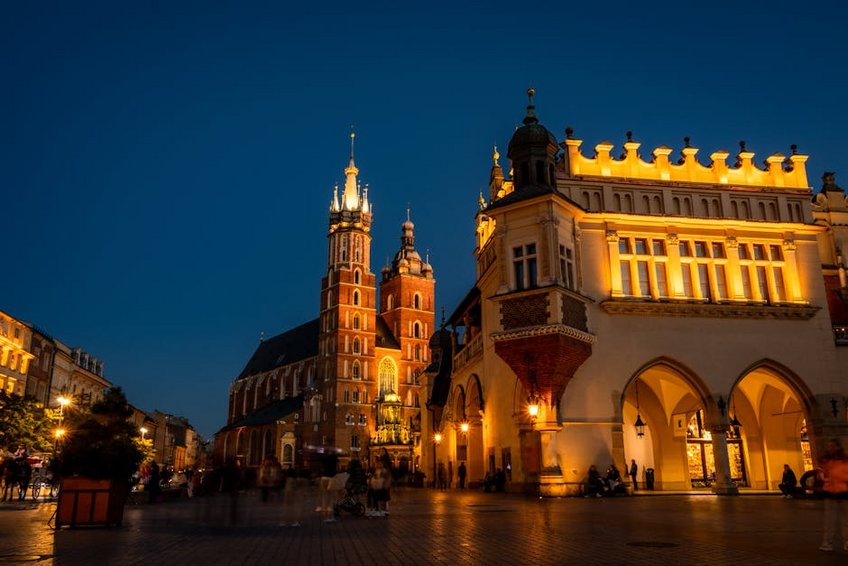
Alt: “krakow-main-square-medieval-architecture-historic-buildings”
Historic Cities in Poland – Planning Your Trip
An effective itinerary through these Polish historical destinations balances major hubs with quieter gems, considering travel distances and thematic interests. Poland has an efficient rail network connecting primary cities, while renting a car offers flexibility for visiting smaller towns and castle ruins. Spring (May-June) and early autumn (September) provide ideal weather with fewer crowds and vibrant seasonal colors.
For a first-time visitor, a 10-day trip covering Kraków, Warsaw, and Wrocław offers a comprehensive overview. Extending to two weeks allows for deeper exploration of the Baltic coast in Gdańsk or the medieval heartland in Toruń and Poznań. Always book intercity train tickets in advance through the PKP Intercity website for the best fares and seat reservations, especially for express routes.
Best Time to Visit Poland’s Historic Centers
The peak tourist season runs from late June through August, with warmer weather but larger crowds and higher prices. Daytime temperatures range from 70-80°F (21-27°C). Major festivals, like Kraków’s Jewish Culture Festival in July, occur during this period. For a balance of good weather and manageable tourism, target the shoulder months of May, June, and September.
Winter (December-February) is cold, with averages of 25-35°F (-4 to 2°C), but offers magical Christmas markets and snowy scenes in medieval squares. Visiting historic cities in Poland during December lets you experience traditional markets in Kraków and Wrocław, though some outdoor attractions may have limited hours. January and February are the quietest months for tourism.
Budget Planning and Costs
Poland remains one of Europe’s more affordable destinations, offering excellent value across all budget levels.
Essential Preparation Checklist
Pack comfortable walking shoes for cobblestone streets, layers for variable weather, and a power adapter for Type E sockets (220V). A lightweight rain jacket is advisable year-round. Ensure your passport is valid for at least three months beyond your planned departure from the Schengen Area.
EU and US citizens do not need a visa for stays up to 90 days. Purchase comprehensive travel insurance that covers medical emergencies. Book accommodation and major intercity trains at least two months ahead for peak season travel. Download the ‘Jakdojade’ app for navigating city public transport networks with real-time schedules.
Top Cities and Their Historic Charms
Each major Polish city possesses a distinct historical personality and a set of unmissable landmarks. Kraków impresses with its royal and academic legacy, largely untouched by war. Warsaw tells a powerful story of destruction and meticulous rebuilding. Gdańsk reveals its Hanseatic trading wealth, while Wrocław charms with its intertwined Polish, German, and Bohemian influences.
Beyond these primary destinations, cities like Zamość, Toruń, and Poznań offer exceptionally well-preserved historic cores that are slightly off the main tourist trail. These locations provide a more intimate, crowd-free experience of Polish urban history, often with unique architectural styles like Toruń’s Gothic brick or Zamość’s Renaissance grid.
Must-See Historic Highlights
Kraków’s Rynek Główny is Europe’s largest medieval market square, anchored by the Cloth Hall and St. Mary’s Basilica. Wawel Castle, the former royal residence, showcases architecture from Romanesque to Renaissance. In Warsaw, the reconstructed Old Town, a UNESCO site, is the symbolic heart, while the Royal Route leads to Łazienki Park’s 18th-century palace.
Gdańsk’s Royal Way along Długa Street features ornate merchant houses leading to the Neptune Fountain. The European Solidarity Centre nearby documents the shipyard workers’ movement. Wrocław’s Centennial Hall is a pioneering work of modern architecture, and its Market Square is surrounded by Gothic and Baroque townhouses, with playful bronze dwarf statues scattered throughout the city.
Hidden Gems and Local Favorites
Explore Kazimierz Dolny, a beautifully preserved Renaissance town on the Vistula River known for its artist community and granary lofts. Visit Frombork on the Vistula Lagoon, where astronomer Nicolaus Copernicus lived and worked; its fortified cathedral complex is stunning. In the south, Kłodzko boasts a massive fortress and a rare 13th-century stone bridge adorned with Baroque statues.
For a poignant experience, travel to Łódź, a 19th-century industrial textile powerhouse. Its Piotrkowska Street is one of Europe’s longest commercial thoroughfares, lined with historic manufactory buildings now housing restaurants and galleries. These locations offer a deeper, more nuanced understanding of the nation’s development beyond the major tourist circuits.
Castles and Fortified Architecture
Poland’s landscape is dotted with over 400 castles and palaces. Malbork Castle, the world’s largest brick castle, was the headquarters of the Teutonic Knights and is a monumental example of medieval fortification. The Książ Castle in Wałbrzych is Poland’s third-largest, with sprawling gardens and a mysterious past linked to World War II projects.
For a romantic ruin, visit the Ogrodzieniec Castle in the Jurassic Highland region. The Eagle’s Nest Trail connects several castles built by King Casimir the Great. Many of these fortresses host knight tournaments and historical reenactments during summer weekends, bringing their storied pasts vividly to life.
Practical Travel Information
Poland is well-connected by air, with major international airports in Warsaw (WAW), Kraków (KRK), Gdańsk (GDA), and Wrocław (WRO). Direct flights from major European hubs and some US cities are readily available. Within the country, the Polish State Railways (PKP) network is extensive and reliable, with fast InterCity services connecting primary destinations in a few hours.
Accommodation options range from international hotel chains to charming boutique hotels in historic townhouses and affordable hostels. For an authentic stay, consider a ‘pensjonat’ (guesthouse), often family-run and located in quieter districts. Booking.com and Airbnb are widely used, and many properties offer free cancellation, which is useful for flexible planning.
| City | Key Historic District | Top Attraction | Average Hotel Price (USD) |
|---|---|---|---|
| Kraków | Old Town & Kazimierz | Wawel Royal Castle | $80-150/night |
| Warsaw | Rebuilt Old Town | Royal Castle & Museum | $70-130/night |
| Gdańsk | Main Town | Artus Court & Neptune Fountain | $65-120/night |
| Wrocław | Market Square & Islands | Centennial Hall & Cathedral Island | $60-110/night |
| Toruń | Medieval Old Town | Copernicus House & Leaning Tower | $55-95/night |