Hamburg Travel Guide: Discover Germany’s Gateway to the World
This Hamburg travel guide unlocks one of Northern Europe’s most compelling port cities, a place where maritime heritage and urban cool collide. You’ll explore a city rebuilt with ambition, boasting more bridges than Venice and a waterfront warehouse district recognized as a UNESCO World Heritage site. We’ll cover everything from navigating the bustling Reeperbahn to finding serene moments along the Alster lakes, providing the practical insights you need for an unforgettable visit.
Essential Hamburg Information
Hamburg, Germany’s second-largest city, operates as a city-state with a history deeply intertwined with trade and water. Founded in the 9th century, its position on the Elbe River made it a key member of the Hanseatic League, a powerful medieval trading confederation. This mercantile past shaped its independent, cosmopolitan character, distinct from other German metropolises.
Modern Hamburg is a media and industrial hub, home to major publishing houses and Airbus manufacturing. The city’s layout is defined by water, with the Elbe, the Alster lakes, and countless canals creating a unique maritime atmosphere. Understanding this blend of historic Hanseatic pride and contemporary innovation is key to appreciating your visit.
The local dialect, “Plattdeutsch” (Low German), is still heard, though standard German and widespread English make communication easy for travelers. Hamburgers are known for a certain reserved, yet deeply proud, northern German demeanor. They value directness and efficiency, qualities reflected in the city’s clean, well-organized public spaces and transport network.
What You Need to Know Before You Go
Prepare for your trip with these foundational facts about the Free and Hanseatic City of Hamburg.
- The local currency is the Euro (€). Credit cards are widely accepted, but it’s wise to carry some cash for smaller shops, markets, and traditional taverns known as “Kneipen.”
- Germany is part of the Schengen Area. U.S., Canadian, U.K., and Australian citizens do not need a visa for tourist stays of up to 90 days within a 180-day period.
- Hamburg has a temperate maritime climate. Expect changeable weather; pack layers, a waterproof jacket, and comfortable walking shoes for exploring its varied neighborhoods and cobblestone streets.
- Budget travelers can manage on $70-$100 per day by staying in hostels like Generator Hamburg, using the Hamburg Card, enjoying street food and market snacks, and visiting free attractions like the Elbphilharmonie Plaza and Stadtpark.
- Mid-range visitors should budget $150-$250 daily for a comfortable hotel in areas like Altona, dining at mid-priced restaurants such as Alt Hamburger Aalspeicher, paid entry to top museums, and a harbor boat tour.
- A luxury experience costs $400+ per day, covering 5-star hotels like The Fontenay, fine dining at restaurants including Jacobs, private guided tours, and premium tickets to the Elbphilharmonie concert hall.
- Official Hamburg Tourism Board
- HVV Hamburg Public Transport Association
Key Historical and Cultural Details
Hamburg’s identity was forged by fire and water. The Great Fire of 1842 destroyed much of the old city, leading to a neoclassical rebuild. The Speicherstadt, or “Warehouse City,” was constructed soon after as a tax-free port zone, creating the iconic brick Gothic architecture seen today.
More tragically, Operation Gomorrah in 1943 during WWII devastated the city. The courageous postwar reconstruction focused on modern infrastructure while preserving key historical sites. This resilience is palpable at memorials like the St. Nikolai Church tower, kept as a ruin to commemorate the war’s destruction.
For a deeper look at planning a city break in Germany, consider reading about urban destinations. The city’s cultural scene is famously vibrant, with over 40 theaters and 60 museums. Its legendary music heritage birthed The Beatles’ early career in the clubs of the St. Pauli district.
The City’s Unique Layout and Waterways
Hamburg’s geography is dominated by the Elbe River, which connects it to the North Sea 110 kilometers away. The Inner and Outer Alster lakes, originally dammed sections of a river, are now picturesque focal points for sailing and city strolls. A network of canals weaves through the Speicherstadt and HafenCity.
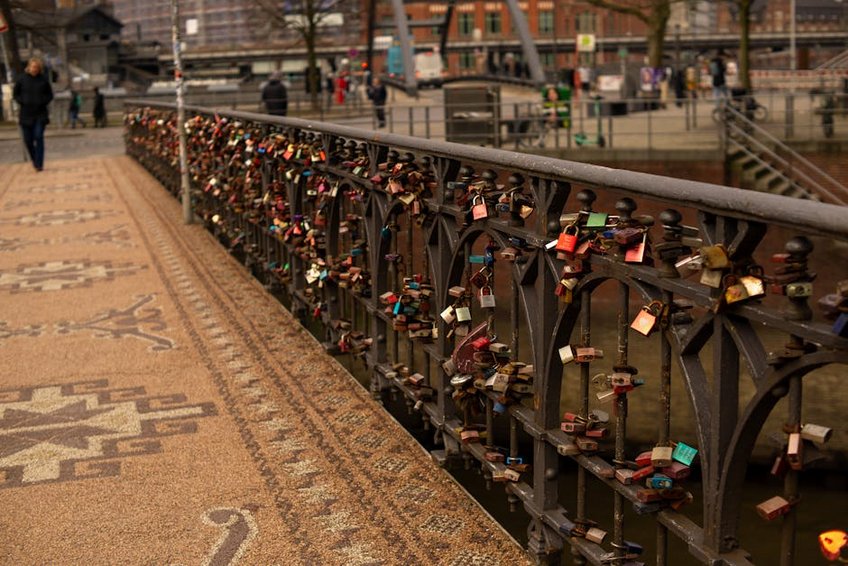
This aqueous landscape means you’ll constantly cross water. The city boasts around 2,500 bridges, more than Amsterdam and Venice combined. Ferries are part of the public transport system, offering scenic and practical routes, especially to the lively Elbe beaches like Blankenese.
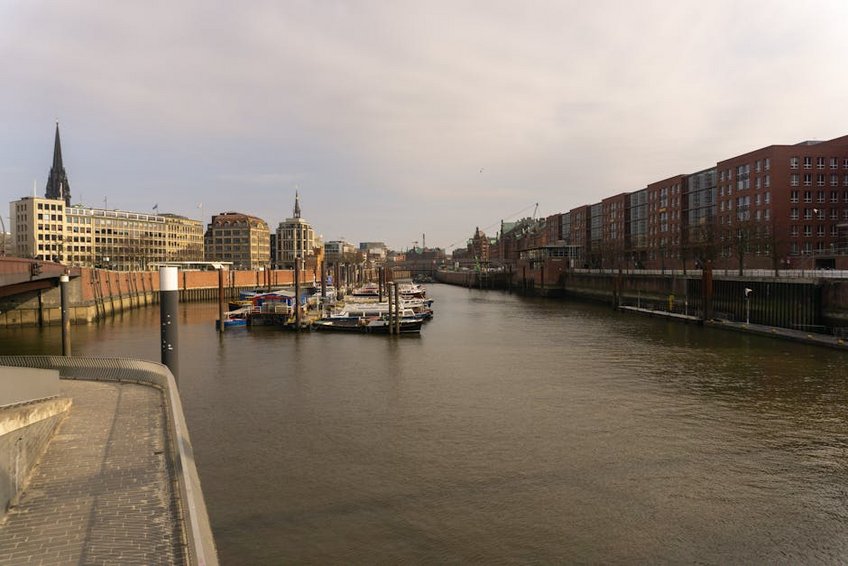
Alt: “hamburg-speicherstadt-warehouse-district-canal-bridges-twilight”
Hamburg Travel Guide – Planning Your Trip
Strategic planning maximizes your experience in this sprawling city. Your Hamburg travel guide itinerary should balance iconic landmarks with neighborhood exploration, allocating time for both urban energy and waterfront relaxation. Booking key attractions in advance saves time during peak seasons.
Consider purchasing the Hamburg Card, which offers unlimited travel on public transport and discounts of up to 50% at over 150 attractions. It’s cost-effective for most visitors. For a more focused visit, identify your primary interests—whether maritime history, avant-garde architecture, nightlife, or culinary delights—to tailor your daily routes.
Getting a feel for the city’s scale is important. The city center around the Alster lakes is compact and walkable, while attractions like the Elbphilharmonie and the St. Pauli district require short U-Bahn or ferry trips. Efficient public transport makes navigating between these areas simple.
Best Time to Visit Hamburg
The ideal months for visiting Hamburg are between May and September. Daytime temperatures range from a pleasant 60°F to 75°F (15°C to 24°C), with long evenings perfect for harbor tours or outdoor dining. This is peak tourist season, so book accommodation well in advance, especially for the Hafengeburtstag (Harbor Birthday) in May.
Shoulder seasons in April and October offer cooler weather, 45°F to 55°F (7°C to 13°C), with fewer crowds and lower prices. Winter brings Christmas markets from late November, creating a magical atmosphere despite cold temperatures of 30°F to 40°F (-1°C to 4°C) and shorter days.
Budget Planning and Costs
A daily budget can vary significantly based on your travel style. Here’s a breakdown for different preferences.
Essential Preparation Checklist
Pack versatile clothing suitable for layering, including a warm sweater, a waterproof and windproof jacket, and sturdy walking shoes. A compact umbrella is essential. For tech, bring a standard European two-pin plug adapter (Type C/F) as Germany uses 230V voltage.
Ensure your passport is valid for at least three months beyond your planned departure date from the Schengen Area. Purchase comprehensive travel insurance that covers medical emergencies and trip cancellation. Download the HVV app for real-time public transport schedules and tickets, and consider learning a few basic German phrases.
Top Attractions and Activities
Hamburg offers a compelling mix of historical grandeur and modern architectural marvels. Start at the stunning Elbphilharmonie concert hall in HafenCity, where you can take the free public elevator to the Plaza for panoramic harbor views. Then, step into the past in the adjacent Speicherstadt, the world’s largest warehouse complex, with its red-brick Gothic towers and canals.
For a different perspective, join one of the classic harbor boat tours that depart from Landungsbrücken piers. These one-hour tours provide the best understanding of the port’s immense scale and activity. Alternatively, explore the city’s green heart by walking or taking a small boat around the beautiful Alster lakes, surrounded by elegant villas.
Must-See Highlights
The Miniatur Wunderland in the Speicherstadt is the world’s largest model railway, an incredibly detailed attraction that captivates visitors of all ages. Book tickets online weeks in advance to avoid long queues. Nearby, the International Maritime Museum houses an exhaustive collection of ship models and nautical history across nine floors in a converted warehouse.
St. Michael’s Church, affectionately called “Michel,” is the city’s most iconic landmark. Climb the 452 steps to the viewing platform in its 132-meter-high tower for a breathtaking 360-degree city view. For a poignant history lesson, visit the St. Nikolai Memorial, where the church’s bombed-out spire stands as a central monument against war.
Hidden Gems and Local Favorites
Venture beyond the center to the Blankenese district, a charming village-like area with steep, narrow lanes and beautiful Elbe views. It feels worlds away from the urban core. For a unique green space, explore the Planten un Blomen park, famous for its free water-light concerts and beautiful botanical gardens, especially lovely in summer.
Discover the Schanzenviertel and Karolinenviertel neighborhoods for a vibrant, alternative vibe. These areas are packed with independent boutiques, street art, and quirky cafes. On Sundays, join locals at the Fischmarkt, where the bustling auction hall and live music create an energetic morning atmosphere from 5 a.m.
Exploring Hamburg’s Famous Nightlife District
The St. Pauli district, centered on the Reeperbahn, is infamous for its nightlife and entertainment. While its adult-oriented attractions are well-known, the area also hosts reputable music venues like Grosse Freiheit 36, where The Beatles performed. Guided tours of the district offer fascinating historical and cultural context.
For a safer and more curated experience, visit during the early evening and stick to main streets. The surrounding streets contain many excellent restaurants and bars. The Operettenhaus theater, showing long-running musicals, is also located here, providing a classic night out.
Practical Travel Information
Navigating Hamburg is straightforward thanks to its integrated and efficient public transport network, the HVV. This system includes U-Bahn (subway), S-Bahn (commuter rail), buses, and ferries, all using the same ticket. Tickets are validated upon first use and are valid for a set time period across all modes.
Accommodation options range from luxury hotels with Alster views to budget-friendly hostels in up-and-coming neighborhoods. For a central location with good transport links, consider staying in Altstadt, Neustadt, or St. Georg. For a more local feel, the districts of Altona and Eimsbüttel offer excellent connectivity and character.
| Accommodation Type | Best For & Features | Price Range/Night (USD) |
|---|---|---|
| Luxury Hotels | Panoramic views, spa facilities, prime central locations near Alster lakes. | $250 – $500+ |
| Boutique & Mid-Range Hotels | Design-focused rooms, located in trendy districts like Sternschanze, good value. | $120 – $250 |
| Budget Hotels & Pensions | Basic comfort, often near main train station (Hauptbahnhof), simple amenities. | $80 – $120 |
| Hostels & Apartments | Solo travelers & groups, self-catering options, social atmospheres in St. Pauli. | $50 – $100 |