Munich Travel Guide
Planning a trip to Bavaria’s capital requires navigating a city rich in royal history, world-class art, and world-famous beer gardens. This Munich travel guide provides the essential details you need, from decoding the historic Altstadt to finding the perfect pretzel. You will discover the optimal seasons to visit, how to budget for everything from luxury hotels to budget hostels, and how to experience Munich’s unique blend of tradition and modernity like a local.
Essential Munich Information
Munich, or München, serves as the capital of the Free State of Bavaria in southern Germany. Founded in 1158, its history is deeply intertwined with the Wittelsbach dynasty, who ruled for over 700 years and left a legacy of spectacular palaces and museums. The city’s layout radiates from the central Marienplatz, making navigation intuitive for first-time visitors.
Today, it’s a global hub for technology, science, and finance, yet retains a remarkably village-like charm in its different districts. Understanding this duality—the proud Bavarian traditions alongside cutting-edge innovation—is key to appreciating the city’s character. Locals cherish their customs, from wearing Tracht (traditional dress) to the ritual of the afternoon beer garden visit.
What You Need to Know
Before you arrive, these key points will help you plan and navigate.
- The official language is German, but English is widely spoken in tourist areas, hotels, and restaurants, making communication straightforward for international visitors.
- The currency is the Euro (€). Credit cards are accepted almost universally, but it’s wise to carry some cash for smaller shops, markets, and beer gardens.
- Munich is one of Germany’s safest major cities, with low crime rates and efficient, reliable public transportation that operates late into the night.
- Budget: Hostels start at $35/night. Use public transport passes ($8-12/day), eat at beer gardens or Imbiss snack stands ($8-15/meal). Focus on free sights like the English Garden. Daily budget: $70-100.
- Mid-Range: Comfortable hotels or apartments cost $120-200/night. Enjoy sit-down meals at traditional brauhauses ($20-40/meal). Visit 2-3 paid museums or take a guided walking tour. Daily budget: $150-250.
- Luxury: Five-star hotels like The Bayerischer Hof start at $400+/night. Dine at Michelin-starred restaurants. Book private guides and premium experiences like VIP Oktoberfest tents. Daily budget: $400+.
- Official Munich Tourism Website
- Lonely Planet Munich Guide
Key Neighborhoods and Districts
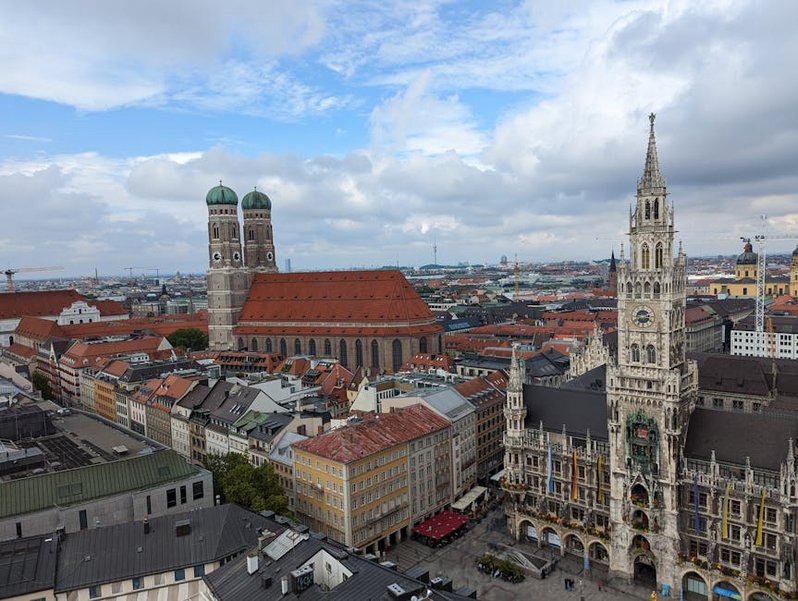
The city center, or Altstadt, is compact and walkable, anchored by Marienplatz and the Frauenkirche. This area contains most major historical sites, the upscale shopping street Kaufingerstraße, and the bustling Viktualienmarkt food market. You can easily cover the core landmarks in a day or two on foot.
Just beyond the center, neighborhoods like Schwabing and Maxvorstadt offer a different vibe. Maxvorstadt is Munich’s university and museum quarter, home to the Kunstareal art district. Schwabing is known for its elegant, leafy streets, café culture, and nightlife. For a more alternative atmosphere, head to the Glockenbachviertel, known for its boutique shopping and vibrant LGBTQ+ scene.
The Lay of the Land
Munich’s climate is continental, with distinct seasons. Winters are cold, with average temperatures from 28°F to 38°F (-2°C to 3°C) and occasional snow. Summers are generally pleasant and warm, with averages between 55°F and 75°F (13°C to 24°C), though heatwaves can occur. The city is famously green, with the sprawling English Garden park larger than New York’s Central Park.
The Isar River runs through the city, providing spots for swimming and sunbathing in summer. Munich’s international airport (MUC) is located about 28 km northeast of the center, with excellent S-Bahn train connections. The Hauptbahnhof (main train station) is a major rail hub for travel across Germany and Europe.
Alt: “marienplatz-munich-new-town-hall-glockenspiel-show”
Munich Travel Guide – Planning Your Trip
Strategic planning transforms a good Munich visit into a great one. Your budget and interests will dictate your itinerary, from palace-hopping to day trips in the Alps. Booking key attractions and accommodations well in advance is crucial, especially for travel during major festivals like Oktoberfest. Flexibility with your dates can lead to significant savings and a more relaxed experience.
Consider purchasing a Munich City Tour Card for unlimited public transport and discounts at museums and attractions. It is available for different durations and zones. For extensive museum visits, the more inclusive Bayern Ticket for regional travel might offer better value for certain day trips outside the city limits.
Best Time to Visit Munich
The peak tourist season runs from May through September, coinciding with warm weather, outdoor beer gardens, and numerous festivals. This period offers the most reliable weather for exploring, with long daylight hours. However, it also brings the highest prices and largest crowds, particularly in August and during Oktoberfest.
For a balance of good weather and fewer people, target the shoulder months of April, May, and late September to October. December is magical for the Christmas markets, though very cold. The low season (January to March) offers the best hotel rates and empty museums, but some attractions have shorter hours.
Budget Planning and Costs
Daily costs vary widely based on your travel style.
Essential Preparation Checklist
Pack for variable weather, even in summer. Include layers, a waterproof jacket, and comfortable walking shoes. For winter, a warm coat, hat, gloves, and sturdy boots are non-negotiable. If visiting churches, carry a scarf or shawl for covering shoulders.
US and EU citizens do not need a visa for stays under 90 days. Ensure your passport is valid for at least three months beyond your departure date. Purchase comprehensive travel insurance that covers medical emergencies and trip cancellation. Book popular hotels 3-4 months in advance, and Oktoberfest accommodations a year ahead.
Top Attractions and Activities
Munich’s must-see list blends iconic landmarks with world-class cultural institutions. Start at Marienplatz to watch the Glockenspiel chime at 11 am or 12 pm. Then, explore the Residenz, the vast palace complex of Bavarian rulers, which can easily consume half a day. The Deutsches Museum, one of the world’s largest science and technology museums, is equally immense and requires prioritization.
For art lovers, the Kunstareal district is unparalleled. It clusters the Alte Pinakothek (Old Masters), Neue Pinakothek (19th-century art), and Pinakothek der Moderne (modern art). The Lenbachhaus, famous for its Blue Rider collection, is also nearby. Don’t miss the serene Asamkirche, a Baroque masterpiece hidden on a busy street.
Must-See Highlights
No visit is complete without a trip to Nymphenburg Palace, the summer residence of the Wittelsbachs. The sprawling palace gardens are free to enter and perfect for a stroll. Allocate at least 3-4 hours to see the main palace, the Marstallmuseum with royal carriages, and the Amalienburg hunting lodge.
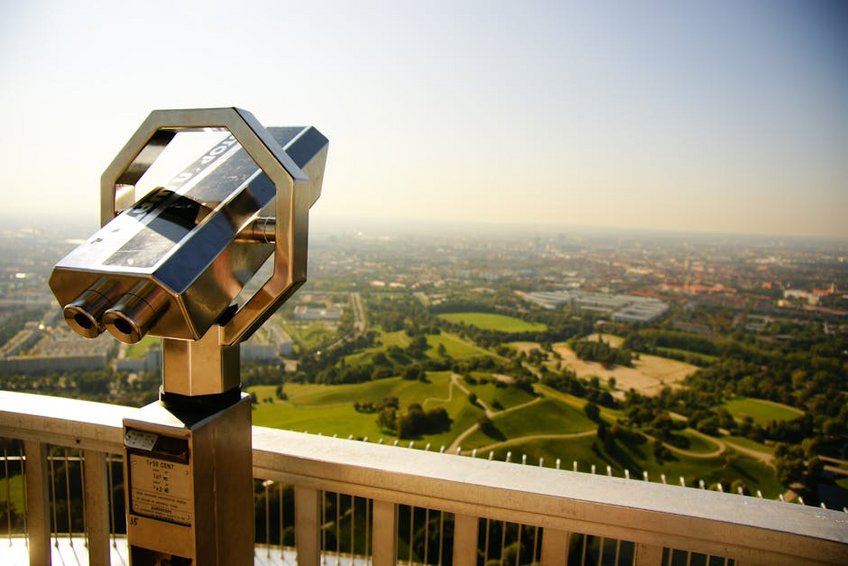
The BMW Welt and Museum is a temple to automotive engineering and design, fascinating even for non-car enthusiasts. The Viktualienmarkt is a daily food market and a sensory delight, ideal for lunch. For panoramic city views, climb the tower of St. Peter’s Church (“Alter Peter”) or visit the Olympiaturm at Olympic Park.
Hidden Gems and Local Favorites
Escape the crowds in the Westpark, especially beautiful during the spring when its Chinese Garden blooms. Visit the peaceful Friedhof am Perlacher Forst cemetery, the final resting place of notable figures like the writer Thomas Mann. For a quirky museum, the Valentin-Musäum celebrates the city’s unique brand of humor.
Locals love the Flaucher area along the Isar River for swimming and barbecues in summer. The Gasteig cultural center hosts concerts and events, and its rooftop terrace offers a great view. Explore the creative workshops and galleries in the Werksviertel district, a former industrial area now buzzing with life.
Beer Culture and Garden Visits
Experiencing a beer garden is a cultural imperative. The Hofbräukeller am Wiener Platz offers a classic, less-touristy atmosphere. Remember the etiquette: find a seat at shared tables, and you can bring your own food to most gardens, but drinks must be purchased from the brewery. Cash is typically required.
For the ultimate experience, visit during Oktoberfest, but book everything a year in advance. Alternatively, try the smaller, more traditional Frühjahrsfest (Spring Festival) or the Tollwood Winter Festival. Each of Munich’s six major breweries—Hofbräu, Augustiner, Paulaner, Hacker-Pschorr, Löwenbräu, and Spaten—has its own hall and garden with a distinct character.
Practical Travel Information
Getting around Munich is efficient thanks to its integrated public transport system (MVV), comprising U-Bahn (subway), S-Bahn (suburban train), trams, and buses. A single inner-city ticket costs around $3.80. For unlimited travel, day passes (Tageskarte) offer much better value, starting at about $8.50 for the inner zone.
Accommodation spans from hostels near the Hauptbahnhof to luxury boutiques in Schwabing. Prices skyrocket during trade fairs and Oktoberfest. For a local feel, consider an apartment rental in neighborhoods like Haidhausen or Neuhausen. Booking direct with hotels can sometimes yield better rates or perks than third-party sites.
| Accommodation Area | Best For & Vibe | Average Price Range/Night (USD) |
|---|---|---|
| Altstadt (Old Town) | First-time visitors, major sights, walkability; bustling and tourist-central. | $180 – $400+ |
| Ludwigsvorstadt-Isarvorstadt | Budget travelers, nightlife near Hauptbahnhof; lively, mixed, and convenient. | $70 – $180 |
| Schwabing & Maxvorstadt | Culture, cafes, museums; elegant, academic, and quieter than the center. | $150 – $300 |
| Haidhausen | Local experience, restaurant scene; charming, residential, and slightly off-center. | $130 – $250 |