Vilnius Travel Guide: Discover Lithuania’s Historic Capital
Vilnius offers a captivating journey through centuries of European history framed by Baroque architecture and vibrant modern culture. This Lithuanian capital enchants visitors with its walkable Old Town, a UNESCO World Heritage site filled with cobblestone streets and hidden courtyards. Your Vilnius travel guide explores the city’s unique blend of Gothic, Renaissance, and Soviet-era landmarks alongside a thriving arts scene.
Essential Vilnius Information
Vilnius serves as Lithuania’s political and cultural heart. The city’s history spans from its 1323 founding by Grand Duke Gediminas to its pivotal role in the 20th-century Baltic independence movement. You can trace these layers through the diverse architecture across its distinct neighborhoods.
The Lithuanian capital operates on Eastern European Time (EET). English is widely spoken in tourist areas and by younger residents. Most establishments accept major credit cards, though carrying some euros in cash remains useful for smaller markets and traditional pubs.
Key Facts and Figures
These details will help you plan efficiently.
- Population: Approximately 600,000 residents, making it a compact and manageable capital for exploration on foot or by public transport.
- Currency: Euro (EUR). ATMs are widely available, and currency exchange offices offer competitive rates in the city center.
- Language: Lithuanian is the official language, with Russian and Polish also commonly spoken; tourism workers typically speak excellent English.
- Budget traveler: $50-70 per day covers hostel dorm beds, self-catered meals, free walking tours, and public transport. Focus on free attractions like exploring the Old Town and Bernardine Gardens.
- Mid-range traveler: $100-150 per day allows for private hotel rooms, restaurant meals, paid museum entries, and occasional taxis. This budget comfortably includes a guided tour and a day trip.
- Luxury traveler: $250+ per day enables boutique hotel stays, fine dining at top restaurants, private guided experiences, and spa treatments. This tier includes premium seats at the opera or ballet.
- Official Vilnius Tourism Board
- Lonely Planet Vilnius Guide
Historical Context and Significance
Vilnius boasts a complex past as part of the Polish-Lithuanian Commonwealth and later the Russian Empire. The city’s architecture reflects this heritage through its many Catholic and Orthodox churches. Meanwhile, the former Jewish quarter, known as the Vilnius Ghetto, bears witness to a rich community tragically decimated during World War II.
More recently, the city became the birthplace of the 1989-1991 Baltic independence movement. You can learn about this pivotal era at the Museum of Occupations and Freedom Fights, located in the former KGB headquarters. This history creates a profound sense of resilience throughout the urban landscape.
City Layout and Neighborhoods
The historic Old Town (Senamiestis) forms the core of your visit. This area contains the majority of landmarks, restaurants, and hotels within a beautifully preserved medieval layout. You will navigate narrow streets that suddenly open into grand squares like Cathedral Square.
Užupis, a bohemian district declared an independent “republic,” sits just east of the Old Town. This area thrives with art galleries, quirky cafes, and a unique constitution. The modern business district lies west of the Old Town, offering contemporary dining and sleek hotel options.
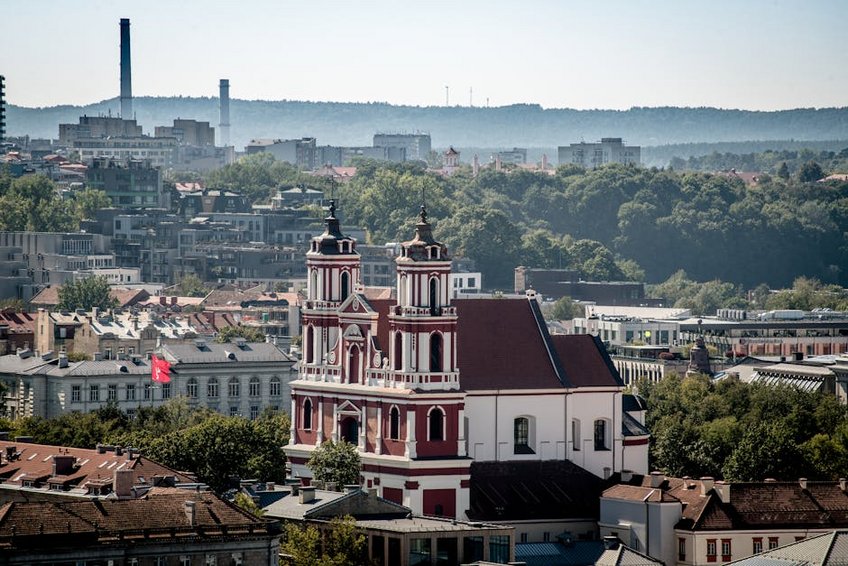
Alt: “vilnius-old-town-cathedral-square-baroque-architecture”
Vilnius Travel Guide – Planning Your Trip
Planning a trip to the Lithuanian capital requires considering its distinct seasonal charm and your personal interests. Spring and autumn provide mild weather perfect for exploring outdoor sites and enjoying cafe culture without summer crowds. Winter transforms the city into a festive wonderland with Christmas markets, though temperatures often drop below freezing.
Your Vilnius travel budget can vary significantly. Budget travelers find excellent hostels and affordable local eateries, while luxury seekers discover boutique hotels and fine dining. Allocate funds for museum entry fees, which are generally modest compared to Western European capitals.
Booking accommodations three months in advance secures the best rates and locations, especially for summer visits. Consider staying in or near the Old Town to minimize transportation needs. The city’s compact size makes it ideal for short city breaks of three to four full days.
Best Time to Visit Vilnius
Visit Vilnius between May and September for the warmest weather and longest days. Average high temperatures range from 65°F to 75°F (18°C to 24°C). This period offers full access to outdoor attractions, open-air cafes, and day trips to nearby Trakai Castle. However, July and August attract the largest crowds.
Shoulder seasons in April-May and September-October provide cooler temperatures of 50-60°F (10-16°C) with fewer tourists. Winter, from December to February, is cold with highs around 30°F (-1°C) but magical with Christmas markets operating through early January. The city receives less tourism during these colder months.
Budget Planning and Costs
Daily costs depend heavily on your accommodation and dining choices.
Essential Preparation Checklist
Pack layers regardless of season, including a waterproof jacket and comfortable walking shoes for cobblestone streets. Bring a universal power adapter (Type C/F, 220V) for European outlets. Ensure your passport is valid for at least three months beyond your planned departure date from the Schengen Area.
Download the Trafi app for real-time public transport schedules and ticket purchasing. Notify your bank of your travel plans to avoid card blocks. Consider purchasing travel insurance that covers medical emergencies and trip cancellation, especially for winter visits with potential flight delays.
Top Attractions and Activities
Vilnius captivates visitors with its stunning mix of sacred architecture and poignant modern history. Begin your exploration at the iconic Cathedral Basilica and its free-standing bell tower in the main square. Then, wander through the Presidential Palace courtyard before heading toward the city’s defining hill.
The Gate of Dawn, a 16th-century city gate containing a sacred chapel, remains an important pilgrimage site. From there, the Literatų Street pays tribute to writers with hundreds of small artistic plaques. These sites collectively tell the story of a city at the crossroads of cultures and faiths.
Must-See Highlights
Gediminas’ Tower offers panoramic views from the top of the hill where the city was founded. A funicular or a short hike leads to this remaining section of the Upper Castle. The tower museum details Vilnius’s medieval history and provides the best photo opportunity of the red-roofed Old Town below.
St. Anne’s Church represents a Gothic masterpiece built from 33 different shapes of brick. Napoleon famously wanted to take it back to Paris. Just behind it, the Bernardine Church and Monastery complex forms one of the largest Gothic ensembles in Lithuania. Visiting both showcases the architectural brilliance of the late 15th century.
The Palace of the Grand Dukes of Lithuania, meticulously reconstructed and opened in 2013, stands on the original site. Its historical museum presents royal artifacts and recreated interiors. The adjacent Cathedral Square hosts key national celebrations and serves as the city’s central gathering point.
Hidden Gems and Local Favorites
Vilnius University, founded in 1579, features stunning courtyards and a library with frescoed ceilings rarely mentioned in guidebooks. The observatory tower provides another unique viewpoint over the Old Town. This active campus adds youthful energy to the historic center, especially during the academic year.
The self-declared Republic of Užupis celebrates its independence every April 1st with street festivals and border stamping. Explore its narrow streets to find artisan workshops, the “Angel of Užupis” statue, and the constitution inscribed on a wall in over 20 languages. This area perfectly embodies the city’s creative, rebellious spirit.
Museum and Cultural Exploration
The National Museum of Lithuania presents comprehensive exhibits on the country’s archaeology, history, and ethnography. The MO Museum focuses on modern Lithuanian art from the 1950s onward in a striking contemporary building. Both institutions offer excellent English-language descriptions and temporary exhibitions.
For a profound historical experience, visit the Museum of Occupations and Freedom Fights. Housed in the former KGB headquarters, it preserves prison cells and execution chambers. The exhibit requires emotional preparedness but provides essential context for understanding 20th-century Lithuania. Allocate at least two hours for a respectful visit.
Practical Travel Information
Vilnius International Airport (VNO) connects to major European hubs like London, Frankfurt, and Warsaw. The airport sits just 6 kilometers from the city center, accessible by train, bus, or taxi. Upon arrival, purchase a Vilnius City Card if you plan intensive museum visiting, as it includes public transport.
Accommodation ranges from international chain hotels in the business district to charming guesthouses in restored Old Town buildings. For authentic atmosphere, choose a small hotel or apartment within the UNESCO zone. Modern hostels cater well to solo travelers and digital nomads with co-working spaces.
| Accommodation Type | Best For / Features | Price Range (USD per night) |
|---|---|---|
| Hostel / Guesthouse | Solo travelers & budget seekers; social atmosphere, shared kitchens | $15 – $40 |
| Mid-Range Hotel | Couples & small families; private bathrooms, central locations, breakfast included | $70 – $120 |
| Boutique Hotel | Luxury & design lovers; historic buildings, unique decor, premium service | $130 – $200 |
| Apartment Rental | Families & longer stays; self-catering, multiple bedrooms, local neighborhood feel | $80 – $150 |