Salzburg Travel Guide: Experience Music, History, and Alpine Beauty
This Salzburg travel guide provides the essential information you need to explore the birthplace of Mozart and the stunning Austrian Alps. You will discover a city where Baroque architecture meets vibrant cultural festivals, all set against a dramatic mountain backdrop. This guide covers everything from historic Old Town walks to practical tips on accommodations, dining, and seasonal visits for a seamless trip.
Essential Information on Salzburg
Salzburg is Austria’s fourth-largest city, located near the German border in a region defined by the Salzach River. Its history as an independent ecclesiastical state under powerful prince-archbishops shaped its stunning architecture and cultural wealth. The city’s identity is a compelling mix of deep musical heritage and breathtaking natural surroundings.
Designated a UNESCO World Heritage Site in 1997, Salzburg’s historic center preserves over 1,000 years of architectural history. This status protects its unique Gothic, Renaissance, and Baroque buildings. The city’s layout showcases urban development from the Middle Ages to the 19th century remarkably intact.
Salzburg’s Historical Significance
Understanding a few key eras helps you appreciate the city’s landmarks. Here is a brief timeline of formative periods.
- Medieval Era (c. 1077): Construction began on Hohensalzburg Fortress, establishing the city’s political and military power for centuries to come.
- Baroque Period (17th-18th Century): Prince-Archbishop Wolf Dietrich von Raitenau transformed the city with Italian architects, creating the Residenz, cathedral, and Mirabell Gardens.
- 19th Century: Salzburg became part of the Austrian Empire after the secularization of the archbishopric, shifting its cultural focus and opening it to tourism.
- Budget Traveler ($70-100/day): Stay in a hostel or budget guesthouse, use the Salzburg Card for transport/sights, enjoy street food and market lunches, and focus on free walking tours and park visits.
- Mid-Range Traveler ($150-250/day): Book a 3-star hotel in the Neustadt (New Town), dine at traditional Gasthäuser for lunch and dinner, attend a chamber music concert, and take a guided tour to the Salt Mines or Eagle’s Nest.
- Luxury Traveler ($350+/day): Stay at a 5-star historic hotel like Hotel Goldener Hirsch, enjoy fine dining at award-winning restaurants, book private guided tours, and attend a performance at the Salzburg Festival with premium seats.
- Salzburg Official Tourism Board
- UNESCO World Heritage Centre – Historic Centre of Salzburg
Salzburg Old Town UNESCO Site
The Altstadt, or Old Town, sits on the left bank of the Salzach River beneath the fortress. Its compact, pedestrian-friendly streets are a delight to explore on foot. You will find most major attractions within a 15-minute walk of each other here.
Key areas include Getreidegasse, the famous shopping street with ornate wrought-iron signs, and Kapitelplatz, a large square with modern art installations. Do not miss the intricate details on building facades and through hidden passageways called ‘Durchhäuser’.
The Alpine Setting and Climate
Salzburg enjoys a Central European transitional climate with distinct seasons. Summers are mild and pleasant, while winters are cold with reliable snow in the surrounding Alps. This climate directly influences the best activities for your visit.
Spring (April-May) brings blooming flowers to the gardens, and autumn (September-October) offers crisp air and golden foliage. The nearby mountains create a stunning panorama from almost any point in the city, influencing light and weather patterns daily.
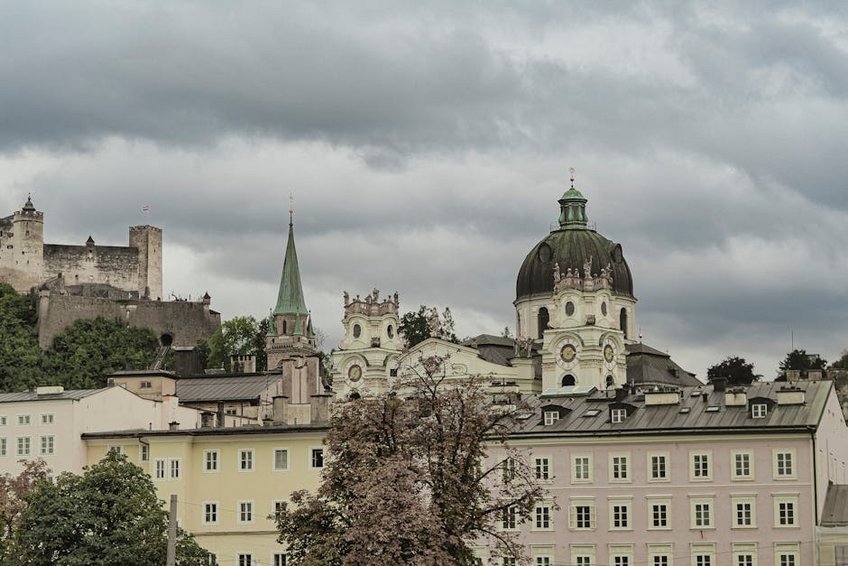
Alt: “salzburg-austria-old-town-baroque-architecture-alps-background”
Salzburg Travel Guide – Planning Your Trip
A successful visit to Mozart’s city requires thoughtful timing and preparation. Your itinerary should balance iconic sights with relaxed café culture. Advance bookings for popular attractions and concerts are highly recommended, especially from June through August.
Consider purchasing a Salzburg Card for included admission to most museums and free use of public transportation. This pass offers excellent value if you plan to visit several paid sites. It is available for 24, 48, or 72-hour durations at tourist offices.
Allocate time to simply wander the cobblestone lanes and riverbanks. Some of the city’s best moments come from unexpected discoveries, like a quiet courtyard or a view of the fortress from a bridge.
Best Time to Visit Salzburg
The ideal period for sightseeing is late spring (May-June) or early autumn (September). Daytime temperatures range from a comfortable 65-75°F (18-24°C) with lower crowds than peak summer. This is perfect for walking tours and outdoor café visits.
July and August are peak tourist season, with average highs of 77°F (25°C) and crowded streets. December is magical for the famous Christkindlmarkt but very cold, around 34°F (1°C). Winter sports enthusiasts can enjoy nearby skiing from December to March.
Budget Planning and Costs
Your daily budget varies significantly based on travel style. Salzburg is not a budget destination, but strategic planning manages costs effectively.
Essential Preparation Checklist
Pack comfortable walking shoes with good grip for cobblestones, a compact umbrella, and layers for changeable weather. A reusable water bottle is useful, as Austrian tap water is excellent. Bring a power adapter for Type F sockets (220V).
EU and US citizens need only a valid passport for stays under 90 days. Purchase travel insurance with medical coverage. Download the Salzburg Verkehr app for real-time public transport schedules. Learn a few basic German phrases like “Grüß Gott” (hello) and “Danke” (thank you).
Top Attractions and Activities
Salzburg offers a rich tapestry of experiences, from imperial history to cinematic landscapes. The city’s attractions are remarkably concentrated, allowing you to see a great deal in a short time. Prioritize based on your interests in music, history, or alpine scenery.
Many sites connect to the city’s most famous son, Wolfgang Amadeus Mozart, and the beloved film *The Sound of Music*. Balancing these popular spots with quieter cultural gems creates a more rounded visit. Always check opening hours online before you go.
Must-See Highlights
Hohensalzburg Fortress is the city’s iconic landmark, offering panoramic views and medieval history. Take the funicular up or hike the path for a rewarding climb. Inside, explore the state rooms and the marionette museum.
Mirabell Palace and Gardens, a UNESCO site, feature the elegant Pegasus Fountain and geometrically arranged flower beds seen in *The Sound of Music*. The Marble Hall inside is a stunning venue for concerts. Entry to the gardens is free.
Mozart’s Birthplace on Getreidegasse displays family portraits, instruments, and letters in the composer’s original apartment. The adjacent Mozart Residence museum offers further context on his life and work.
Hidden Gems and Local Favorites
Steingasse is a narrow, atmospheric lane on the right bank of the river, once home to salt traders and now lined with quirky bars and shops. It feels centuries removed from the bustling Old Town just a block away.
The St. Peter’s Cemetery (Petersfriedhof) is one of Europe’s oldest, with ornate wrought-iron grave markers and catacombs carved into the Mönchsberg rock. It’s a serene and historic spot often overlooked by tourists.
For a classic local experience, visit the Augustiner Bräustübl, a monastic brewery hall in Mülln where you collect a stoneware mug and enjoy fresh beer at communal tables. The attached beer garden is perfect in summer.
Salzburg’s Musical Legacy
Beyond Mozart, the city pulses with music. The annual Salzburg Festival each summer is a world-renowned celebration of opera and drama. Smaller chamber concerts are held year-round in historic venues like the Mirabell Palace.
*The Sound of Music* tours are immensely popular, visiting film locations like the Leopoldskron Palace (the Von Trapp home) and the Hellbrunn Palace gazebo. These tours provide fun context whether you are a superfan or a casual viewer.
Practical Travel Information
Navigating Salzburg is straightforward with its excellent public transport and walkable core. The city is safe, clean, and efficient, with English widely spoken in tourist areas. Planning your logistics in advance maximizes your time for exploration.
Accommodation ranges from luxurious historic hotels to modern hostels. Staying just outside the immediate Old Town, in areas like the Neustadt, often provides better value and a more local atmosphere. Book well ahead for festival periods.
| Category | Options/Features | Price Range (USD) |
|---|---|---|
| Accommodation (Per Night) | Hostel dorm bed, 3-star hotel, 5-star heritage hotel | $30 – $400+ |
| Dining (Per Meal) | Würstelstand sausage, Gasthof lunch, fine dining multi-course | $5 – $120+ |
| Attraction Tickets | Single museum entry, Hohensalzburg Fortress combo ticket, 48-hr Salzburg Card | $12 – $55 |
| Local Transport | Single bus ticket, 24-hour pass, taxi from airport to city | $3 – $25 |