

Cash or Card in Europe: Navigating Payments Like a Pro
Traveling through Europe presents a classic financial puzzle: cash or card? The continent operates on a nuanced payment spectrum, where a trendy Copenhagen café might refuse cash while a remote Greek taverna only accepts it. Your choice between physical euros and digital transactions impacts everything from securing the best exchange rates to avoiding awkward moments at checkout. This guide breaks down the modern European payment landscape, country-by-country preferences, and strategic tips to optimize your spending and simplify your travels.
Essential European Payment Information
Europe is not a monolith when it comes to money. The Euro (€) is the official currency for 20 of the 27 European Union nations, creating a convenient monetary zone. However, several major destinations like the United Kingdom (British Pound), Switzerland (Swiss Franc), and the Czech Republic (Czech Koruna) maintain their own currencies. This mix is the first layer of complexity for any traveler’s budget planning.
Beyond currency, the adoption of digital and contactless payment technology varies significantly. Northern and Western Europe are largely cashless societies, with card payments dominating. Southern and Eastern Europe still show a stronger preference for cash, especially for smaller, local transactions. Understanding this divide is the first step to managing your money effectively abroad.
The Eurozone and Key Currencies
Navigating multiple currencies is a core part of European travel logistics. While the euro simplifies travel across much of the continent, other major currencies remain in use. Always check the local currency before you arrive to avoid confusion and poor exchange rates at airports or border towns.
- The Euro (€): Used in Germany, France, Italy, Spain, the Netherlands, Austria, Portugal, Greece, and 11 other EU countries. Notes come in €5, €10, €20, €50, €100, €200, and €500 denominations, though €200 and €500 notes are rarely seen and sometimes refused.
- British Pound Sterling (£): The UK’s currency, with England, Scotland, Wales, and Northern Ireland using the same pound notes. Scotland and Northern Ireland issue their own banknote designs, which are legal tender but can be refused outside their region.
- Swiss Franc (CHF): Switzerland’s currency, known for its stability. While the euro may be accepted in some tourist border areas, you will always get a better price by paying in the local franc.
- Scandinavian Krone: Denmark (DKK), Norway (NOK), and Sweden (SEK) each have their own version of the “krone.” Sweden is famously cash-averse, with many businesses no longer accepting physical money at all.
- Budget Traveler (Scandinavia/UK): Plan for $10-20 USD per day in local cash. This covers occasional market snacks, a locker fee, or a small donation. Over 95% of spending will be via card. Withdraw a larger amount once to minimize ATM fees.
- Mid-Range Traveler (France/Spain): Allocate $30-50 USD equivalent daily. This budget handles nice lunches at casual bistros, souvenir shopping at outdoor markets, taxi rides, and tips. Use card for dinners, hotels, and attraction tickets.
- Comfort/Luxury Traveler (Italy/Greece): Budget $50-80 USD per day in cash. Higher-end dining and shopping still take cards, but you’ll encounter more scenarios—like private tour guide gratuities, boutique hotel concierge tips, or purchases from artisan workshops—where cash is expected or appreciated.
- European Central Bank – The Euro
- Rick Steves Europe – Cash vs Card Tips
- Mastercard Currency Conversion Calculator
How Payment Preferences Vary by Region
Your ideal payment method depends heavily on which corner of Europe you’re exploring. In Scandinavia and the Netherlands, carrying large amounts of cash can be seen as unusual, and card payments are the absolute standard for any amount. The infrastructure here is built for seamless, secure digital transactions.
Meanwhile, in countries like Italy, Germany, and Greece, cash remains deeply ingrained in the culture, particularly for small purchases at markets, family-run restaurants, or for paying exact amounts. There’s also a notable generational and urban-rural divide, with cities and younger vendors being far more card-friendly than rural villages.
Austria and parts of Germany have a strong legal and cultural attachment to cash. It’s not uncommon to encounter bakeries or small shops with minimum card spend amounts, or even signs that say “Nur Bargeld” (Cash Only). Researching your specific destinations is key.
Understanding Contactless and Mobile Payments
Contactless card payments, using either a physical card or a smartphone wallet like Apple Pay or Google Pay, are the dominant form of payment in urban Europe. The tap-to-pay limit varies by country but is often between €50-€100 per transaction. This method is faster and often more secure than inserting a chip card.
Mobile payment adoption is extremely high. You can confidently rely on your smartphone to pay for public transport in London, a coffee in Stockholm, or groceries in Paris. For US travelers, ensure your card is enabled for international transactions and notify your bank of your travel plans to prevent fraud alerts from blocking your payments abroad.
Alt: “contactless-card-payment-outdoor-european-cafe-table”
Cash or Card in Europe – Planning Your Strategy
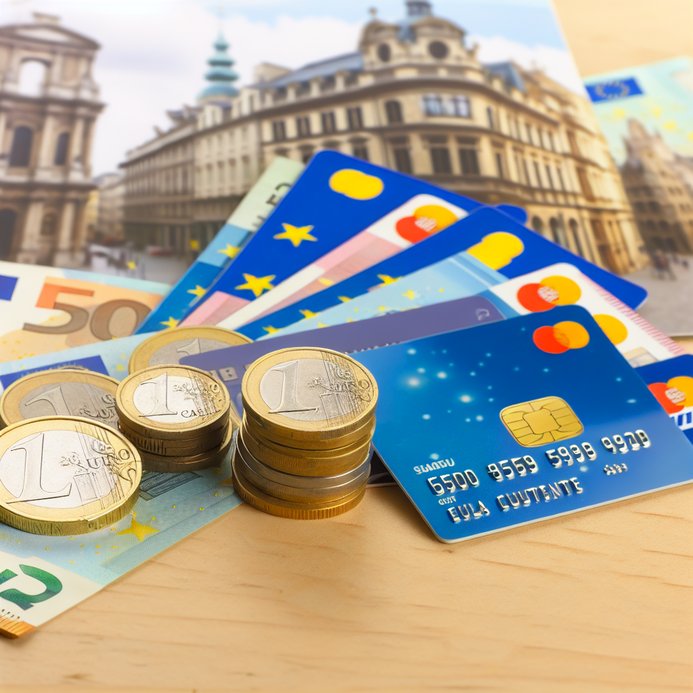
Deciding between cash or card in Europe is less about picking one and more about finding the right balance. A hybrid approach is the most practical solution for nearly all travelers. You should plan to use your credit or debit card for the majority of expenses—hotels, sit-down meals, train tickets, and larger purchases—while keeping a moderate amount of local cash on hand for small, incidental costs.
Your cash needs will depend entirely on your itinerary. A week in Stockholm or Amsterdam might require less than €50 in physical cash for the entire trip. Conversely, a tour of small Italian villages or Greek islands could necessitate withdrawing €200-€300 to cover daily meals, souvenirs, and local transport. Always check if your accommodations require cash for tourist taxes, a common practice in Italy and Germany.
The financial strategy for your trip should prioritize avoiding unnecessary fees. This means using a credit card with no foreign transaction fees for most purchases and a debit card from a bank that reimburses ATM fees for your cash withdrawals. Exchanging currency before you leave the US typically offers the worst rates; it’s almost always better to withdraw local currency from an ATM upon arrival.
Best Times to Use Card vs. Cash
Use your card for virtually all planned, significant expenses. This includes hotel bookings, airline and train tickets, museum entries, car rentals, and meals at established restaurants. Cards offer superior fraud protection, easy expense tracking, and often better exchange rates than cash exchanges. For spontaneous or small-scale spending, cash is often more appropriate.
Cash remains king for transactions under €10-€15, especially at outdoor markets, food trucks, public restrooms, ice cream stands, and for tipping tour guides or hotel porters. In many Southern European countries, smaller family-owned restaurants and bars prefer or even insist on cash. Having a mix ensures you’re never caught off guard, regardless of the payment preference you encounter.
Budget Planning and Daily Cash Allocation
To avoid overspending or frequent ATM trips, calculate a daily cash allowance based on your destination’s habits. Here’s a breakdown for different travel styles across common European regions.
Essential Financial Preparation Checklist
Before departure, contact your bank and credit card issuers to inform them of your travel dates and countries. This prevents your cards from being frozen due to suspicious overseas activity. Confirm that your credit card has a chip and PIN capability; while signature is often accepted, some unattended kiosks (like train ticket machines) require a PIN.
Carry at least two payment cards from different issuers (e.g., one Visa, one Mastercard) and store them separately. Keep a small emergency fund of US dollars or euros separate from your wallet. Download your bank’s mobile app to monitor transactions in real-time and to easily find in-network ATMs, which provide the best exchange rates and lowest fees.
Top Spending Scenarios and How to Pay
European commerce has its own rhythms and rules. From bustling food halls to serene countryside vineyards, knowing the expected payment method saves time and stress. While large chains and hotels are universally card-friendly, the charm of Europe often lies in its smaller, independent businesses, which may have different rules.
Transport is a major spending category with varied payment norms. Long-distance trains and airline websites accept international cards seamlessly. However, local city buses, trams, or minor taxi services might operate on a cash-only basis, especially outside major urban centers. Researching local transport payment apps before you arrive is a savvy move.
Must-Pay-By-Card Situations
Certain expenses in Europe are almost exclusively digital. Online bookings for accommodations, tours, and high-speed rail (like France’s TGV or Italy’s Frecciarossa) require a credit card. Car rental agencies will demand a card for the security deposit hold, and they often refuse cash or debit cards for this purpose.
Contactless card payments are non-negotiable for using the London Underground, Paris Metro, or Berlin U-Bahn. While you can sometimes buy paper tickets with cash, the convenience and discount of an Oyster, Navigo, or Deutschlandticket are linked to card payments. For major supermarket chains, department stores, and international brand shops, card payment is the default and fastest option.
Common Cash-Only Encounters
Despite the digital shift, cash remains essential in specific, often memorable, contexts. Farmers’ markets and Christmas markets are vibrant hubs of local culture that typically deal only in cash. The same goes for paying for a sunbed at a beach club in Greece or Spain, or for entry to a small, privately-owned historical site.
In Germany, Austria, and parts of Eastern Europe, you may find that restrooms, particularly at autobahn service stations or older train stations, require a coin (often €0.50-€1) for entry. Tipping is another area where cash is preferred; while you can add a tip to a card receipt, handing a few euros directly to your server, guide, or driver is the customary and appreciated practice.
Navigating Tipping and Service Charges
Tipping culture in Europe is less prescriptive than in the US. A service charge is often included in your restaurant bill, especially in France, Italy, and Switzerland. In these cases, an additional tip is not expected, though rounding up the bill or leaving small change (€1-2) is a kind gesture for good service.
For services where a charge isn’t included—like taxi rides, guided tours, or hotel housekeeping—cash is the standard and simplest way to offer a gratuity. A good rule is 5-10% for a taxi or a superb meal (if service isn’t included), and €1-2 per day for hotel housekeeping, left in the room. Always have small denomination coins and bills for these purposes.
Practical Travel Financial Information
Managing your money practically requires understanding fees, safety, and logistics. The biggest financial mistake travelers make is using dynamic currency conversion (DCC), where a merchant or ATM offers to charge you in US dollars. Always decline and choose to be charged in the local currency for a far better exchange rate from your bank.
ATM usage is your best source for local cash. Use machines attached to actual bank branches during business hours for maximum security and lower fees. Avoid independent ATMs in tourist hubs, often labeled “Euronet,” which charge exorbitant fees and offer poor exchange rates. When prompted, select to complete the transaction “without conversion.”
| Spending Category | Recommended Payment Method & Tips | Estimated Daily Cost (USD) |
|---|---|---|
| Accommodation (Mid-range Hotel) | Credit Card for booking and check-in. Some smaller B&Bs may request cash for balance upon arrival. | $120 – $250 |
| Food & Drink (Restaurants, Cafes) | Card for sit-down meals. Keep €20-40 cash for street food, bakeries, and smaller establishments. | $40 – $100 |
| Local Transportation (Metro, Bus, Taxi) | Use contactless card for city transit passes. Keep coins and small bills for single bus/taxi fares. | $10 – $30 |
| Sightseeing & Attractions | Book major museums/tours online with card. Have cash for smaller churches, markets, and tips for guides. | $25 – $75 |
| Souvenirs & Shopping | Card for larger purchases at stores. Cash is essential for artisan markets and small boutique transactions. | $20 – Variable |


