Nepal Kathmandu Valley UNESCO Sites Ancient Heritage
Exploring the Nepal Kathmandu Valley UNESCO sites immerses you in a living museum where ancient temples and palace squares define daily life. This compact region holds seven distinct monument zones, each telling a story of artistry and spirituality that has evolved over two millennia. This guide details the essential temples, practical logistics, and cultural insights to plan a respectful and profound visit.
Essential Heritage and Cultural Context
The Kathmandu Valley’s exceptional universal value lies in its harmonious blend of Hinduism and Buddhism, visible in its architecture and rituals. These sites represent the pinnacle of Newar craftsmanship from the Malla period, primarily between the 12th and 18th centuries. Their resilience through earthquakes and modernization makes visiting a powerful experience in cultural continuity.
Each site is a “durbar square” or a major religious complex, serving as the historic heart of its city. They are not open-air museums but vibrant community hubs where locals pray, socialize, and celebrate. Understanding this living context transforms a sightseeing trip into a meaningful cultural observation.
What Defines the Seven Monument Zones
The UNESCO designation protects seven specific areas across three historic cities. Each offers unique architectural highlights.
- Kathmandu Durbar Square showcases the Hanuman Dhoka palace and the Kumari Ghar, home to the living goddess, with intricate wood carvings.
- Patan Durbar Square is famed for its perfectly proportioned courtyards and the ancient Krishna Mandir built entirely of stone.
- Bhaktapur Durbar Square features the 55-Window Palace and is the best-preserved, with a spacious, vehicle-free core.
- Swayambhunath Stupa (Monkey Temple) is an ancient hilltop complex with panoramic views, symbolizing the birth of the valley.
- Boudhanath Stupa is one of the world’s largest, a center for Tibetan Buddhism with a massive, calming mandala.
- Pashupatinath Temple is a sacred Hindu complex on the Bagmati River, dedicated to Lord Shiva, where open-air cremations occur.
- Changu Narayan Temple is the oldest in the valley, perched on a hill with priceless 5th-century stone inscriptions.
- Budget: Expect $25-40 per day. Stay in Thamel guesthouses ($10-15/night), use local buses ($0.50-1 per ride), and eat local dal bhat ($2-4). The combined UNESCO ticket is $50, valid for one week. This style requires patience with logistics.
- Mid-Range: Plan for $60-100 daily. Comfortable hotels in Kathmandu or Bhaktapur cost $30-50. Use taxis or ride-sharing ($5-15 per trip) and hire a private guide for a half-day ($25-35). Enjoy meals in good restaurants ($5-10). This offers the best balance of comfort and immersion.
- Luxury: Budget $150+ per day. Stay in boutique heritage properties like Dwarika’s in Kathmandu or a Bhaktapur courtyard hotel ($100-250/night). Arrange a private car with driver and expert guide ($80-120/day). Dine at top restaurants and participate in curated cultural experiences like private prayer ceremonies.
- UNESCO World Heritage Centre – Kathmandu Valley
- Nepal Tourism Board – Official Site
Key Historical Timeline
The valley’s history begins with the Kirati period around the 1st century CE. The Licchavi era (400-750 CE) established major trade routes and the foundational art style seen at Changu Narayan. However, the golden age arrived during the Malla dynasty from the 12th to 18th centuries.
This period produced the magnificent palaces and tiered temples you see today. The valley was divided into three rival kingdoms—Kathmandu, Patan, and Bhaktapur—whose competition fueled an artistic renaissance. Their legacy survived the Gorkha conquest in 1768 and remains central to Newar identity.
Architectural Styles and Symbolism
Newar architecture features multi-tiered, pagoda-style roofs with intricately carved wooden struts depicting deities. Brick, wood, and clay are primary materials, creating a warm, earthly aesthetic. The “shikhara” style, a curved tower, is also present, as seen in the Krishna Mandir in Patan.
Every element holds meaning: the all-seeing eyes on stupas symbolize enlightenment, while serpent deities (nagas) guard temple stairs. Toranas (carved tympanums) above doorways often illustrate scenes from epic myths. Recognizing these symbols deepens your appreciation for the craftsmanship.
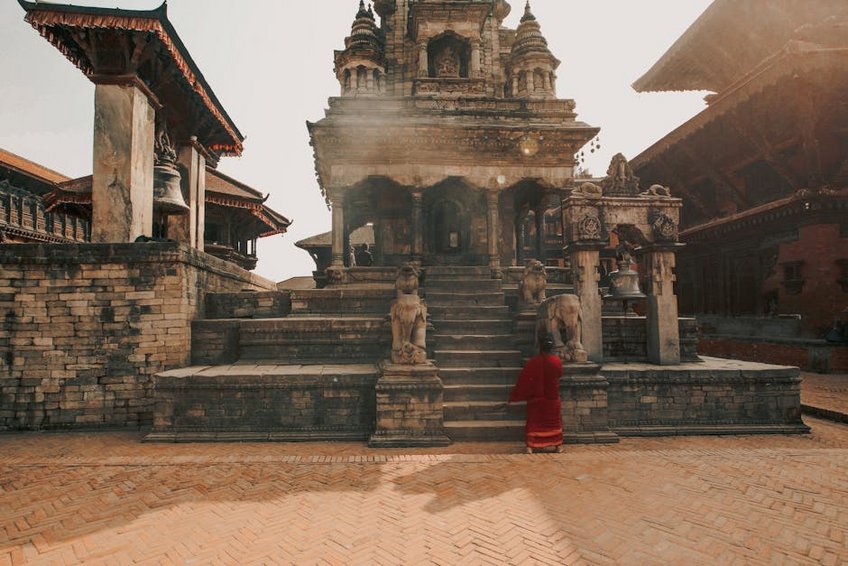
Alt: “kathmandu-durbar-square-ancient-temples-wood-carvings”
Nepal Kathmandu Valley UNESCO Sites – Planning Your Trip
A successful visit to these heritage sites requires strategic planning around timing, tickets, and transportation. The monument zones are close but located in dense, bustling cities, so efficient routing saves time. You will need a different mindset than visiting a remote archaeological park, as these are integrated into modern urban life.
Purchase the combined UNESCO entrance ticket, which offers significant savings versus individual site fees. Always carry the ticket and your passport, as random checks are common. Dress modestly, covering shoulders and knees, especially for temple entry, and be prepared to remove shoes frequently.
Engage a licensed guide for at least one site, like Patan or Bhaktapur, to unlock the layers of history and symbolism invisible to the untrained eye. Their insights into the living culture and post-earthquake restoration efforts are invaluable. Plan for two full days minimum to cover the highlights without rushing.
Best Time to Visit the Kathmandu Valley
The ideal months are October to November and March to April. October and November provide clear skies, mild temperatures (60-75°F / 15-24°C), and excellent visibility after the monsoon. This is peak season, so sites are busier, but festival activity, like Tihar, is vibrant.
Spring (March-April) offers warm weather (65-80°F / 18-27°C) and blooming rhododendrons, with the colorful Holi festival. Winter (Dec-Feb) has crisp, clear days but cold mornings and evenings (35-65°F / 2-18°C). The monsoon (June-Sept) brings heavy rain, humidity, and potential travel delays, though lush landscapes are beautiful.
Budget Planning and Costs
Your main costs will be the UNESCO ticket, transport, guides, and accommodation. Below is a breakdown for different travel styles.
Essential Preparation Checklist
Secure your visa, which is available on arrival for most Western passports ($30 for 15 days, $50 for 30 days). Ensure you have at least six months’ validity on your passport. Purchase comprehensive travel insurance that covers medical evacuation and trip interruption. Cash is king; withdraw Nepali rupees (NPR) from ATMs in Kathmandu, as cards are rarely accepted at sites.
Pack sturdy, comfortable walking shoes for uneven stone paths and temple stairs. Bring a scarf or shawl for modesty and sun protection. Include hand sanitizer, a refillable water bottle with a filter, and a small flashlight for dimly lit temple interiors. Download offline maps (Maps.me or Google Offline) and a translation app for basic Nepali phrases.
Top Attractions and Site-Specific Guides
While all seven monument zones are significant, each offers a distinct atmosphere and highlight. Kathmandu, Patan, and Bhaktapur Durbar Squares showcase royal grandeur, while Swayambhunath and Boudhanath are spiritual centers. Pashupatinath and Changu Narayan provide deep religious and historical context. Prioritizing based on your interests is key.
Allocate more time to Bhaktapur and Patan, as they feel less chaotic than Kathmandu’s square. Start your days early, around 8 AM, to experience the sites in the soft morning light before large tour groups arrive. Be observant of rituals but maintain a respectful distance, and always ask permission before photographing people, especially at Pashupatinath.
Must-See Highlights at Each Location
At Kathmandu Durbar Square, focus on Kasthamandap, the legendary wooden pavilion, and the Kumari Ghar to glimpse the living goddess. The stone inscription wall and the towering Taleju Temple are also essential. In Patan, the museum within the palace is world-class, and the Golden Temple (Hiranya Varna Mahavihar) nearby is stunning.
Bhaktapur’s highlight is the 55-Window Palace and the Nyatapola Temple, Nepal’s tallest pagoda. Don’t miss the Potter’s Square for a live craft demonstration. Swayambhunath’s main stupa with its all-seeing eyes is mesmerizing, and the surrounding smaller shrines and monasteries are equally captivating. Walk the full kora (circumambulation path) around Boudhanath Stupa with pilgrims.
Hidden Gems and Local Experiences
Venture to the lesser-visited courtyards within the durbar squares. In Patan, find the hidden Mul Chowk inside the palace, often quiet and serene. In Bhaktapur, explore the backstreets leading to Dattatreya Square, home to the Peacock Window, a masterpiece of wood carving. These areas offer a break from the main tourist thoroughfares.
For an authentic experience, visit during a local festival. Observe morning prayers with locals at Boudhanath or attend an evening aarti (prayer ceremony) at Pashupatinath. In Bhaktapur, you might see traditional pottery being fired in open kilns in Potter’s Square. Engaging with these daily and seasonal rhythms is unforgettable.
Understanding Restoration and Preservation
The 2015 earthquakes caused significant damage, particularly in Kathmandu, Patan, and Bhaktapur squares. Ongoing restoration is a massive, meticulous effort using traditional materials and techniques. At many sites, you’ll see scaffolding and workshops where artisans are recreating carved elements.
Your entrance fee directly contributes to this work. Observe the “post-earthquake exhibition” areas that explain the process. This context adds a layer of appreciation for the resilience of both the structures and the community dedicated to rebuilding them. It’s a testament to the living heritage you are witnessing.
Practical Travel Information and Logistics
Navigating the valley is straightforward but requires planning. The three durbar squares are in separate, traffic-heavy cities. While only 10-15 km apart, travel times can exceed an hour. Taxis and ride-sharing (Pathao, inDrive) are the most efficient for tourists, though price negotiation is standard. For the adventurous, local buses are extremely cheap but challenging.
Accommodation choices define your experience. Staying in Thamel (Kathmandu) puts you near tourist services but far from peace. Choosing a hotel in Bhaktapur or Patan offers a more atmospheric base right near the monuments. Book hotels with generators, as daily power cuts (load-shedding) are still common.
| Transport Method | Route & Details | Price Range (USD) |
|---|---|---|
| Taxi (Negotiated) | Kathmandu to Patan or Bhaktapur; agree on price before entering | $10 – $20 |
| Ride-Sharing App | Pathao or inDrive; often cheaper than taxis, fixed price | $5 – $15 |
| Tourist Bus | Organized day-tour from Thamel; includes guide and transport | $30 – $60 |
| Local Microbus | From Ratna Park (Kathmandu) to Bhaktapur; very crowded | $0.50 – $1 |
| Private Car with Driver | Full-day hire for visiting multiple sites at your pace | $40 – $80 |