Ecuador Baños Adventure Capital
Baños de Agua Santa serves as Ecuador’s premier adventure hub, nestled in the Tungurahua province where the Andes meet the Amazon basin. This town offers everything from waterfall rappelling and bridge swinging to thermal baths and volcano viewing, all within a compact, accessible area. Your Ecuador Baños adventure capital experience combines adrenaline activities with cultural immersion in a safe, traveler-friendly environment.
Essential Baños Information
Baños sits at approximately 1,820 meters (5,971 feet) elevation in central Ecuador’s highlands, surrounded by active Tungurahua volcano and lush cloud forests. The town’s name translates to “Baths of Holy Water,” referencing its thermal springs that have attracted visitors for centuries. Founded in the colonial era, Baños evolved from religious pilgrimage site to adventure tourism center in the late 20th century.
Modern Baños maintains its traditional charm with colorful buildings and church architecture while supporting extensive adventure infrastructure. The climate remains spring-like year-round, though rainfall varies significantly between dry and wet seasons. Local authorities prioritize tourist safety with regulated adventure companies and clear signage for independent exploration.
Key Geographical Features
Understanding Baños’ unique landscape helps plan activities effectively across different zones.
- Tungurahua Volcano (5,023m/16,480ft) dominates the skyline, offering hiking routes with panoramic views when volcanic activity permits access to certain areas.
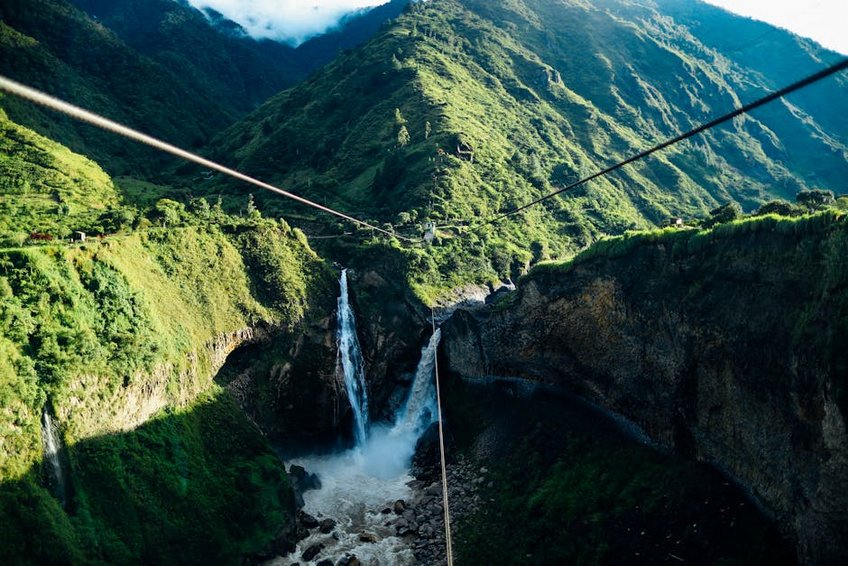
- The Pastaza River carves deep canyons through the region, creating ideal conditions for whitewater rafting classes II-IV and spectacular waterfall systems like Pailón del Diablo.
- Multiple microclimates exist within short distances, from paramo highlands to subtropical forests, supporting diverse adventure options in compact geographical range.
- Budget travelers spend $35-50 daily covering hostel dorm beds, market meals, and 1-2 self-guided activities like hiking or thermal bath visits, prioritizing free attractions and walking tours.
- Mid-range visitors allocate $75-120 daily for private rooms, restaurant dining, and 2-3 guided adventures such as canyoning or rafting with certified operators including equipment and transportation.
- Luxury experiences cost $150-250+ daily featuring boutique hotels, fine dining, private guides, and premium activities like helicopter tours or multi-day expeditions with gourmet catering.
- Ecuador Ministry of Tourism
- Lonely Planet Ecuador Guide
Cultural and Historical Context
Baños developed around the Virgin of Holy Water sanctuary, where pilgrims still visit the basilica seeking healing from thermal waters. The town’s architecture reflects Spanish colonial influence with wooden balconies and tile roofs, though modern construction accommodates tourism growth. Local culture blends indigenous traditions with mestizo influences, visible in festivals like Fiesta de la Virgen in October.
Adventure tourism expanded significantly after highway improvements in the 1990s made Baños more accessible from Quito. Today, certified operators ensure safety standards while preserving natural environments through sustainable tourism practices. The community maintains strong family values alongside entrepreneurial spirit, creating welcoming atmosphere for international visitors.
Climate and Weather Patterns
Baños experiences mild temperatures year-round, averaging 15-20°C (59-68°F) during daytime hours. December through March represents drier season with more sunshine ideal for outdoor activities, though afternoon showers still occur frequently. June through September brings cooler, cloudier conditions with higher rainfall, particularly affecting high-altitude hiking routes.
Microclimates create significant variations—the town center might be sunny while cloud forest areas experience misty conditions. Always pack layers including waterproof jacket regardless of forecast. Temperature drops noticeably at night, especially when volcanic ash clouds block sunlight or during southern hemisphere winter months.
Alt: “banos-ecuador-tungurahua-volcano-adventure-activities”
Ecuador Baños Adventure Capital – Planning Your Trip
Organizing your Ecuador Baños adventure capital visit requires balancing activity selection with weather considerations and booking timelines. The compact town center allows walking between most accommodations, restaurants, and adventure operator offices within 10-15 minutes. Budget-conscious travelers find excellent value through combo tours bundling multiple activities at discounted rates compared to individual bookings.
Peak visitation occurs during North American and European summer vacations (June-August) and holiday periods (December-January), requiring earlier reservations for popular guides. Shoulder seasons (April-May, September-October) offer smaller crowds and occasional discounted pricing while maintaining good weather conditions. Even during rainy months, many adventure activities operate with proper gear and adjusted routes.
Your Ecuador Baños adventure capital planning should prioritize must-do experiences based on fitness level and interests, then build itinerary around those core activities. Most visitors combine high-adrenaline adventures with relaxation in thermal springs and cultural experiences like visiting the basilica or local markets. Allow flexibility for weather changes and spontaneous discoveries in this dynamic destination.
Best Time to Visit Baños
Visit Baños between June and September for optimal adventure conditions with lower rainfall and clearer volcano views. Daytime temperatures range 16-21°C (61-70°F) during these months, comfortable for strenuous activities without overheating. This dry season sees more consistent operation of all adventure activities with minimal weather cancellations.
Shoulder months April-May and October-November provide good alternatives with fewer crowds and lower accommodation prices. Rainfall increases during these periods but typically occurs in afternoon bursts rather than all-day events. December through March represents wettest season, though thermal baths remain enjoyable and some adventure operators offer rainy-day alternatives.
Budget Planning and Costs
Baños offers adventure experiences across multiple price points, from budget-friendly to premium guided tours.
Essential Preparation Checklist
Pack quick-dry clothing, sturdy hiking shoes, swimwear for thermal baths, and waterproof layers regardless of season. Adventure gear like helmets and harnesses gets provided by certified operators, though bringing personal items like break-in hiking boots improves comfort. Include insect repellent for lower elevation areas and high-SPF sunscreen for intense equatorial sun exposure.
US and EU passport holders enjoy 90-day visa-free entry to Ecuador, though always verify current requirements before travel. Purchase comprehensive travel insurance covering adventure activities and potential volcanic disruptions. Book popular guides 2-3 weeks ahead during peak seasons, with more flexibility during quieter months through direct negotiation.
Top Attractions and Activities
Baños delivers concentrated adventure diversity within its small geographical footprint, allowing visitors to experience multiple activities in short timeframes. The town’s unique position between mountain and jungle ecosystems creates unparalleled variety—you can hike volcanic trails in morning and raft Amazon-bound rivers by afternoon. Most operators cluster around downtown area, facilitating easy comparison shopping and spontaneous activity decisions.
Adventure difficulty ranges from beginner-friendly zip-lining to expert-level rock climbing, with certified guides available for all skill levels. Many activities operate year-round with weather-appropriate modifications, ensuring consistent access to Baños’ signature experiences. Combination tours prove particularly cost-effective, bundling 3-4 adventures into full-day itineraries with transportation and equipment included.
Must-See Highlights
The Swing at the End of the World (Casa del Árbol) provides iconic photo opportunity overlooking Tungurahua volcano, with admission costing $2 and operating 8AM-5PM daily. Pailón del Diablo waterfall requires $2 entry fee and moderate 30-minute hike through lush vegetation to reach thunderous cascade with viewing platforms and optional stair descent behind water curtain.
Baños thermal baths complex offers multiple pools at different temperatures, with $4 admission providing 2-hour access to therapeutic mineral waters. The Ruta de las Cascadas features numerous waterfalls accessible via $25 bike rental including protective gear, with shuttle options available for return journey. These core attractions demonstrate Baños’ perfect blend of natural wonder and adventure accessibility.
Hidden Gems and Local Favorites
Venturing beyond main tourist trail reveals quieter thermal pools like Santa Clara hot springs, where locals prefer for more authentic experience at lower prices. The Bellavista Cross hike provides panoramic town views with minimal crowds during early morning hours, accessible via steep but well-marked trail from city center.
Local guides know secluded swimming holes along Pastaza River beyond standard rafting routes, often included in premium tours. Traditional sugar cane mills (trapiches) demonstrate artisanal production methods with tasting opportunities. These lesser-known spots capture Baños’ authentic character while avoiding peak-time congestion at major attractions.
Adventure Activity Spectrum
Whitewater rafting operates year-round on Pastaza River with class III-IV rapids suitable for beginners through experts, costing $35-55 for half-day trips including equipment and guides. Canyoning adventures descend waterfall systems using rappelling techniques, with $45-65 covering multiple drops and full safety gear from certified operators.
Bridge swinging from San Francisco bridge delivers 40-meter freefall experience above river canyon, priced at $20 including harness and professional supervision. These adrenaline activities represent Baños’ adventure core while maintaining excellent safety records through regulated operator systems and mandatory guide certifications.
Practical Travel Information
Baños infrastructure supports travelers efficiently with multiple transportation options, varied accommodations, and extensive adventure services. The compact town layout enables walking between most points of interest, while taxis and buses connect outer attractions affordably. Spanish language proficiency helps but isn’t essential, as most adventure operators employ English-speaking guides and menus feature translations.
US dollars serve as Ecuador’s official currency, with ATMs available throughout town and credit cards accepted at larger establishments. Electrical outlets use 120V/60Hz Type A and B plugs compatible with North American devices. Mobile coverage remains reliable in town center, though signal weakens in surrounding mountainous areas and during adventure activities in remote locations.
| Category | Options/Features | Price Range (USD) |
|---|---|---|
| Accommodation | Hostel dorms to boutique hotels with thermal pool access, free breakfast common | $15-200/night |
| Transportation | Local buses $0.50, taxis $2-5 around town, bike rentals $8-15/day | $1-50 daily |
| Adventure Activities | Guided tours with equipment, photos, and sometimes meals included | $20-150/activity |
| Food & Dining | Local markets $3-7, mid-range restaurants $10-20, fine dining $25-40 | $10-50 daily |