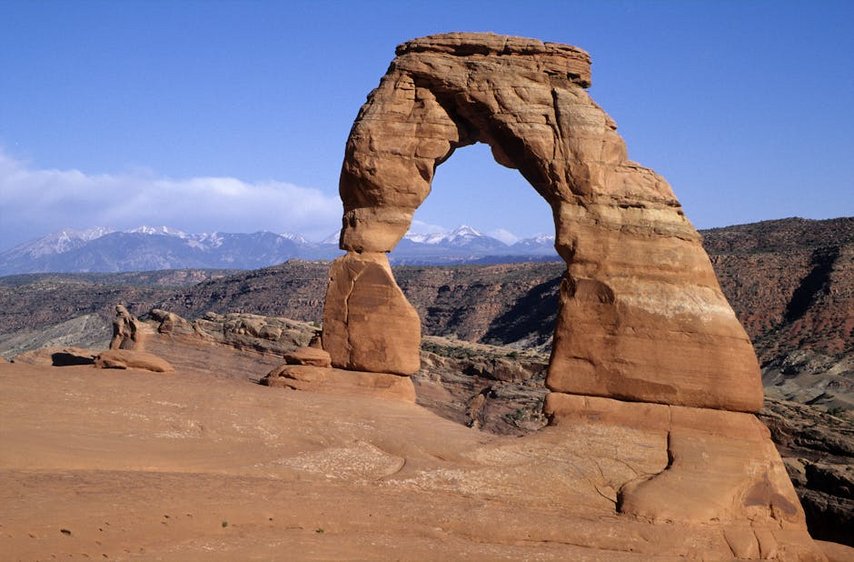
USA Arches National Park Delicate Arch – Essential Hiking Guide
Arches National Park in Utah features over 2,000 natural sandstone arches, with Delicate Arch standing as its most iconic formation. This 52-foot freestanding arch rewards hikers with breathtaking views across the desert landscape after a moderately challenging 3-mile round trip. Your USA Arches National Park Delicate Arch experience combines geological wonders with accessible adventure, perfect for photographers and outdoor enthusiasts.
Arches National Park Essential Information
Located near Moab, Utah, Arches National Park protects 76,679 acres of stunning red rock formations. The park’s unique geology developed over millions of years through erosion of salt deposits and sandstone layers. Visitor numbers exceed 1.5 million annually, with peak seasons bringing substantial crowds to popular trails.
The park operates year-round, though summer temperatures frequently exceed 100°F (38°C). Winter visits offer cooler conditions with occasional snow dusting the red rocks. Spring and fall provide ideal hiking weather between 60-80°F (16-27°C) with comfortable daytime temperatures.
Park History and Formation
Understanding the park’s geological history enhances any visit to these remarkable landscapes.
- Salt beds deposited 300 million years ago created underground salt valleys that later collapsed, forming the arches and fins visible today through erosion processes.
- President Herbert Hoover designated the area as a national monument in 1929, with Congress redesignating it as a national park in 1971 after recognizing its unique value.
- Delicate Arch gained international recognition when it appeared on Utah license plates and the 2002 Winter Olympics medals, cementing its status as a state symbol.
- Budget travelers spend $50-100 daily using campgrounds, preparing meals, and focusing on free park activities after paying the $30 entrance fee that covers seven days of access.
- Mid-range visitors allocate $150-250 daily for comfortable Moab hotels, restaurant meals, and occasional guided tours like ranger programs or photography workshops.
- Luxury experiences cost $300-500+ daily featuring resort accommodations, fine dining, private guides, and specialty activities like helicopter tours over the arches.
- National Park Service – Arches National Park
- Moab Area Travel Council
Visitor Services and Facilities
Arches National Park provides comprehensive visitor services to enhance your experience. The main visitor center features extensive exhibits, bookstore, and ranger-staffed information desk. Restrooms and water filling stations appear at the visitor center and selected trailheads throughout the park.
Timed entry reservations now required April through October help manage congestion and protect fragile ecosystems. The park maintains paved roads to major viewpoints with unpaved routes accessing more remote areas. Camping reservations at Devils Garden Campground often sell out months in advance for peak seasons.
Conservation and Park Regulations
Park regulations protect both visitors and the delicate desert environment. Stay on designated trails to prevent damaging cryptobiotic soil crusts that require decades to regenerate. Carry and drink at least one gallon (4 liters) of water per person daily in summer months to prevent dehydration.
All natural and cultural resources remain protected, meaning rock climbing on arches and collection of rocks, plants or artifacts violates federal law. Proper food storage prevents wildlife encounters, particularly with coyotes and desert bighorn sheep occasionally spotted in the park.
USA Arches National Park Delicate Arch – Planning Your Trip
Successful visits to Delicate Arch require careful timing and preparation to maximize your experience. The 1.5-mile uphill trail gains 480 feet in elevation, taking most hikers 2-3 hours round trip with photography stops. Early morning or late afternoon hikes avoid extreme heat and provide better lighting for photographs.
Park entrance fees cost $30 per vehicle for 7-day access, while America the Beautiful passes provide annual entry for $80. The timed entry system operates from 6 AM to 5 PM daily during peak season, requiring advance reservations through Recreation.gov. Consider visiting before 6 AM or after 5 PM when reservations aren’t required but daylight remains sufficient.
Your USA Arches National Park Delicate Arch planning should account for seasonal temperature variations and changing daylight hours. Summer visits require pre-dawn starts to complete hikes before afternoon heat peaks, while winter hiking demands traction devices for potential ice on the trail.
Best Time to Visit Arches National Park
March through May and September through October offer optimal conditions with daytime temperatures between 60-80°F (16-27°C). These shoulder seasons provide comfortable hiking weather without extreme heat, though afternoon thunderstorms occasionally occur in late summer. Crowds diminish slightly compared to peak summer months, improving the overall experience.
June through August brings intense heat exceeding 100°F (38°C), requiring very early morning hikes to ensure safety. November through February sees temperatures ranging from 30-50°F (-1 to 10°C) with occasional snow creating stunning photographic contrasts against red rocks. Holiday weekends draw larger crowds year-round, particularly around spring break and Thanksgiving.
Budget Planning and Costs
Budget considerations vary significantly based on accommodation choices and trip duration.
Essential Preparation Checklist
Proper gear and preparation ensure a safe and enjoyable visit to the desert environment. Sturdy hiking shoes with good traction handle the rocky, uneven terrain, while moisture-wicking clothing layers accommodate temperature swings. Wide-brimmed hats, sunglasses, and mineral-based sunscreen provide essential sun protection in the high-desert climate.
Download offline maps since cell service remains unreliable throughout most of the park area. Carry a headlamp or flashlight for potential late returns, and inform someone of your hiking plans with expected return times. Check weather forecasts immediately before departure since desert conditions change rapidly with potential flash flood risks in narrow canyons.
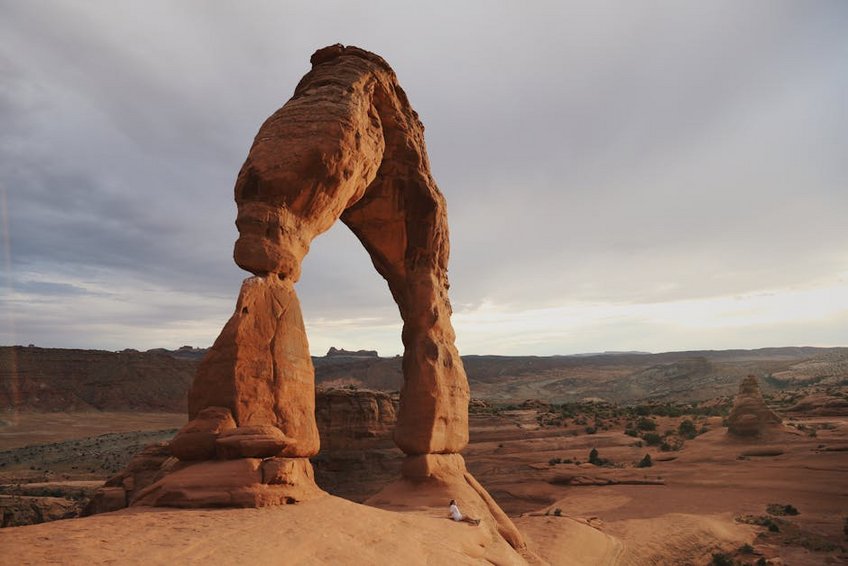
Alt: “delicate-arch-sunset-hikers-silhouette-red-rocks”
Top Attractions and Activities
Beyond Delicate Arch, Arches National Park offers numerous spectacular formations and hiking opportunities. The Windows Section contains multiple massive arches accessible via short, flat trails perfect for families and limited-mobility visitors. Balanced Rock stands prominently along the main park road, requiring just a 0.3-mile loop to appreciate its precarious appearance.
Devils Garden Trailhead provides access to seven notable arches along a 7.2-mile primitive loop requiring scrambling in sections. Landscape Arch spans 306 feet as one of the world’s longest natural arches, though sections have collapsed in recent decades. Park Avenue features towering rock monoliths resembling a big-city skyline along a one-mile trail between the Courthouse Towers viewpoint.
Must-See Highlights
Delicate Arch Viewpoint offers an alternative for those unable to hike the full trail, providing distant views from a paved, accessible path. The Windows Section includes North Window, South Window, and Turret Arch within a compact area easily explored in one hour. Double Arch presents two massive arches sharing the same stone foundation, appearing in opening scenes of Indiana Jones and the Last Crusade.
Fiery Furnace requires permits for independent exploration or ranger-guided tours through a maze of narrow sandstone canyons. Sand Dune Arch sits hidden between rock fins, providing a shady, sandy area popular with children and those seeking respite from summer heat. Skyline Arch doubled in size after a rock fall in 1940, demonstrating the park’s ongoing geological evolution.
Hidden Gems and Local Favorites
Broken Arch actually remains intact despite its name, accessible via a 1.3-mile round trip from the Devils Garden Campground. Tower Arch requires a moderately strenuous 2.6-mile round trip in the Klondike Bluffs area, typically seeing fewer visitors than main attractions. Eye of the Whale Arch sits in the Herdina Park area outside main park boundaries, requiring a high-clearance vehicle for access.
Local photographers favor Mesa Arch in nearby Canyonlands National Park for sunrise, though many capture Delicate Arch at both sunrise and sunset for different lighting effects. Moab’s downtown area features numerous art galleries showcasing local landscape photography and Native American crafts. The Colorado River offers rafting trips ranging from mild float excursions to challenging whitewater adventures just minutes from the park entrance.
Photography Tips for Delicate Arch
Sunrise and sunset provide the most dramatic lighting for photographing Delicate Arch, with the arch framing the La Sal Mountains. Use a wide-angle lens (16-35mm) to capture the arch with surrounding landscape, and a telephoto (70-200mm) for compressed mountain backgrounds. Arrive at least one hour before sunset to secure optimal positioning since the small bowl area fills quickly with photographers.
Neutral density filters help balance exposure between bright sky and darker foreground during midday shooting. A sturdy tripod proves essential for low-light conditions and long exposures capturing star trails with the arch silhouette. For unique perspectives, hike around the bowl area to find different compositions rather than clustering at the most obvious viewpoints.
Practical Travel Information
Arches National Park sits 5 miles north of Moab, Utah, with the nearest major airport in Salt Lake City 230 miles away. The park features one entrance station with a visitor center just inside, where rangers provide maps and current conditions. Most visitors base themselves in Moab, which offers full services including grocery stores, outdoor gear shops, and numerous accommodation options.
The 18-mile scenic drive connects all major viewpoints and trailheads, with parking lots filling by mid-morning during peak seasons. Shuttle services operate from Moab during busy periods, reducing congestion and eliminating parking challenges at popular destinations. Many visitors combine Arches with nearby Canyonlands National Park, Dead Horse Point State Park, and Colorado River recreation areas.
| Accommodation Type | Options and Features | Price Range (USD) |
|---|---|---|
| Campgrounds | Devils Garden in-park camping, 51 sites, no hookups, restrooms | $25-50 per night |
| Budget Hotels | Basic motels in Moab, pool, AC, limited amenities | $80-150 per night |
| Mid-Range Hotels | Comfortable lodging, breakfast included, pool, modern rooms | $150-300 per night |
| Vacation Rentals | Full homes or condos, kitchens, multiple bedrooms, privacy | $200-500 per night |