San Marino Mount Titano: Europe’s Historic Mountain Republic
San Marino Mount Titano offers a unique travel experience as one of the world’s oldest republics perched atop a dramatic limestone peak. This UNESCO World Heritage site combines medieval architecture with panoramic views across the Italian countryside, accessible through day trips from nearby cities. This guide covers essential planning details, cultural insights, and practical tips for exploring this microstate’s three iconic towers and historic pathways.
Essential Republic Information
San Marino claims the title of world’s oldest surviving sovereign state, founded in 301 AD by Saint Marinus. The republic maintains its independence despite complete enclosure by Italy, with Mount Titano’s three peaks forming its geographical and historical core. This microstate covers just 61 square kilometers yet preserves centuries of autonomy through its unique political system.
The country operates as a parliamentary republic with two Captains Regent serving as heads of state for six-month terms. Visitors discover well-preserved medieval structures including government buildings, museums, and defensive walls dating to the Renaissance period. San Marino’s currency is the Euro, though it wasn’t an EU member until 1992, maintaining distinctive stamps and coins.
Historical Timeline – Key Events
Understanding San Marino’s chronology enhances appreciation for its cultural significance.
- Founding Era (301 AD): Stonecutter Marinus establishes Christian community escaping religious persecution, creating settlement’s foundation.
- Medieval Period (1000-1300): Construction of three towers begins as defensive system against Malatesta family from Rimini.
- Modern Recognition (1862): Italy formally recognizes San Marino’s sovereignty through friendship treaty ensuring protection.
- Budget travelers spend $50-75 daily using Rimini hotels, public transportation, and self-guided exploration with packed lunches and free walking tours.
- Mid-range visitors allocate $100-150 per day for San Marino accommodations, museum passes, restaurant meals, and guided tower tours with transportation included.
- Luxury experiences cost $200-300 daily featuring boutique hotels, private guides, fine dining, and specialty shopping for collectible stamps and coins.
- Official San Marino Tourism Board
- UNESCO World Heritage Centre
Geographical Features and Climate
Mount Titano rises 739 meters above sea level, creating microclimates differing from surrounding Italian plains. The mountain’s limestone composition supports unique flora including rare orchid species within its protected nature reserves. Summer temperatures average 75-85°F (24-29°C) while winter sees 30-45°F (-1 to 7°C) with occasional snowfall.
The republic’s elevation creates cooler conditions than coastal Rimini just 22 kilometers away. Visitors should prepare for changeable weather with possible fog cover affecting visibility from the peaks. Spring and autumn provide ideal hiking conditions with moderate temperatures and clearer panoramic views.
UNESCO World Heritage Status
San Marino’s historic center and Mount Titano received UNESCO designation in 2008 for representing a preserved medieval city-state. The recognition specifically cites the three towers – Guaita, Cesta, and Montale – as exemplary feudal defense systems. This status ensures continued preservation of architectural heritage while increasing tourism infrastructure.
The UNESCO boundary encompasses the entire historic center including public palaces, churches, and defensive walls. Conservation efforts maintain original materials and construction techniques while accommodating modern visitor needs. This protection guarantees future generations can experience this unique political and geographical entity.
San Marino Mount Titano – Planning Your Trip
Visiting San Marino Mount Titano requires understanding its unique logistics as a landlocked microstate without its own airport or train station. Most travelers access the republic through Italian transportation hubs, then utilize local buses or rental cars for the mountain ascent. Your itinerary should balance tower visits with museum explorations and leisurely dining in the historic center.
Budget considerations include accommodation costs averaging $100-300 nightly, though day trips eliminate overnight expenses. The San Marino Card provides discounted museum access and public transportation for visitors staying multiple days. Advance reservations for guided tours ensure better understanding of the republic’s complex history and political system.
Physical preparation involves comfortable walking shoes for steep pathways and numerous staircases between attractions. The altitude and elevation changes demand moderate fitness levels, though cable car options assist visitors with mobility challenges. Pack layers for changeable mountain weather regardless of season.
Best Time to Visit San Marino Mount Titano
April through June offers ideal conditions with daytime temperatures of 60-75°F (15-24°C) and minimal rainfall. These months provide clear visibility from the towers before summer haze develops, with wildflowers blooming across the mountainside. September and October similarly deliver comfortable hiking weather with autumn foliage enhancing the landscape.
July and August attract peak crowds despite temperatures reaching 85°F (29°C), requiring earlier arrival to avoid lines. Winter visits between December and February see fewer tourists but limited attraction hours and possible trail closures. Shoulder seasons in March and November balance accessibility with moderate visitor numbers.
Budget Planning and Costs
San Marino accommodates various travel budgets through strategic planning and accommodation choices.
Essential Preparation Checklist
EU and US passport holders need no visa for stays under 90 days, though carrying identification is mandatory for border checks. Secure European health insurance coverage since San Marino’s healthcare system primarily serves residents. Download offline maps and transportation schedules since cellular service may be unreliable on the mountain.
Pack waterproof jackets and sturdy footwear for changeable mountain conditions, plus sun protection for exposed pathways. Reserve popular restaurants like Ristorante Bolognese two weeks ahead for dinner during peak season. Learn basic Italian phrases for interactions beyond tourist areas, though English is widely spoken at major attractions.
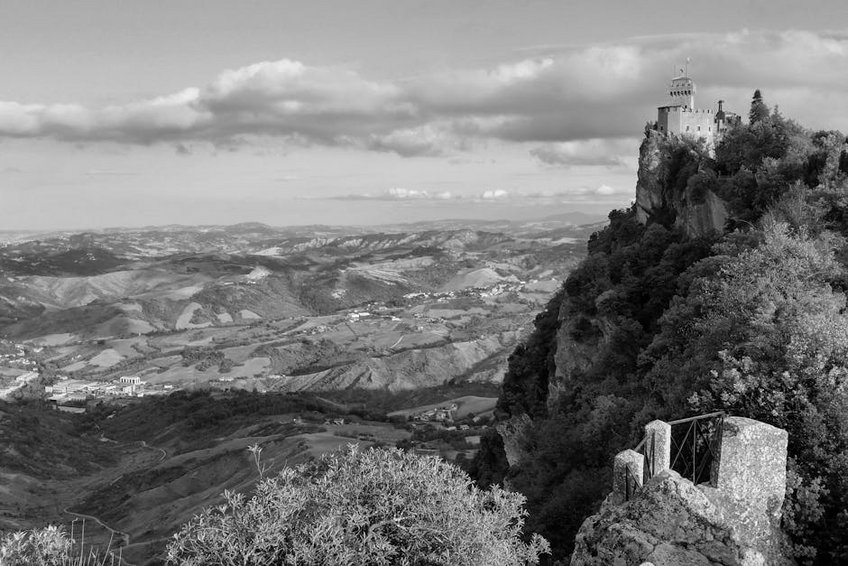
Alt: “san-marino-mount-titano-three-towers-panoramic-view”
Top Attractions and Activities
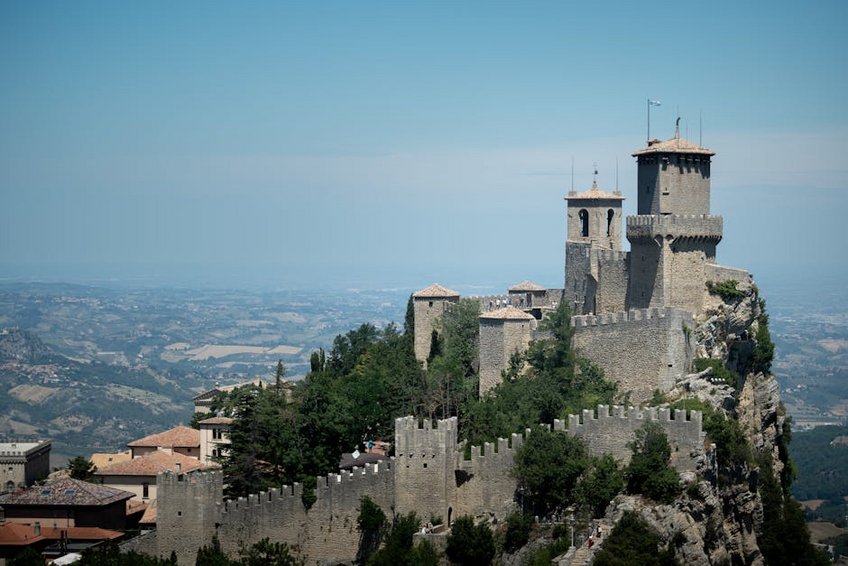
The Three Towers of San Marino represent the republic’s most iconic landmarks, each with distinct historical significance and architectural features. Guaita Tower dates to the 11th century as the oldest and most formidable fortress, accessible via stone staircases with rewarding summit views. Cesta Tower houses the Museum of Ancient Weapons displaying over 500 historical pieces across multiple exhibition levels.
Montale Tower remains the most secluded of the three, requiring a pleasant forest walk to reach its distinctive pentagonal structure. The towers connect through the Passo delle Streghe (Witches’ Path), a scenic trail offering spectacular photography opportunities across the Adriatic coastline. Combined museum tickets cost approximately $10-15 providing access to all three towers and their exhibitions.
Must-See Highlights
Basilica del Santo Marino contains the relics of Saint Marinus in its neoclassical structure completed in 1838. The Public Palace serves as government headquarters with guided tours available when parliament isn’t in session. Piazza della Libertà features the Statue of Liberty and changing of the guard ceremony during summer months.
State Museum showcases archaeological artifacts and artistic treasures spanning San Marino’s history across four floors. The Torture Museum presents medieval judicial instruments within atmospheric underground chambers. Wax Museum displays historical figures and local personalities through lifelike recreations.
Hidden Gems and Local Favorites
Borgo Maggiore’s weekly Thursday market has operated since the 14th century, offering local products and artisan crafts. The small village of Acquaviva provides quiet cobblestone streets and traditional restaurants away from main tourist paths. Montalbo Church contains 14th-century frescoes rarely visited by day-trippers.
Monte Titano’s western slopes feature less-traveled hiking trails with exceptional sunset viewing opportunities. Local enotecas like Enoteca San Marino offer wine tastings featuring regional Sangiovese varieties. The Crossbowmen’s training demonstrations occur monthly in summer, preserving medieval traditions.
Hiking and Outdoor Activities
San Marino’s network of trails ranges from gentle paved pathways to challenging mountain routes with significant elevation changes. The Ancient Paths circuit connects all three towers while providing interpretive signage about local flora and geological features. Guided nature walks depart from the Tourist Information Center focusing on medicinal plants and mountain ecology.
Rock climbing opportunities exist on Mount Titano’s northern face with routes suitable for various skill levels. Paragliding operators launch from designated areas offering aerial perspectives of the republic’s compact territory. Winter brings occasional cross-country skiing when snowfall permits, though conditions vary annually.
Practical Travel Information
San Marino lacks an airport or train station, requiring travel through Italian transportation infrastructure. Federico Fellini International Airport in Rimini sits 25 kilometers away, served by seasonal European flights. Bologna Guglielmo Marconi Airport offers more international connections 135 kilometers distant with regular train service to Rimini.
Rimini’s train station provides frequent regional services from Bologna, Ancona, and other Italian cities. From Rimini, Bonelli Bus operates regular service to San Marino’s historic center with journeys taking approximately 45 minutes. Rental cars offer flexibility though limited parking availability in upper San Marino justifies using park-and-ride facilities.
| Category | Options/Features | Price Range (USD) |
|---|---|---|
| Accommodation | Hotels in historic center, Borgo Maggiore B&Bs, agriturismos | $80-300/night |
| Transportation | Bonelli Bus from Rimini, cable car, rental cars, taxis | $5-50/day |
| Food & Dining | Traditional trattorias, enotecas, casual cafes, grocery stores | $15-60/meal |
| Attractions | Combined museum tickets, tower access, guided tours | $10-40/person |