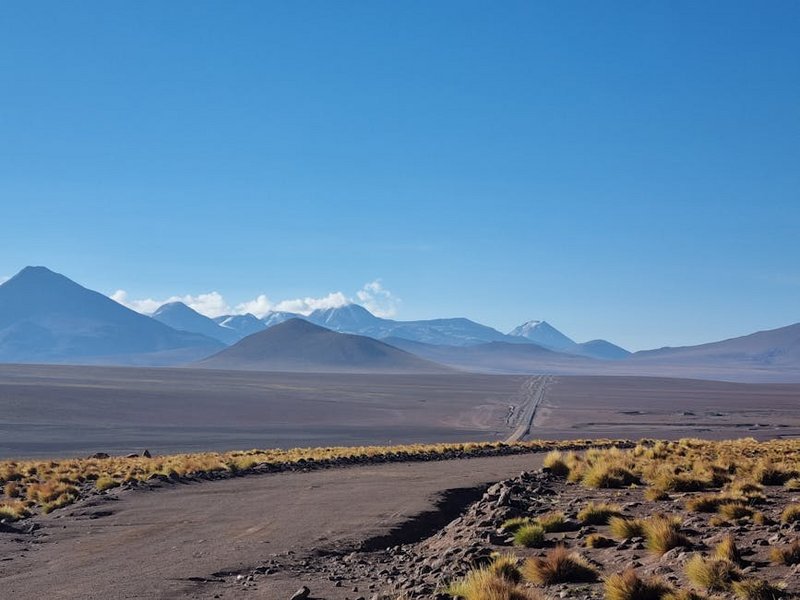
Exploring the Atacama Desert in Chile
Journeying to the Atacama Desert in Chile presents a starkly beautiful landscape where adventures unfold under the driest skies on Earth. Your expedition promises star-filled nights, surreal salt flats, and geothermal fields that challenge your perception of nature’s capabilities. This guide covers essential planning, from navigating high altitudes and budget logistics to discovering hidden lagoons and cultural encounters.
Essential Desert Information
The Atacama is a high-altitude plateau nestled in northern Chile, part of the larger Central Andean dry puna ecoregion. Its status as the driest non-polar desert stems from a double rain shadow from both the Andes and the Chilean Coast Range. This unique geography creates an environment where some weather stations have never recorded measurable rain.
It spans over 105,000 square kilometers (40,500 square miles) with elevations commonly between 2,000 and 3,000 meters (6,500-9,800 feet). The principal tourist hub is San Pedro de Atacama, a small adobe town that serves as the gateway to the region’s wonders. Nearly all organized tours and transportation networks radiate from this central point.
Geographical and Climate Facts
Understanding the environment is crucial for preparation.
- The desert’s core receives less than 1 mm (0.04 inches) of precipitation annually, creating an arid climate with intense solar radiation requiring strong SPF 50+ sunscreen at all times.
- Altitude sickness, or *soroche*, is common due to elevations starting at 2,400m (7,900 ft) in San Pedro; plan for 24-48 hours of light activity upon arrival to acclimatize.
- Temperatures swing dramatically from day to night, often exceeding 25°C (77°F) during the day and dropping near freezing (0°C/32°F) after sunset, necessitating layered clothing.
- Budget traveler: $60-80 USD per day covers a hostel dorm, self-catered meals, public transportation to nearby sites, and one or two group tours. Focus on free activities like hiking the Valle de la Muerte and stargazing from town.
- Mid-range explorer: $150-250 USD per day allows a private room in a comfortable guesthouse, meals at local restaurants, and scheduled group tours to key attractions like the Tatio Geysers and the Salar de Atacama salt flat.
- Luxury experience: $400-600+ USD per day includes stays at high-end lodges like Awasi or Tierra Atacama, private guided tours with expert astronomers or geologists, gourmet dining, and spa treatments utilizing local elements.
- Chile Travel Official Tourism Board
- SERNATUR National Tourism Service
- CONAF Los Flamencos National Reserve
A Brief Historical Context
The region’s human history stretches back millennia, with the Atacameño people establishing settlements around oases. They developed sophisticated irrigation systems and formed part of the Tiwanaku and later Inca trade routes. Spanish colonization in the 16th century introduced new influences, visible today in the blend of indigenous and colonial architecture in villages.
Modern history is marked by mining for nitrates, copper, and lithium, which remains a key industry. For travelers, this legacy offers visits to abandoned saltpeter mining towns like Humberstone, now UNESCO World Heritage sites. These ghost towns provide a poignant glimpse into Chile’s economic past.
Environmental Protection and Conservation
Much of the Atacama lies within protected areas like the Los Flamencos National Reserve. This reserve safeguards diverse landscapes, from salt flats and saline lakes to high-altitude lagoons that are critical habitats for flamingos. The ALMA Observatory, a major international astronomical project, operates under strict light pollution controls to preserve the pristine night sky.
Visitors must follow “Leave No Trace” principles strictly due to the fragile desert ecosystem. This includes staying on marked trails, not removing any natural materials, and using biodegradable products. Tour operators certified by SERNATUR (Chile’s National Tourism Service) generally adhere to these sustainable practices.
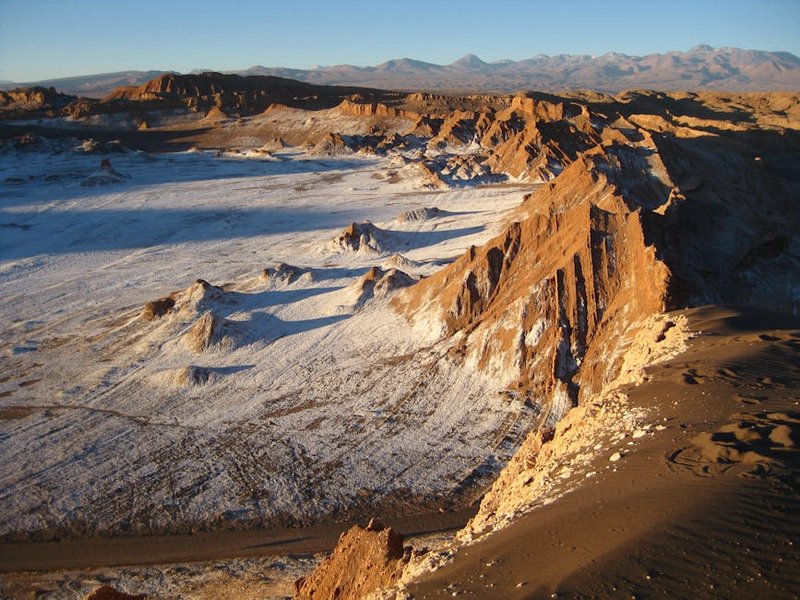
Alt: “atacama-desert-valley-of-the-moon-sunset-landscape”
Atacama Desert in Chile – Planning Your Trip
A successful visit to this arid region hinges on strategic planning around seasons, altitude, and activity bookings. The desert’s remoteness means services are concentrated in San Pedro, so advance reservations for popular tours and higher-end lodgings are essential, especially during peak months from September to November. Independent exploration is limited, making guided excursions the most practical way to see major sites.
Budget considerations should account for tour costs, which form a significant portion of expenses, alongside accommodations and dining. While San Pedro has options for all budgets, the isolated location makes everything from groceries to fuel more expensive than in major Chilean cities. Payment in Chilean Pesos (CLP) is standard, though many places accept credit cards; carrying cash for smaller vendors and tips is wise.
Best Time to Visit the Atacama Desert
The peak season runs from September to November (Southern Hemisphere spring) and March to May (autumn). During these months, daytime temperatures are pleasant, ranging from 20-25°C (68-77°F), and night temperatures are milder, rarely dropping below 5°C (41°F). Clear skies are most consistent, offering optimal conditions for both daytime exploration and stargazing, though you’ll encounter more crowds.
Visit during the summer (December to February) for warmer days but expect possible afternoon cloud buildup and brief, rare showers in the highlands. Winter (June to August) delivers chilly nights, often below freezing, but crystal-clear days perfect for photography. This off-season offers fewer tourists and potentially better lodging rates, despite the cold.
Budget Planning and Costs
A daily budget varies dramatically based on your travel style.
Essential Preparation Checklist
Packing correctly is non-negotiable for comfort and safety. Essentials include high-SPF sunscreen, lip balm with SPF, a wide-brimmed hat, sunglasses with UV protection, and reusable water bottles. For clothing, pack moisture-wicking base layers, a warm fleece or down jacket for nights, a windbreaker, and sturdy, broken-in hiking shoes for rocky terrain.
Prepare documentation like a valid passport (most nationalities receive a 90-day tourist card upon arrival) and consider travel insurance covering high-altitude activities. Book your tours and accommodations at least two to three months in advance for peak seasons. Consult your doctor about altitude sickness medication like acetazolamide and ensure you have a basic first-aid kit.
Top Attractions and Unforgettable Activities
The Atacama’s allure lies in its otherworldly landscapes and the range of experiences they enable. From the vast silence of the salt flats to the explosive dawn at a geyser field, each site offers a distinct perspective on this extreme environment. The clarity of the atmosphere also makes it a premier destination for astronomers and photographers alike.
While the major sites are well-known, the true magic often lies in the timing of your visit. Witnessing the colors shift on the mountains at sunset in Valle de la Luna or seeing flamingos feed in the early morning light at the Chaxa Lagoon transforms these places from scenic to sublime. Planning your tour schedules around sunrise and sunset is highly recommended.
Must-See Natural Highlights
Valle de la Luna (Moon Valley), located within the Cordillera de la Sal, is famed for its dramatic salt and stone formations that mimic a lunar landscape. Visit for sunset when the mountains glow intense shades of red and orange; park entry costs around 3,000 CLP ($3.50 USD). The adjacent Valle de la Muerte (Death Valley) offers impressive dunes and hiking trails.
The El Tatio Geyser Field, one of the highest in the world at 4,320 meters (14,170 ft), requires a pre-dawn departure to see steam columns erupt at sunrise. Tour prices range from $25-50 USD. The Salar de Atacama, Chile’s largest salt flat, is home to the Chaxa Lagoon where you can observe Andean, Chilean, and James’s flamingos; reserve entry is approximately 2,500 CLP ($3 USD).
Hidden Gems and Local Favorites
Venture to the high-altitude lagoons of Miscanti and Miñiques, located at over 4,100 meters (13,500 ft). Their stunning blue waters set against volcanic peaks offer serene beauty with fewer crowds than the central sites. Access is via a tour or rental car with a permit, as it’s part of the Los Flamencos Reserve.
For a cultural deep dive, visit the quiet village of Toconao to see its bell tower built from liparite stone and local artisan workshops. The less-visited Rainbow Valley showcases colorful mineral-streaked hills without the crowds of the more famous valleys. These spots provide a more tranquil and authentic glimpse of the region.
Astronomy and Stargazing Experiences
The Atacama boasts some of the clearest skies on the planet, protected from light pollution. Multiple observatories near San Pedro offer nightly tours where you can view planets, nebulae, and galaxies through powerful telescopes. Tours typically cost $30-60 USD per person and are led by knowledgeable guides.
For a more immersive experience, several luxury hotels have private observatories. You can also visit the ALMA Observatory on specific weekend mornings (advance reservation required). The desert hosts major international astronomy projects, underscoring its global significance for celestial observation.
Practical Travel Information
Navigating the logistics of a trip to this remote region requires understanding your limited options. All international travelers will connect through Santiago’s Comodoro Arturo Merino Benítez International Airport (SCL). From there, you take a domestic flight to Calama’s El Loa Airport (CJC), which is the primary gateway, located about a 1.5-hour drive from San Pedro de Atacama.
Accommodation in San Pedro ranges from basic hostels to world-class luxury lodges. The town is small and walkable, so any lodging within the central grid provides easy access to tour agencies, restaurants, and shops. Booking directly with hotels or through reputable platforms often yields the best rates and confirms sustainability practices.
| Category | Options/Features | Price Range (USD) |
|---|---|---|
| Budget Hostel | Dorm bed, shared kitchen, communal area, basic breakfast included | $15-30 per night |
| Mid-Range Guesthouse | Private room with bath, local decor, courtyard, airport transfer available | $80-150 per night |
| Tourist Hotel | Swimming pool, on-site restaurant, tour desk, comfortable rooms | $150-300 per night |
| Luxury Lodge | All-inclusive stays, private guides, spa, gourmet dining, exclusive excursions | $600-1,200+ per night |