Historical and Natural Attractions in Bursa
Bursa, Turkey’s first major Ottoman capital, presents a compelling fusion of imperial heritage and pristine mountain landscapes that few destinations can match. The city’s stunning Grand Mosque and vibrant bazairs sit just a short drive from the snow-capped peaks and thermal springs of Mount Uludağ. Exploring the historical and natural attractions in Bursa requires thoughtful planning to appreciate both its Silk Road legacy and its outdoor adventures across a single visit.
Bursa’s Historical and Geographical Significance
Founded in the 2nd century BC, Bursa gained its defining identity after its 1326 conquest by Orhan Ghazi, which established it as the inaugural capital of the Ottoman Empire. This pivotal history left a dense concentration of early Ottoman architecture, including royal tombs, theological schools, and sprawling commercial complexes that fueled the empire’s growth. The city’s strategic position on the western slopes of the Bithynian Olympus, now Uludağ, created a unique settlement pattern where urban development meets a national park.
Geographically, the area benefits from fertile plains and mountain-sheltered valleys, which historically enabled prosperous silk and textile production. This natural bounty is still visible today in the region’s famous peaches, chestnuts, and thermal water sources. The proximity of major historical sites to natural reserves means travelers can experience a 14th-century mosque and a mountain hiking trail within the same afternoon.
Key Historical Periods and Influence
Understanding Bursa’s timeline enhances any visit to its monuments.
- Early Ottoman Era (1326-1365): This period established Bursa’s core architectural identity, seen in the Yesil Türbe (Green Tomb) and the Grand Mosque, which set patterns for later imperial construction across Istanbul and Edirne.
- Silk Road Prosperity (15th-17th Centuries): Bursa became a terminal for the Silk Road, making the Koza Han (Cocoon Inn) a global hub for silk trading and financing, wealth that funded further monumental building.
- Modern Republic & Urban Growth (20th Century Onward): While industrialization expanded the metropolitan area, strict preservation laws protected the historic center (Hanlar Bölgesi), now a UNESCO World Heritage site, ensuring its survival.
- Budget Traveler ($45-65/day): Stay in hostels or guesthouses near the city center, use public transport and the teleferik (cable car), eat at local lokantas, and focus on free attractions like mosques and markets. A one-day budget covers a museum pass, simple meals, and bus fare.
- Mid-Range Traveler ($90-140/day): This allows for a comfortable hotel in Çekirge, rental car for flexibility, guided historical tours, dinners at traditional restaurants like Kebapçı İskender, and a ski lift pass or guided nature walk in Uludağ.
- Luxury Traveler ($200+/day): Includes five-star thermal spa hotels, private guided tours of UNESCO sites, fine dining, private transfers to mountain resorts, and premium activities like heli-skiing or photography tours with specialized guides.
- Bursa Metropolitan Municipality Official Portal
- UNESCO World Heritage – Bursa and Cumalıkızık
The Natural Canvas: Uludağ National Park
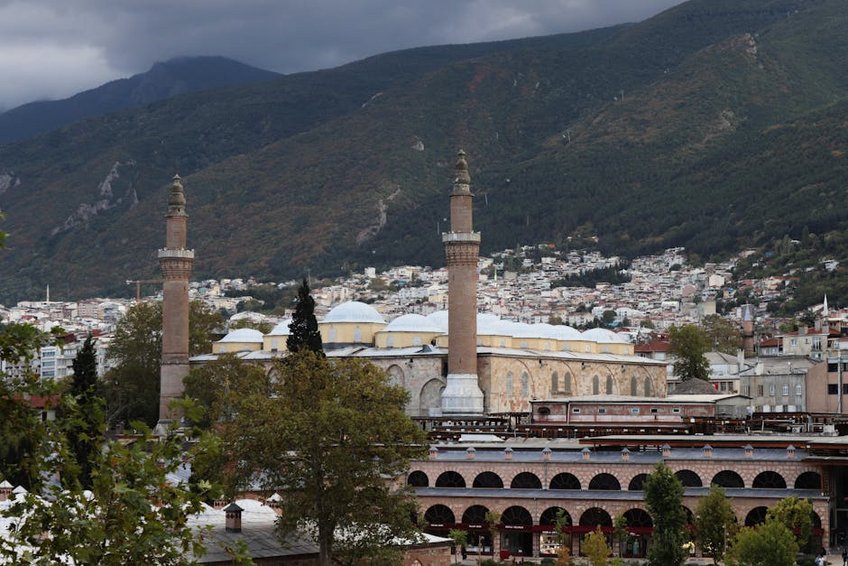
Designated a national park in 1961, Uludağ dominates Bursa’s skyline and ecosystems. The mountain range reaches 2,543 meters (8,343 feet), creating a dramatic climatic divide that influences the entire region. Its lower slopes are covered in pine and fir forests, which give way to alpine meadows and glacial lakes at higher elevations.
This diverse terrain supports activities from skiing and paragliding to botanical hikes among endemic wildflowers. Crucially, the mountain’s snowmelt feeds the thermal springs in Çekirge district, linking Bursa’s natural wellness offerings directly to its geological foundation. The park’s existence ensures the historical city retains a dramatic natural backdrop.
Cultural Synthesis in Architecture
Bursa’s architecture demonstrates a unique synthesis. Early Ottoman builders incorporated Seljuk, Byzantine, and Persian elements into a new, distinctly Ottoman style characterized by large central domes and inverted T-plans. The use of green-blue İznik tiles became a signature, giving the Yeşil Complex its name.
This architectural innovation occurred alongside functional structures like hammams and caravanserais, which serviced both trade and daily life. The resulting cityscape isn’t a museum but a living urban fabric where centuries-old markets still operate next to cafes, demonstrating how history and modern life coexist here.
Alt: “bursa-grand-mosue-and-uludag-mountain-background”
Historical and Natural Attractions in Bursa – Planning Your Trip
To fully experience both the cultural landmarks and outdoor splendors, you need a balanced itinerary. Allocate separate days for the compact historical city center and for excursions into Uludağ National Park. This Ottoman capital rewards visitors who appreciate its dual character, so planning for both urban exploration and nature time is essential.
Spring (April-May) and autumn (September-October) offer the most comfortable conditions, with average highs of 68-75°F (20-24°C) and fewer crowds. These seasons allow for pleasant walking tours of the old city and clear hiking conditions on the mountain. Winters are for skiers, while summers can be hot in the city center but remain cool at higher elevations.
A moderate budget is sufficient for a rewarding visit. While the city is less expensive than Istanbul, costs rise during the ski season on Uludağ. Focus your accommodation near the historic core or the Çekirge thermal district for the best access to major sites and transportation hubs.
Best Time to Visit Bursa
The ideal months are April-May and September-October for balanced weather across all attractions. City temperatures range from 60-75°F (15-24°C) with low rainfall, perfect for exploring UNESCO sites like the Grand Mosque and bazaars. On the mountain, these months provide excellent visibility for hiking and cable car rides without winter’s snow or summer’s haze.
For winter sports, visit December through February when Uludağ’s ski resorts are operational, with base snow depths often exceeding 2 meters (6.5 feet). July and August are peak for Turkish domestic tourism; the city can feel crowded and warm, with highs around 86°F (30°C), but the mountain offers a refreshing escape. Note that some historical sites have shorter hours during Ramadan.
Budget Planning and Costs
Daily costs vary significantly based on season and activity focus.
Essential Preparation Checklist
Pack layers regardless of season. City walking requires comfortable shoes for cobblestones, while the mountain demands sturdy hiking boots, a waterproof jacket, and warm layers. From June to September, include sun protection, a hat, and a reusable water bottle for hydration during long sightseeing days.
Check visa requirements; many nationalities need an e-Visa for Turkey. Ensure your travel insurance covers both standard medical care and potential outdoor activities like skiing or hiking. Book popular thermal hotels and guided tours at least two weeks in advance, especially for weekend visits or during the ski season when domestic demand is high.
Top Historical Sites and Natural Wonders
The city’s crown jewel is the Grand Mosque (Ulu Cami), a 14th-century Seljuk-Ottoman hybrid with 20 domes and stunning calligraphy. Nearby, the bustling Koza Han caravanserai continues its 500-year tradition as a silk trading center. These sites form the heart of the historic bazaar district, a UNESCO zone where commerce and history are inseparable.
For natural splendor, the Bursa Teleferik (cable car) provides a breathtaking 9-kilometer (5.6-mile) ascent to the Uludağ ski resort, offering panoramic views over the Sea of Marmara. At the top, you can choose between winter sports or summer hikes to glacial lakes like Aynalıgöl. The Çekirge district’s thermal baths, fed by the mountain’s geothermal activity, provide the perfect restorative end to any day.
Must-See Historical Highlights
Start at the Yeşil Türbe (Green Tomb) of Sultan Mehmed I, renowned for its exquisite İznik tile work that gives the complex its name. The adjacent Yeşil Mosque represents the peak of early Ottoman architectural ornamentation. Visit early in the morning to see the tiles glow in the soft light and avoid the midday tour groups that arrive from Istanbul.
The Ottoman House Museum (Osmanlı Evi Müzesi) in the Muradiye district offers an intimate look at 19th-century domestic life. Meanwhile, the Emir Sultan Mosque, set against the forested hillside, provides a serene spiritual atmosphere. Allocate 2-3 hours for the bazaar area alone, as getting lost in the covered markets is part of the authentic experience.
Hidden Gems and Local Favorites
Venture to the village of Cumalıkızık, a well-preserved Ottoman rural settlement with cobblestone streets and timber-framed houses at the foot of Uludağ. It’s a living museum where residents still sell homemade jams and crafts. Reaching it by local bus or taxi offers a glimpse into the region’s village life distinct from the imperial city.
For a quiet natural escape, seek out the Suuçtu Waterfall near Mustafakemalpaşa or the botanical trails around the Saitabat Şelalesi (Saitabat Waterfall). These spots are popular with locals for weekend picnics but see few international tourists. Similarly, the Tophane area offers not just the tombs of the empire’s founders but also one of the city’s best panoramic viewpoints at sunset.
Experiencing the Silk Road Legacy
The historic markets are not mere attractions but functioning economic centers. Watch master weavers at work in the silk shops of Koza Han, where you can purchase scarves and textiles directly from artisans. The İpek Han (Silk Inn) nearby, though quieter, features a beautiful central courtyard shaded by ancient trees.
This legacy extends to cuisine. The famous İskender kebab, invented in Bursa in the 19th century, is a direct product of the region’s rich pastoral lands. Enjoying it at its origin, with melted butter over thinly sliced lamb and yogurt, is a culinary pilgrimage. Pair it with a glass of şıra, a traditional fermented grape drink.
Practical Travel and Logistics
Bursa is easily accessible but requires one transfer. Most international travelers fly into Istanbul (IST or SAW) and then take a combined bus and ferry service or a direct coach to Bursa. The journey takes approximately 3-4 hours. Within the city, a compact historic center is walkable, but the BursaKart contactless card is essential for buses and the metro reaching outlying districts.
Accommodation splits between the historical center for culture, the Çekirge district for thermal hotels, and the Uludağ slopes for ski-in/ski-out convenience. Each area offers a different experience, so choose based on your trip’s primary focus. Booking.com and local hotel websites offer the best rates, especially for thermal spa properties.
| Accommodation Area | Best For & Features | Price Range/Night (USD) |
|---|---|---|
| Historic Center (Heykel) | First-time visitors, walkability to mosques & bazaars, budget options | $35 – $80 |
| Çekirge District | Thermal spa hotels, wellness focus, Ottoman-style luxury | $90 – $200+ |
| Uludağ Ski Resort | Ski enthusiasts, direct slope access, winter activities | $120 – $300 (seasonal) |
| Nilüfer District | Modern conveniences, shopping malls, longer stays | $50 – $120 |